
European Travel Part-1: The Majestic Appeal of the United Kingdom
By M Firoz Al Mamun | The Impartial 24
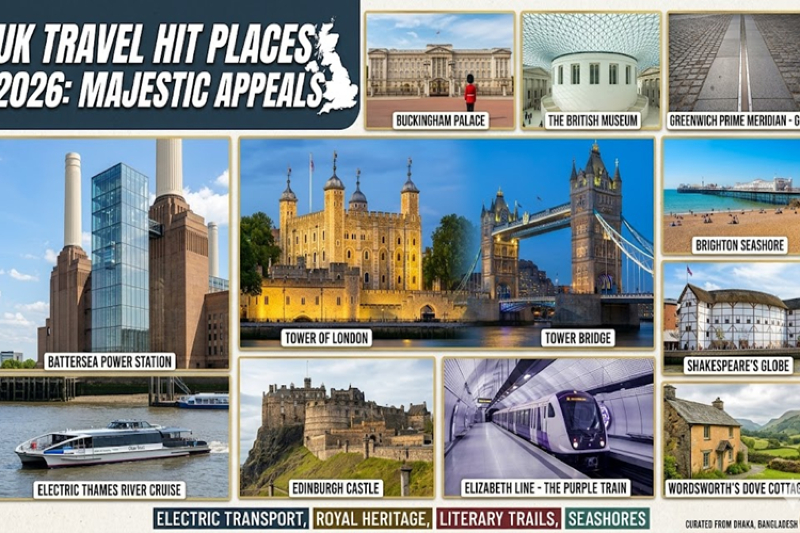
In 2026, the United Kingdom stands as a masterclass in "Time Travel." It is a place where you can stand on the line that defines global time in the morning and walk through a 1,000-year-old royal fortress by afternoon.
I. The Royal Pulse: Buckingham Palace & The Thames
No visit to the UK is complete without the Buckingham Palace experience. In 2026, the State Rooms and the newly popular East Wing Highlights Tour will open to the public from July 11 to September 27.
The Experience: Walk through the White Drawing Room and the Throne Room, then head to the West Terrace for a curated "Garden Highlights Tour."
The River Thames: The lifeblood of London. A cruise from Westminster to Greenwich is the best way to see the city. Sailing under the Tower Bridge while it opens is a 2026 "bucket list" moment.
II. Greenwich: Standing at the Center of the World
At the Royal Observatory in Greenwich, you can literally stand in two hemispheres at once.
The Prime Meridian: Pose astride the historic line (
$0^\circ$ longitude) that defines Greenwich Mean Time (GMT). The Tech: Explore Harrison’s sea clocks—the high-tech gadgets of the 18th century that solved the problem of longitude.
Pro Tip: Arrive at opening time (10:00 AM) to get a clear photo on the Meridian line before the crowds arrive.
III. The Literary Pilgrimage: From Shakespeare to Wordsworth
For lovers of the English language, the UK is holy ground.
Stratford-upon-Avon: Visit Shakespeare’s Birthplace.
If you time your visit for April 25–26, 2026, you can join the traditional Shakespeare Birthday Parade, featuring street performances and community monologues. The Romantic Poets: * Keats House (Hampstead): See where John Keats composed "Ode to a Nightingale."
Dove Cottage (Lake District): Visit William Wordsworth’s beloved home.
In 2026, the cottage offers "Dementia-Friendly" sessions and "Riverside Garden" tours where Wordsworth’s sister Dorothy kept her famous journals.
IV. The "Dreaming Spires" of Academia
The rivalry between Oxford and Cambridge is as vibrant as ever.
Cambridge Open Days: If you are visiting in July 2026 (9th & 10th), the university opens its historic colleges for prospective students and tourists alike.
Oxford: Tour the Bodleian Library and Christ Church College (the inspiration for Harry Potter’s Great Hall).
V. Sun, Sand, and Luxury Stays
Famous Seashores: For the quintessential British summer, Brighton offers a vibrant pier and pebbled beaches.
If you seek golden sands, St. Ives in Cornwall or the Victorian charm of Blackpool Beach (featuring the iconic Spanish Steps) are the top picks for 2026. Famous Hotels:
The Savoy (London): The epitome of British luxury with stunning river views.
The Peninsula London: A 2026 favorite for "Noble Luxury" near Hyde Park.
Prestonfield House (Edinburgh): For an old-world estate experience in Scotland.
Traveler’s Logistics (2026 Estimates)Transport: The National Rail and London Tube are highly efficient. A "Royal Day Out" ticket (Palace, Mews, and Gallery) costs roughly $125.
Royal Day Out Ticket (2026 Estimates)
| Ticket Type | Price in British Pounds (£) | Price in US Dollars ($) |
|---|---|---|
| Adult (Advance) | £65.70 | ~$88.00 |
| Adult (On-the-day) | £69.30 | ~$92.80 |
| Young Person (18-24) | £42.70 | ~$57.20 |
| Child (5-17) | £32.80 | ~$43.90 |
Traveler’s Logistics Note
The "Royal Day Out" is the most comprehensive way to experience the monarchy's history in a single afternoon.
The Experience: The tour typically lasts about 4.5 hours and is available during the palace's summer opening (from July 9 to September 27, 2026).
Efficiency: Using the London Tube or the Elizabeth Line to reach Victoria or Green Park stations is the most efficient way to arrive, costing roughly $3–$6 depending on your starting zone.
Savings Tip: As shown above, booking in advance online saves you nearly $5 per adult ticket compared to purchasing at the gate.
Safety: The UK remains in the global Top 15 for safety. Pedestrian-friendly "Smart Zones" in London and Edinburgh have made city walking safer than ever this year.
Cost: Average daily budget for a mid-range traveler is $150–$200.
The Engineering Marvels of the River Thames
While London’s history is ancient, the way you experience its river in 2026 is pure futurism.London Bridge vs. Tower Bridge: * The Confusion: Tourists often mistake the ornate Tower Bridge for the simpler London Bridge.
While London Bridge offers a sleek, modern walkway with incredible views of The Shard, it is Tower Bridge where the real magic happens. The Experience: In 2026, you can walk across the High-Level Walkways with glass floors that let you look 42 meters straight down at the river traffic.
Don’t miss the Victorian Engine Rooms, which once used massive steam boilers to lift the bridge's 1,000-ton bascules.
The "Liquid" Highway: * Uber Boat by Thames Clippers: This is the "electric tram of the water." It’s the fastest way to get from Central London to Greenwich.
New for 2026: Look for the UK’s first fully electric tour boats departing from Tower Bridge Quay.
These silent, zero-emission vessels offer a 40-minute round trip to Big Ben, allowing you to hear the sounds of the city without the roar of a diesel engine.
Battersea Power Station: Once a derelict coal plant (famous for the Pink Floyd Animals album cover), it is now London’s most vibrant "industrial-chic" neighborhood.
Take Lift 109, a glass elevator that ascends one of the iconic white chimneys for a 360-degree view of the Thames. Electric Travel: Trams, and the "Purple Train"
The UK has undergone a massive green revolution. In 2026, "electric" is the standard for the sophisticated traveler.
The Elizabeth Line (The Purple Train): This is the crown jewel of British electric rail. It isn't a standard "Tube" train; it’s a high-speed, spacious, air-conditioned electric marvel that stretches from Reading and Heathrow in the west to Canary Wharf in the east.
Traveler Tip: Use it to get from Heathrow to Central London in just 30 minutes. The stations are massive, futuristic, and fully step-free.
The London Tramlink (South London): Often called the "Trum" by locals, this quiet electric tram network connects Wimbledon and Croydon.
It offers a scenic, ground-level view of suburban London that most tourists never see. It’s perfect for a "slow travel" afternoon. The Battersea Land Train: For a bit of fun at the Power Station, look for the electric Land Train (perfect for families) that shuttles visitors through the new parks and shopping districts along the riverbank.
Docklands Light Railway (DLR): This is a driverless electric train that winds through the skyscrapers of the financial district.
The Pro Move: Sit in the very front seat where the driver would normally be—it feels like a low-speed rollercoaster through a futuristic city of glass.
The "New" Seashores of 2026
Brighton’s Electric Pier: Just an hour from London by electric train, Brighton has updated its iconic pier with sustainable energy lighting.
Blackpool’s Spanish Steps: This newly renovated coastal area on the Irish Sea is a must-see. The city’s famous electric trams—some of the oldest in the world—still run along the 11-mile promenade, blending vintage charm with modern green tech.
2026 Travel Logistics: UK Essentials
For our international audience, we have converted the key travel costs into US Dollars (USD) based on the current April 2026 exchange rates. These estimates help you plan your "Green Britain" adventure with precision.
Feature Mode of Transport Estimated Cost (USD) Heathrow to Central London Elizabeth Line (Electric Rail) ~$16.30 Thames River Sightseeing Electric Zero-Emission Boat ~$20.40 London to Brighton Coast Electric Intercity Rail ~$28.50 Battersea Chimney Lift Electric Glass Elevator ~$22.80 Safety Note: With the 2026 "Vision Zero" safety initiative, London’s streets have more "pedestrian-only" electric zones, making it the safest time in history to explore the city by foot or by "trum."