
NSU Panel Discusses Architecture in the Age of AI
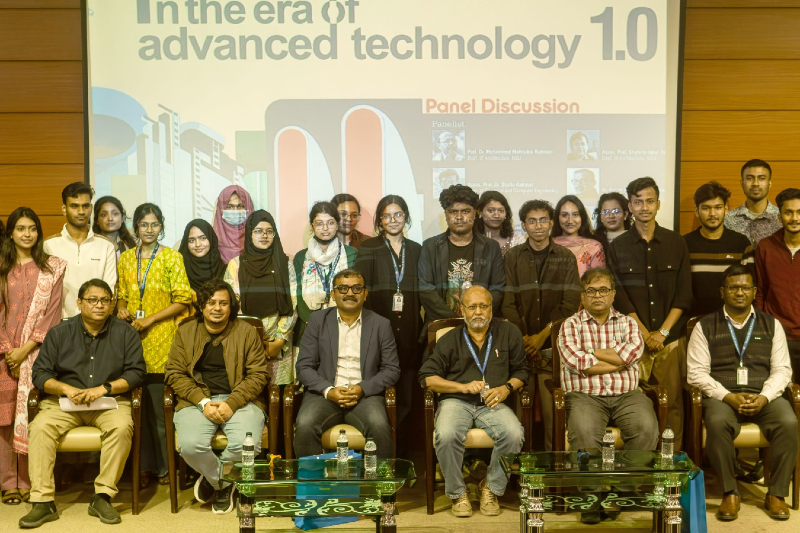
Dhaka, Feb 2, 2026: The Department of Architecture at North South University (NSU) hosted a panel discussion titled “Architecture: In the Era of Advanced Technology 1.0” on February 2, 2026, bringing together academics, researchers, and industry professionals to critically examine how architecture is evolving amid the rapid rise of Artificial Intelligence (AI) and advanced digital technologies.
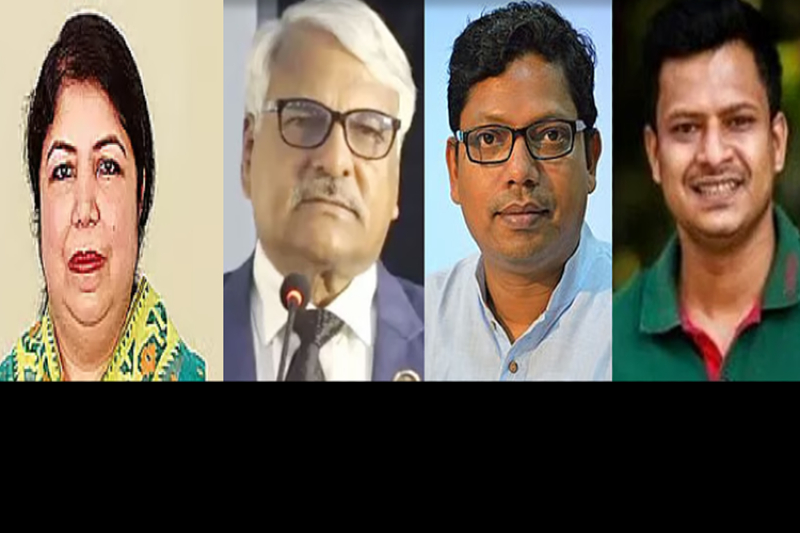
The panel featured Prof. Dr. Mohammed Mahbubur Rahman, Associate Professor Shahriar Iqbal Raj, Associate Professor Dr. Shafin Rahman, Dr. Golam Mohammad Mohiuddin, and Lecturer A K M Saleh Ahmed Anik. The session was moderated by Prof. Mujtaba Ahsan of NSU’s Department of Architecture.
The discussion opened with a central question posed by Prof. Mujtaba Ahsan:
“How is architecture going to embrace AI in the near future?”
Responding to this, Prof. Dr. Mohammed Mahbubur Rahman underscored the enduring importance of traditional architectural thinking and human sensitivity.
He questioned how architecture should be defined in an AI-driven era, asking whether it is primarily design or technology.
Drawing on the principles of Vitruvius, he revisited the three foundational pillars of architecture—Utilitas (function), Firmitas (structure), and Venustas (beauty)—noting that while function and structure are largely objective, aesthetics remain subjective and culturally shaped.
He emphasized that architecture is not merely about drawing lines or creating rooms, but about shaping space, enclosure, and human experience.
While acknowledging the inevitability of technological integration, he argued that AI cannot fully replicate the depth, sensitivity, and perception cultivated through human experience and manual design processes.
Offering a contrasting yet complementary perspective, Lecturer A K M Saleh Ahmed Anik focused on adaptability and the transformative power of technology.
He discussed the historical co-evolution of human cognition and tools, referencing futurist Ray Kurzweil’s predictions on AI, Artificial General Intelligence (AGI), and Artificial Superintelligence (ASI).
He described a shift toward “Homo Cybernetics,” where digital devices function as extensions of human senses. He stressed the need to move beyond rigid, IQ-based education systems toward lifelong, adaptive learning models supported by Emotional Intelligence (EI).
He also raised ethical and environmental concerns, noting that AI development requires vast energy resources, making human judgment, cultural awareness, and emotional intelligence increasingly vital.
Dr. Golam Mohammad Mohiuddin presented a case study illustrating how an AI-generated architectural animation was completed within 24 hours using limited project data.
While acknowledging AI’s efficiency, he cautioned about potential job displacement and stressed that architects must position themselves as curators and decision-makers rather than passive users of AI tools. He also questioned whether AI-generated outputs can truly be considered architecture if they are never realized in physical form.
Providing technical clarity, Associate Professor Dr. Shafin Rahman explained the differences between Artificial Narrow Intelligence (ANI) and Artificial General Intelligence (AGI), noting that most current AI applications fall within the ANI category.
He outlined AI’s developmental stages and warned that unchecked progress toward ASI could raise serious ethical challenges.
Dr. Shafin emphasized the importance of localized AI models and interdisciplinary collaboration, highlighting the role of NSU’s Machine Intelligence Lab in advancing responsible AI research.
Associate Professor Shahriar Iqbal Raj, Chair of the Department of Architecture at NSU, reflected on the profession’s evolution from sub-digital practices to advanced technological integration.
He stressed the need for closer collaboration between architects and programmers and proposed introducing an academic course on “Prompt Engineering.”
Emphasizing that learning has no age limit, he noted that while new knowledge often replaces old, every phase of learning contributes to shaping future architectural practice.
Concluding the session, Prof. Mujtaba Ahsan remarked that in today’s rapidly changing world, learning new skills has itself become a continuous job.
The discussion ended with a shared understanding that adaptability, collaboration, and lifelong learning are essential for architects navigating the era of advanced technology.