
United by Unique: Global Health Leaders Urge Action on Early Cancer Detection to Save Millions
GENEVA — As the global cancer burden continues to surge, international health authorities and oncology experts have issued a unified directive: early detection must become the focal point of public healthcare systems.
Aligning with the current multi-year global campaign theme, “United by Unique,” the World Health Organization (WHO) and global advocacy networks are emphasizing a shift toward people-centered care.
This approach places individual lived experiences at the heart of medical policy while aggressively expanding community-level screening initiatives.
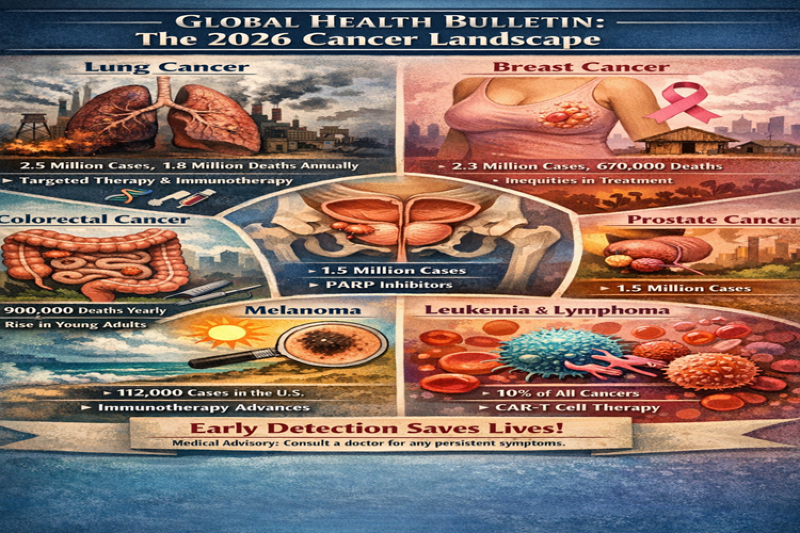
According to data tracked by the International Agency for Research on Cancer (IARC), approximately 20 million new cancer cases are diagnosed annually, a figure projected to spike by 77% to 35 million by 2050.
Medical researchers note that a massive portion of these future fatalities can be directly prevented if tumors are identified before they metastasize.
The Crucial Window of Early Diagnosis
Clinical data demonstrates that when cancer is identified in its initial asymptomatic or localized stages, the probability of successful treatment increases exponentially.
Higher Survival Outcomes: For the most common global malignancies—including lung, breast, and colorectal cancers—early-stage medical intervention dramatically lowers mortality rates compared to advanced-stage diagnoses.
Reduced Morbidity: Early detection enables physicians to deploy localized, less aggressive therapies.
This minimizes the need for extensive systemic chemotherapy or invasive surgeries, preserving the patient's long-term quality of life. Economic Relief: Treating late-stage cancer incurs astronomical financial burdens on both families and national healthcare infrastructure.
Early screening offers a highly cost-effective alternative to prolonged oncological critical care.
Breaking Down Barriers: Awareness and Prevention
Health officials highlight that between 30% and 50% of all cancer deaths are entirely preventable by modifying lifestyle risk factors and utilizing established clinical guidelines.
Central to the "United by Unique" mandate is dismantling the social stigma, systemic inequities, and fear that frequently prevent vulnerable demographics from seeking early medical consultations.
The primary pillars of the preventative framework involve regular risk-based and age-appropriate screenings, such as mammograms,
PAP smears, and colonoscopies.
A Global Call for Equitable Infrastructure
While high-income countries benefit from advanced personalized diagnostics and routine screening networks, low- and middle-income countries (LMICs) continue to bear a disproportionate brunt of the escalating mortality rates due to scarce resource distribution.
Oncology leaders are calling on global policymakers to implement robust national cancer control plans that guarantee universal access to basic diagnostic evaluation and timely referral pathways.
By shifting the paradigm from late-stage crisis management to proactive, empathetic, and early individual health-seeking behaviors, the global medical community aims to fundamentally rewrite the future of cancer survivorship.