
Shingles Vaccine Linked to Dramatic Drop in Heart Attack and Stroke Risk, New Research Suggests
Beyond its primary role in preventing a painful skin rash, the shingles vaccine may be a powerful new tool in the fight against heart disease.
Recent clinical data suggests that the immunization significantly reduces the risk of major cardiovascular events, including heart attacks and strokes, particularly in high-risk populations.
The latest findings, scheduled for presentation at the American College of Cardiology’s Annual Scientific Session (ACC.26) on March 30, indicate that the protective benefits of the vaccine may be far more extensive than previously understood.
Key Findings: A "Stunning" Reduction in Risk
Researchers conducted an extensive analysis of health records from over 246,000 U.S. adults diagnosed with atherosclerotic cardiovascular disease (plaque buildup in the arteries). The study compared vaccinated individuals against a demographically matched unvaccinated group over a one-year period.
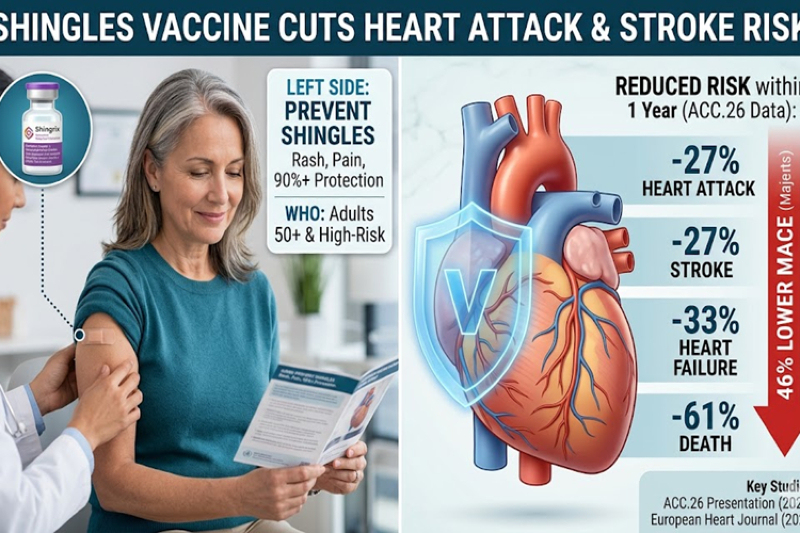
The data revealed a "meaningful and significant" reduction in life-threatening complications among those who received either the Shingrix or Zostavax vaccines:
46% lower risk of major adverse cardiovascular events (MACE).
61% lower risk of death from any cause.
27% lower risk of experiencing a heart attack or stroke.
33% lower risk of developing heart failure.
Medical experts have noted that these risk reductions are comparable to the health benefits achieved by quitting smoking, marking a potential shift in how cardiologists view routine immunizations.
The Science: How a Virus Affects the Heart
The connection between shingles—caused by the reactivation of the varicella-zoster virus—and heart health lies in systemic inflammation. When the virus reactivates, it does more than cause a rash; it triggers inflammation in the blood vessels and increases the likelihood of dangerous blood clots.
"Varicella-zoster has been shown to increase inflammation, cause blood vessel damage, and increase clotting," explains Dr. Cheng-Han Chen, a board-certified interventional cardiologist. "By preventing the infection, the vaccine decreases these adverse reactions."
A separate long-term study published in the European Heart Journal (May 2025) followed 1.2 million adults in South Korea for 12 years. That research confirmed that the protective cardiovascular effects could last for up to eight years, with the strongest protection occurring within the first three years post-vaccination.
Clinical Recommendations and Ethics
Current guidelines from the Centers for Disease Control and Prevention (CDC) recommend two doses of the shingles vaccine for all adults aged 50 and older. These new studies provide a compelling argument for prioritizing vaccination in patients with pre-existing heart conditions.
Citing the Sources:
The data presented stems from two primary scientific pillars:
ACC.26 Presentation (2026): Focuses on U.S. patients with existing heart disease.
European Heart Journal (2025): A comprehensive 12-year longitudinal study of 1.2 million individuals.
A Note of Caution:
While the results are statistically robust, researchers emphasize that these are observational studies. This means that while a strong link exists, a direct "cause-and-effect" relationship has yet to be proven through randomized controlled trials. Other healthy lifestyle choices among vaccinated individuals could also play a role in these outcomes.
Summary of Benefits Beyond Shingles Prevention
| Outcome | Reported Risk Reduction |
|---|---|
| Overall Mortality | 61% Lower |
| Major Cardiac Events | 46% Lower |
| Heart Failure | 26%–33% Lower |
| Stroke & Heart Attack | 27% Lower |
What is shingles vaccine?
The shingles vaccine is a vaccine designed to prevent shingles, which is a painful skin rash caused by the reactivation of the varicella-zoster virus — the same virus that causes chickenpox. After someone recovers from chickenpox, the virus can stay dormant in nerve cells for decades and then reactivate later in life as shingles.
Key Points About the Shingles Vaccine:
- Purpose: Protects against shingles and its complications, such as postherpetic neuralgia (long-lasting nerve pain).
- Types:
- Shingrix – the preferred vaccine, given in two doses, highly effective.
- Zostavax – older vaccine, less commonly used now.
- Recommended Age: Usually for adults 50 years and older, though it can also be given to younger adults with weakened immune systems.
- Additional Benefits: Recent research suggests it may also reduce risks of heart attack, stroke, and heart failure in adults with cardiovascular risk factors.
- How It Works: Stimulates your immune system to recognize and fight the varicella-zoster virus, preventing it from reactivating.
In short, the shingles vaccine not only prevents a painful rash but may also protect the heart according to emerging studies.