
Global Measles Emergency: Bangladesh Children Bearing Brunt as Epidemic Sweeps Multiple Nations
While the world faces a concerning resurgence of measles across several continents, Bangladesh is currently battling a critical and rapidly deteriorating outbreak.
Health experts warn of a "perfect storm" of vaccination gaps, malnutrition, and highly contagious new strains, placing thousands of children at extreme risk. This report provides a comprehensive look at the crisis in Bangladesh, the global landscape, and essential health information.
Part 1: Bangladesh Ground Zero: "A Crisis of the Unprotected"
The pediatric wards of Rajshahi Medical College Hospital (RMCH) are overwhelmed. A specialized measles isolation ward, established just days ago, is already "overflowing" with suffering children, many of whom have not yet reached the age to receive their first vaccine dose.
This heartbreaking reality highlights the most alarming trend of the current outbreak: the virus is striking the youngest, most vulnerable infants.
Alarm at Rajshahi Medical College Hospital (RMCH)
Data exclusively obtained from RMCH reveals a terrifying statistical shifts:
Age of Vulnerability: Approximately 65 percent of all children admitted to RMCH with confirmed measles or measles symptoms are under 9 months old.
Too Young for the Jab: The primary measles vaccine in Bangladesh is scheduled at 9 months. This means nearly two-thirds of the current victims were medically ineligible for protection.
Peak Infection: Children around six months of age represent the highest number of infections within this vulnerable group.
The Surge: The number of hospitalized cases continues to climb daily. As of Monday evening, 102 children were admitted with symptoms, up from 92 just the day before.
High Positivity Rate: Out of 63 samples tested through the World Health Organization (WHO), 34 were confirmed positive—a 54% positivity rate.
Hotspot: The majority of patients at RMCH are arriving from Chapainawabganj district, particularly Shivganj upazila, identifying it as a clear epicenter. Other cases are coming from Pabna, Rajshahi, and Naogaon.
"They Caught it While We Waited for Their Birthday"
The human cost is evident in the stories of parents like Elias Hossain. His 6-month-old daughter, Eva, was hospitalized with a persistent fever that later erupted into the characteristic measles rash. She had three months left until her scheduled vaccination.
Another parent, Mohammed Wasim from Shivganj, brought his 9-month-old child to the hospital with pneumonia, one day before they were set to receive the first measles vaccine. Tragically, the child developed measles while inside the hospital, presumably infected by another patient. "Most of the children affected are under 9 months old," Wasim observed.
A Decadal Failure in Immunization
The crisis in Rajshahi is not isolated. Across Bangladesh, including Dhaka, Mymensingh, and Chattogram, hospitals are strained. Health Minister Sardar Md Sakhawat Husain confirmed a shocking statistic that explains the country’s vulnerability: No nationwide measles vaccination campaigns have been administered in Bangladesh over the past eight years.
This prolonged disruption in routine immunization programs, compounded by reported shortages of vaccines, field-level health workers, and the absence of a dedicated measles-rubella campaign since 2020, has left a massive immunity gap. Stockpiles of essential vaccines at central storage facilities are reportedly depleted.
Part 2: The Global Resurgence of Measles
Bangladesh is not alone in this fight. The World Health Organization (WHO) and other health bodies have reported a worldwide spike in measles cases, driven primarily by declining vaccination coverage during the COVID-19 pandemic.
Country-Wise Breakdown and Fatality Toll (Reports vary, data is dynamic):
| Country | Key Issue | Recent Fatality/Case Trends |
|---|---|---|
| Bangladesh | Severe immunity gap (no campaigns in 8 years), malnutrition, highly contagious strain. | At least 38 deaths reported this year, 21 in March alone. Toll likely higher. |
| Ukraine | War-related infrastructure damage, displacement, vaccine disruption. | High case counts reported prior to the conflict and currently being monitored. |
| Romania | Historical vaccine hesitancy leading to low coverage rates. | Has declared a national epidemic with multiple fatalities reported. |
| Ethiopia & Nigeria | Chronic humanitarian crises, large numbers of unvaccinated children ("zero-dose" children). | Frequent, large-scale outbreaks resulting in hundreds of fatalities yearly. |
| USA & UK | Pockets of vaccine refusal in specific communities, importing cases from high-risk areas. | Significant rise in localized outbreaks, straining public health services. |
Part 3: Knowing the Threat: What is Measles?
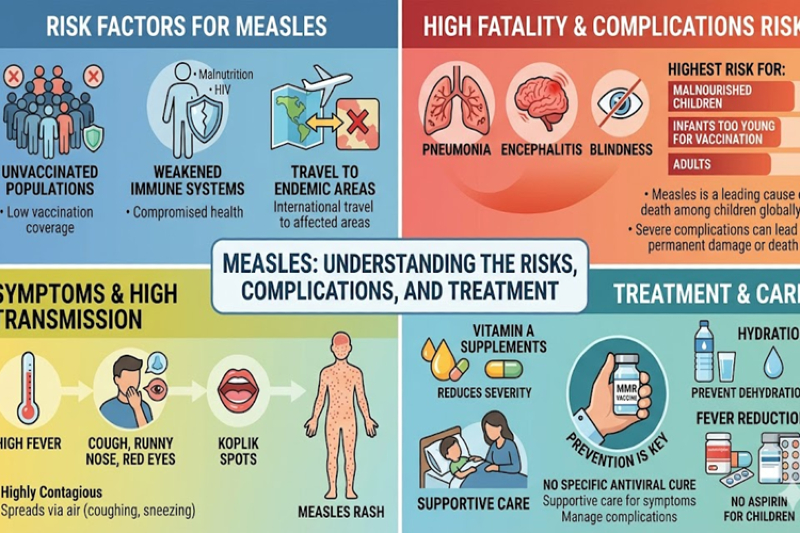
Measles is one of the most contagious diseases known to humanity. It is caused by a virus and spread through the air via coughing or sneezing.
Contagion Factor: A single infected person can infect 15 to 18 susceptible individuals.
Incubation Period: Symptoms typically appear 10–14 days after exposure.
Transmission Window: An infected person is contagious from four days before the rash appears until four days after it starts.
Part 4: Treatment and Prevention: Your Complete Health Guide
There is no specific antiviral treatment for the measles virus. Medical management focuses on:
1. Treatments:
Fever Reduction: Acetaminophen (Tylenol) or ibuprofen to control fever. (NOTE: Do NOT give aspirin to children due to the risk of Reye's syndrome).
Hydration: Ensuring the child drinks plenty of fluids (water, oral rehydration solutions, breastmilk/formula) to prevent dehydration caused by fever and diarrhea.
Supportive Care: Rest and a comfortable environment.
Vitamin A Supplementation: Critically important. Vitamin A can significantly reduce the severity of measles and lower the risk of death, especially in malnourished children.
Antibiotics: Only necessary if secondary bacterial infections, such as pneumonia or an ear infection, develop.
2. Precautions: The Only Sure Protection is the Vaccine
The most effective, single intervention to stop the measles epidemic is vaccination.
The Vaccine: The MMR (Measles, Mumps, Rubella) vaccine is safe, highly effective, and provides lifetime protection for most people.
Standard Schedule: Children generally receive two doses: the first at 12–15 months and the second at 4–6 years.
Outbreak Schedule (Critically Relevant to Bangladesh): In outbreak areas, health authorities may lower the age of the first dose to as early as 6 months (as supplemental immunization). This is a critical consideration given the RMCH data.
Conclusion: An Urgent Call to Action
The situation in Bangladesh is a human rights crisis and a catastrophic failure of public health infrastructure.
Children are dying from a preventable disease. Governments and international organizations must treat this as a global emergency.
A rapid, well-coordinated, and adequately funded mass vaccination campaign must be launched immediately in Bangladesh and other affected nations to close the immunity gap and save thousands of lives before it is too late.