
US Plans Troop Reduction in Germany as Trump–Merz Dispute Escalates
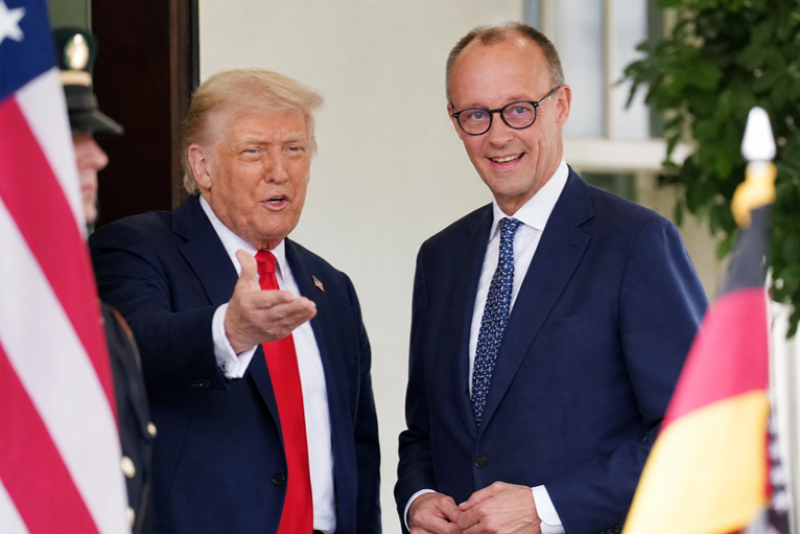
WASHINGTON- The United States is preparing to reduce its military presence in Germany by around 5,000 troops, a move that comes amid rising tensions between President Donald Trump and German Chancellor Friedrich Merz over the handling of the Iran situation.
According to the US Department of Defense, the decision follows a strategic review of American military deployment across Europe.
Officials indicated that the withdrawal would be carried out gradually over the next six to twelve months, reflecting changing operational priorities and conditions on the ground.
The announcement came shortly after a war of words between the two leaders. Merz had publicly criticised Washington’s approach to negotiations with Iran, suggesting that the United States appeared to have been outmanoeuvred diplomatically.
In response, Trump launched a series of sharp attacks on Merz via social media, accusing him of poor leadership and criticising Germany’s policies on energy and immigration.
Germany currently hosts the largest contingent of US troops in Europe, with more than 36,000 personnel stationed across various bases, including the strategically important Ramstein Air Base. The proposed reduction would mark a significant shift in the US military footprint in the region.
German Defence Minister Boris Pistorius acknowledged the development, stating that while the presence of American forces remains beneficial to both countries, a partial withdrawal had long been anticipated. He noted that Washington has been signalling a broader intention to scale back its European deployments.
The Pentagon confirmed that the directive originated from Defence Secretary Pete Hegseth, emphasising that the move is part of a wider reassessment of US global force posture.
Trump has also hinted at the possibility of reducing troop levels in other allied countries, including Italy and Spain, criticising their reluctance to support US-led efforts related to tensions in the Middle East, particularly around the Strait of Hormuz.
Despite earlier disputes over defence spending—when Trump accused Germany of failing to meet NATO targets—Berlin has significantly increased its military budget in recent years. Projections indicate that Germany’s defence expenditure will exceed 3% of its GDP in the coming years, marking a major policy shift.
The planned troop reduction is likely to raise concerns among European allies, especially those in Eastern Europe, who remain wary of security threats from Russia and rely heavily on US military support for regional stability.