
Disney’s ABC Licenses Under FCC Review Following "Expectant Widow" Joke About Melania Trump
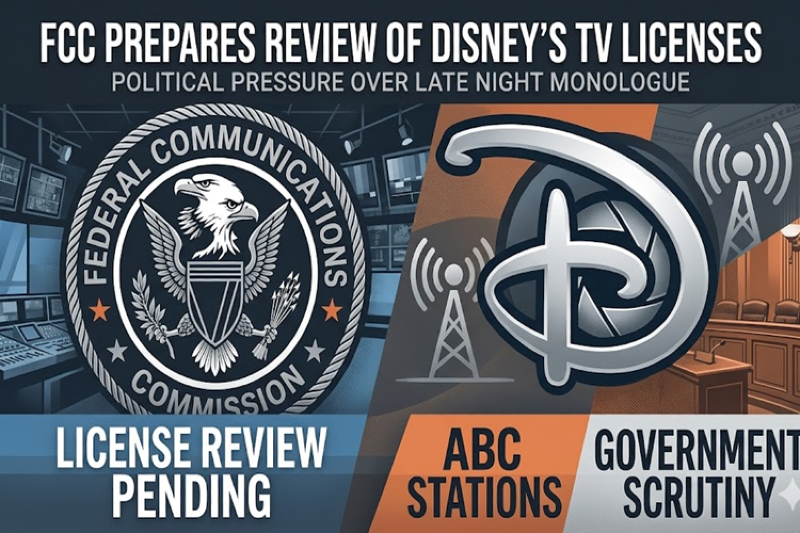
WASHINGTON — The Federal Communications Commission (FCC) is reportedly moving toward a formal review of the broadcast licenses held by Disney for its ABC television stations.
This administrative maneuver, first reported on Tuesday, April 28, 2026, escalates the tension between the media giant and federal regulators following a controversial late-night monologue and ongoing scrutiny of the company's internal policies.
According to sources familiar with the matter, the FCC is preparing to file paperwork that could challenge the eight local station licenses currently owned by Disney. While the commission has the option to halt this "early license review" process, the development marks a significant threat to Disney’s ability to broadcast over public airwaves.
The "Expectant Widow" Controversy
The move comes as the White House intensifies pressure on Disney to fire Jimmy Kimmel, the host of ABC’s Jimmy Kimmel Live!
The remark took on a much darker tone two days later when a gunman, identified as 31-year-old Cole Tomas Allen, attempted to breach security at the annual White House Correspondents’ Dinner.
Administration Demands: Both President Donald Trump and the First Lady have publicly called for Kimmel's termination, with Melania Trump stating on X (formerly Twitter) that "people like Kimmel shouldn’t have the opportunity to enter our homes each evening to spread hate."
Kimmel’s Defense: On his Monday night program, Kimmel refused to apologize, characterizing the joke as a "light roast" and noting it was not a call to violence.
Regulatory Grounds: Diversity and "Character Qualifications"
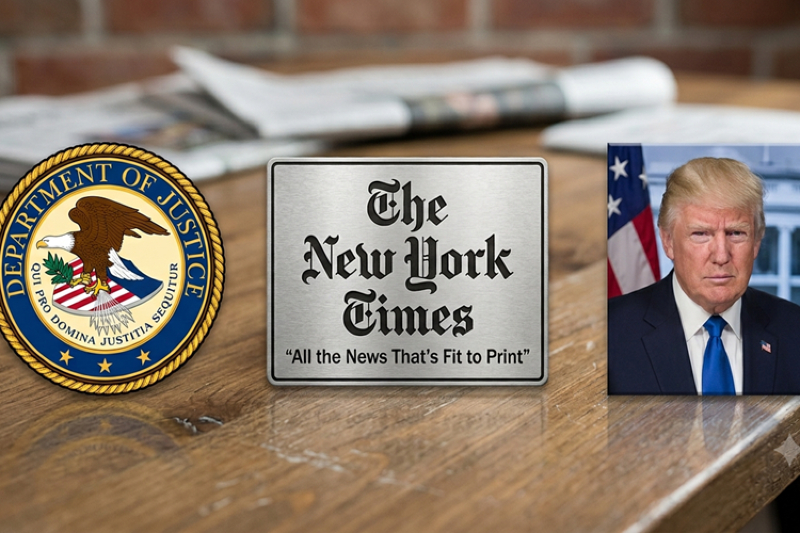
Despite the timing, sources within the FCC suggest the review is not solely tied to the late-night host. FCC Chairman Brendan Carr has been vocal about investigating Disney’s corporate practices, specifically its diversity, equity, and inclusion (DEI) programs.
Earlier this month, Carr warned that if evidence shows Disney engaged in "race- and gender-based discrimination" through its hiring and promotion initiatives, it could impact their "character qualifications"—a critical legal standard required to hold a federal broadcast license.
“If the evidence does in fact play out and shows that they were engaged in... discrimination, that’s a very serious issue at the FCC,” Carr told Fox News.
Market Impact and Legal Stakes
The news of the potential license challenge caused Disney shares to slip approximately 1% in Tuesday morning trading.
Under the Communications Act, broadcasters operate on publicly owned spectrum and must serve the "public interest."
If the FCC proceeds, it would be a rare and aggressive use of its "early review" power, potentially setting a precedent for how the government monitors the content and corporate culture of major media networks. Disney and ABC have yet to issue a formal response to the reports.
Key Facts at a Glance
| Entity | Current Status |
|---|---|
| Broadcaster | ABC (Owned by Disney) |
| Key Licenses | 8 local stations across the U.S. |
| FCC Chairman | Brendan Carr |
| Trigger Points | Controversial monologue, DEI programs, and character qualifications |
| Market Reaction | Disney (DIS) shares down ~1% |
How might this review affect the future of late-night satire?
If the FCC were to cancel or revoke Disney’s broadcast licenses, it would be a "nuclear option" for the network, essentially forcing its local television stations to go dark.
While the FCC does not license the ABC Network itself, it licenses the individual local stations that broadcast ABC's signal over the airwaves.
1. What Happens if the Licenses are Cancelled?
Total Blackout on Airwaves: The affected stations would be legally prohibited from broadcasting their signal. Viewers who use antennas would see static.
Forced Sale or Re-allocation: The FCC would likely put those "empty" frequencies up for auction, allowing other companies (like Sinclair or Nexstar) to buy the rights to broadcast in those cities.
Massive Revenue Loss: Disney would lose billions in local advertising revenue and "retransmission fees" (money paid by cable companies to carry the local ABC signal).
Legal "Character" Damage: A revocation often stems from a finding that the owner lacks the "character" to be a public trustee. This could trigger "cross-default" clauses in Disney’s other multibillion-dollar contracts and loans.
Cable/Satellite Survival: Technically, Disney could still provide ABC content via cable or streaming (Hulu/Disney+), but they would lose the massive "free-to-air" audience that serves as the foundation of their ratings.
2. Which Organizations and Outlets Would be Affected?
If the FCC targets Disney’s "Owned and Operated" (O&O) stations, the impact would hit the biggest media markets in the U.S. first:
Directly Affected (Disney-Owned ABC Stations):
These are the specific stations Disney owns directly. If their licenses are cancelled, these major cities lose their local ABC news and programming:
WABC-TV (New York City): The most-watched local station in the U.S.
KABC-TV (Los Angeles): A massive hub for West Coast news.
WLS-TV (Chicago): A dominant force in the Midwest.
WPVI-TV (Philadelphia): Famous for its "Action News" brand.
KGO-TV (San Francisco): Covers the entire Bay Area.
KTRK-TV (Houston): Essential for Gulf Coast coverage.
WTVD (Raleigh-Durham): A key hub in North Carolina.
KFSN-TV (Fresno): Serving central California.
Indirectly Affected (Affiliates & Partnerships):
The ABC Television Network: While the network itself isn't licensed, it relies on these 8 major stations to reach nearly 20% of the U.S. population. Losing them would make the national network economically unviable.
ESPN on ABC: Major sporting events (like NBA Finals or Monday Night Football) that air on ABC would lose their broadcast reach, likely shifting entirely to cable/streaming.
Local Affiliates: Companies like Sinclair, Nexstar, and Hearst own hundreds of local ABC stations. While their licenses might be safe for now, they would lose the national ABC programming (like Good Morning America or World News Tonight) that Disney provides.
3. The "Chilling Effect"
Beyond Disney, this move would send a shockwave through the entire media industry.
NBC, CBS, and Fox would likely self-censor their late-night hosts and news anchors to avoid similar "character" reviews by the FCC.
Investors might pull back from media stocks, fearing that a single joke or a corporate diversity policy could lead to the government shutting down a multi-billion dollar business.
Current Status: As of late April 2026, the FCC has only signaled a review. Revocation is a long legal process that involves hearings and would almost certainly be challenged in the Supreme Court under the First Amendment.