
Trump Vows Response After US Helicopter Downing, While Israel Threatens Fresh Strikes on Iran
WASHINGTON — Tensions in the Middle East have escalated dramatically following a series of highly volatile developments involving the United States, Iran, and Israel.
Trump Promises U.S. Action Over Strait of Hormuz Incident
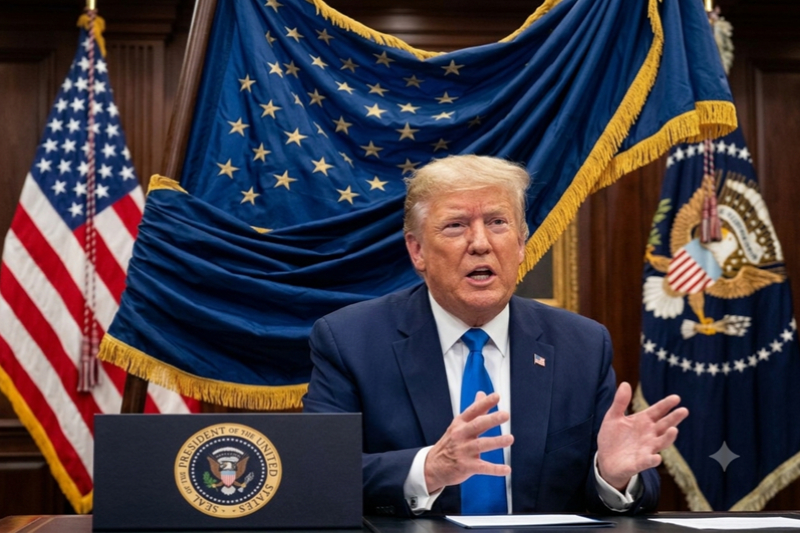
U.S. President Donald Trump announced via social media that an American military helicopter was shot down by Iranian forces over the critical Strait of Hormuz waterway.
According to the President, the aircraft involved was a sophisticated Apache helicopter on a routine patrol mission.
While the two pilots on board were successfully rescued without injury, President Trump explicitly warned that Washington would not let the provocation go unanswered, stating that the United States "must, of necessity, respond."
Addressing concerns over long-term American military entanglement, Vice President JD Vance emphasized that the administration remains focused on a singular objective.
Vance stated that as long as the U.S. keeps its mission firmly anchored on preventing Iran from developing a nuclear weapon, the situation will not devolve into a prolonged quagmire akin to past conflicts in Iraq or Afghanistan.
Meanwhile, U.S. Energy Secretary Chris Wright noted that while Iranian authorities have effectively kept the Strait of Hormuz restricted, maritime shipping traffic has seen a highly meaningful increase. However, Wright cautioned that restoring traditional global energy flows could take several months after hostilities finally subside.
Israel Outlines Plans for 'Deep Strike' Against Tehran
In Tel Aviv, Israeli military leadership signaled readiness to ramp up pressure on Iran. IDF Chief of Staff Eyal Zamir stated that the Israeli military is fully prepared to execute significant deep-strike operations against Iranian targets
if ordered. Zamir indicated that previous military operations against Tehran were merely foundational steps ahead of what he described as a much more severe and substantial blow.
The renewed rhetoric comes amidst widening geopolitical fractures. Observers point out that the ongoing friction between Israel and Iran is exposing a growing diplomatic rift between Israeli Prime Minister Benjamin Netanyahu and President Trump, highlighting increasingly incompatible strategic priorities between the two close allies.
Deadly Bombings Continue in Southern Lebanon
On the ground, devastating conflict continues to rip through the region. Israeli airstrikes across southern Lebanon killed at least nine people in the coastal city of Tyre shortly after the military issued forced evacuation orders. The strikes also injured dozens of civilians, including two Lebanese Red Cross paramedics.
Separate waves of aerial bombardments tore through several towns in the Nabatieh region—including Kfar Reman, Aadshit, and Zefta—killing multiple people and destroying residential infrastructure.
UN Secretary-General António Guterres issued an urgent plea to all parties, calling for an immediate cessation of violence and urging compliance with previously declared ceasefires in Gaza, Lebanon, and Iran.
West Bank Tensions Explode Amid Sanctions
The violence has also reverberated deep into the occupied West Bank. In the village of Burqa near Nablus, groups of Israeli settlers launched an assault on Palestinian residences, throwing stones at properties and setting a vehicle ablaze in nearby Beit Imrin.
The escalating settler violence prompted a coordinated international response, with the United Kingdom, France, Australia, Canada, New Zealand, and Norway imposing joint sanctions designed to target the financial networks enabling and funding violent settler groups in the West Bank.
However, humanitarian organizations like Amnesty International argued the diplomatic measures fall short of ensuring true accountability.