
America Marks 250th Birthday: A Milestone Defined by Heat, Polarization, and Tradition
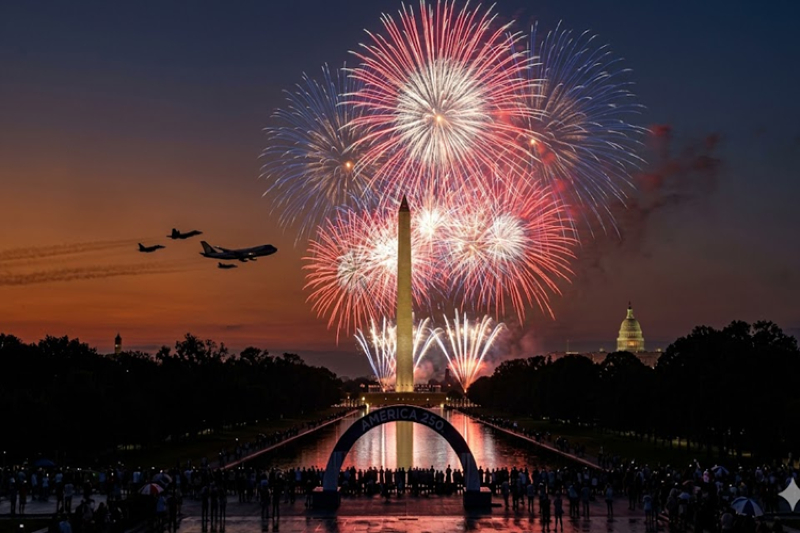
WASHINGTON, D.C. —The United States reached a historic milestone on July 4, 2026, marking its 250th birthday with a complex display of national pride, political friction, and environmental struggle.
Across the country, the semiquincentennial was celebrated with traditional flyovers, massive fireworks displays, and community gatherings, all unfolding under the shadow of a relentless, multi-day heat wave that tested the endurance of millions.
A Capital Divided
In Washington, D.C., the National Mall served as the epicenter of the day’s tensions. The federally sanctioned "America 250" events were complemented—and in some ways overshadowed—by the "Freedom 250" rally.
President Donald Trump addressed the crowd late into the night, framing the celebration as the beginning of a "golden age" for the country. His speech, which touched on themes of national sovereignty and his vision for the future, underscored the political chasm currently splitting the nation.
Critics have accused the administration of politicizing the anniversary by creating a parallel event separate from bipartisan commemorations. This divide was mirrored on the streets, where the celebration’s tone was further complicated by the appearance of roughly 400 members of the white nationalist group Patriot Front.
The masked, uniformed group marched in unison near the Capitol, a stark visual reminder of the ideological polarization that persists even on a day meant to honor national unity.
The Weather Factor
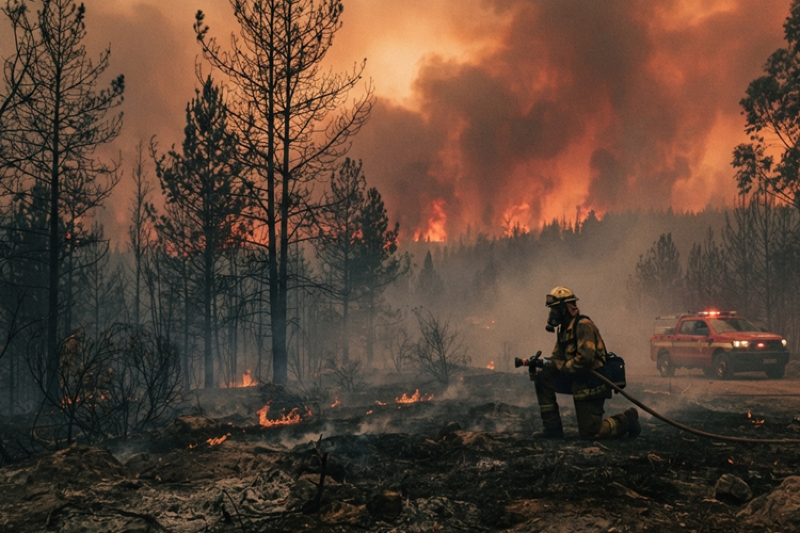
Beyond politics, the environment played a lead role in the holiday narrative. Much of the eastern United States had been suffering under an unforgiving heat wave for days, with temperatures in Maryland, Delaware, and New Jersey climbing toward a blistering 108°F (42°C).
The extreme weather forced a cascade of cancellations. Parades and outdoor festivals, including the National Park Service’s annual Independence Day Parade in the capital, were scrapped due to safety concerns.
Nature also brought violent volatility; severe thunderstorms and high winds—reaching speeds of over 60 mph in Michigan—wreaked havoc on the electrical grid.
By the time the national fireworks concluded in Washington, approximately 750,000 customers in the East and another 350,000 in the Midwest were left without power, turning a day of celebration into a logistical endurance test.
Reflections and Resilience
Despite the logistical challenges and the heat, the core spirit of the holiday remained intact in many corners of the country. In Philadelphia, the "birthplace of America," members of Congress gathered at Independence Hall to honor the signing of the Declaration of Independence.
Across the nation, “America’s Block Party” events brought neighborhoods together, while major musical acts performed in iconic locations from Times Square to Los Angeles.
Traditions continued, offering a sense of normalcy. At Mount Vernon, the historic estate of George Washington, a naturalization ceremony welcomed 150 new citizens from 50 countries, a poignant reminder of the nation’s foundational identity as a refuge and a project. In New York City,
Joey Chestnut further cemented his legacy by winning his 18th Nathan’s Famous International Hot Dog Eating Contest, downing 66 hot dogs, while Miki Sudo claimed her 12th title in the women’s division.
As the sun set, the country’s four living former presidents offered their own reflections. Joe Biden and Barack Obama emphasized the "unfinished work" required to ensure equality for all citizens.
George W. Bush issued a call for active civic engagement, urging Americans to be "citizens, not spectators," while Bill Clinton offered a sobering acknowledgment of the threats currently facing democratic institutions.
As the final fireworks faded over the National Mall, the 250th anniversary stood as a snapshot of an evolving nation. It was a day of celebration, yes, but one firmly anchored in the reality of a country struggling to reconcile its past with an increasingly uncertain and divided future.