
DOJ Subpoenas New York Times Reporters Following Air Force One Security Expose
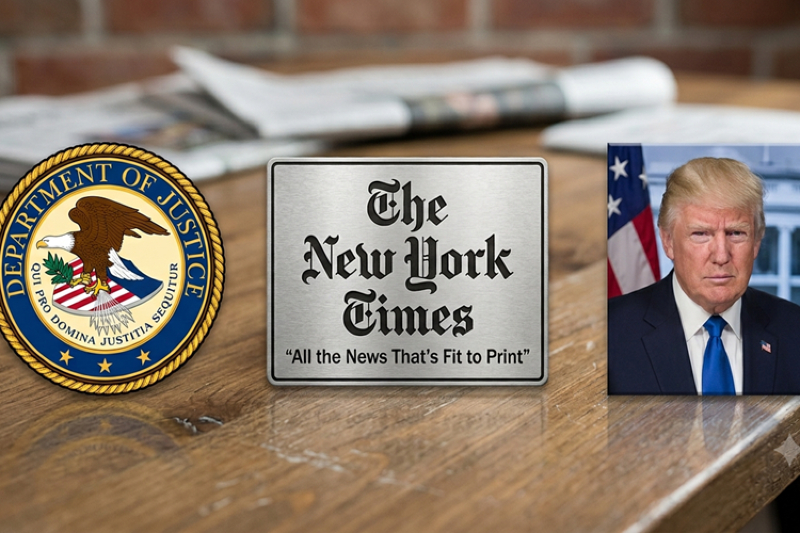
WASHINGTON — In a major escalation of its friction with the press, the Trump administration has issued federal subpoenas to multiple New York Times journalists, demanding they testify regarding their recent coverage of potential security vulnerabilities on the new Air Force One.
According to the newspaper, federal agents personally served the legal summonses to some of the journalists at their private residences.
Security Fears Over the "Qatari Gift"
The aggressive legal response follows a series of articles detailing how President Donald Trump was advised by the Secret Service to change aircraft when departing a NATO summit in Turkey.
The Times reported that the newly commissioned Boeing 747-8—which was given to the United States as an unconditional gift by Qatar last year—allegedly lacks critical defense countermeasures, including advanced anti-missile capabilities.
The $400 million luxury jumbo jet had reportedly been modified by the Air Force to serve the president, with officials initially stating that any previously identified vulnerabilities had been neutralized. However, sources noted that rushing the plane into service left it without the full defensive framework required for high-threat environments.
When questioned about the potential security risks, President Trump dismissed the concerns, telling reporters, "I have a threat all the time.
Press Freedom vs. Government Secrecy
The Department of Justice (DOJ) defended the actions in a statement, emphasizing that the criminal probe is centered on the unauthorized disclosure of classified information rather than the press itself.
"We value and appreciate the important role that the press plays in this country, but DOJ also plays an important role to make sure that the people entrusted with our nation's secrets do what they're supposed to do with that information, which means not sharing classified information,"
the Justice Department stated, adding that "reporters are not the targets, those leaking classified information are."
The New York Times strongly condemned the subpoenas.
McCraw argued that sending federal law enforcement to reporters' doorsteps should shock anyone who believes in constitutional protections, stating the move is "nothing more than an attempt to prevent the public from knowing what is happening in their country by intimidating journalists from doing their jobs."
The development marks a highly volatile period for media relations, arriving at a time when the administration is navigating delicate, high-stakes geopolitical tensions and ceasefire negotiations in the Middle East.