
Escalation in the Gulf: US Launches Fresh Airstrikes as Iran Targets Kuwait and Bahrain, Threatening Ceasefire
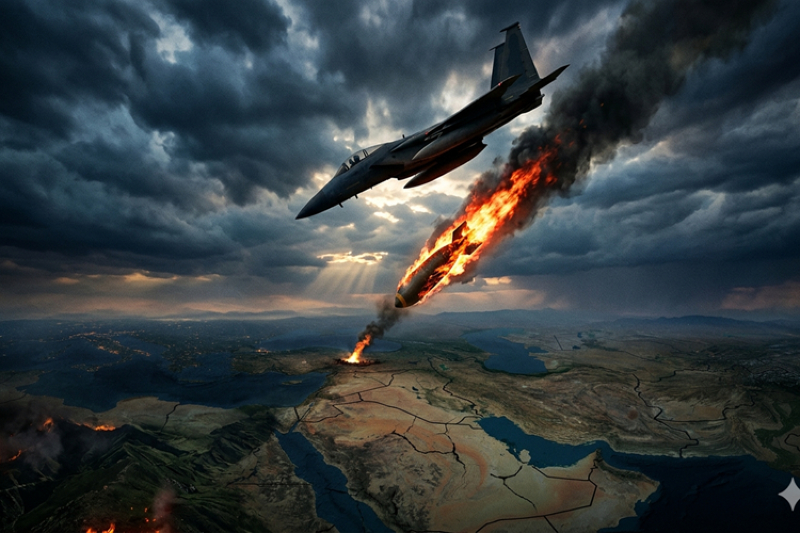
DUBAI, United Arab Emirates — The fragile interim ceasefire between the United States and Iran is on the brink of collapse following a dramatic escalation of military actions in the Persian Gulf.
On Saturday, the U.S. military executed a second round of retaliatory airstrikes against Iranian targets. The action followed a series of drone and missile attacks launched by Tehran against neighboring Bahrain and Kuwait, significantly intensifying regional instability.
U.S. Retaliation Follows Tanker Assault
According to U.S. Central Command (CENTCOM), the latest American airstrikes targeted critical Iranian military assets, including communication networks, surveillance infrastructure, air defense installations, drone storage depots, and minelaying equipment.
The military action was triggered by a Saturday morning strike on the Kiku, a Panamanian-flagged oil tanker. Maritime tracking data indicated the vessel was transporting crude oil for Qatar's state energy company from a Gulf oil field to a port in the United Arab Emirates. The Kiku was reportedly utilizing a newly expanded, Oman-aligned shipping lane designed to bypass Iranian-controlled waters.
U.S. President Donald Trump confirmed the military response on social media, stating that forces hit Iranian drone and missile locations alongside coastal radar stations for "violating the Cease Fire Agreement." He issued a stark warning, suggesting that continued defiance could lead to a decisive military intervention that would threaten the existence of the Islamic Republic.
Cross-Border Strikes Hit Kuwait and Bahrain
Following the U.S. strikes, both Kuwait and Bahrain reported incoming hostilities from Iran.
Kuwait: The Kuwaiti military confirmed early Sunday that its air defense systems successfully intercepted a barrage of Iranian missiles and drones. While no immediate details regarding casualties or damage were released, the incident marks a significant escalation; Kuwait hosts a major U.S. military base and had not been targeted since the implementation of the tentative peace deal.
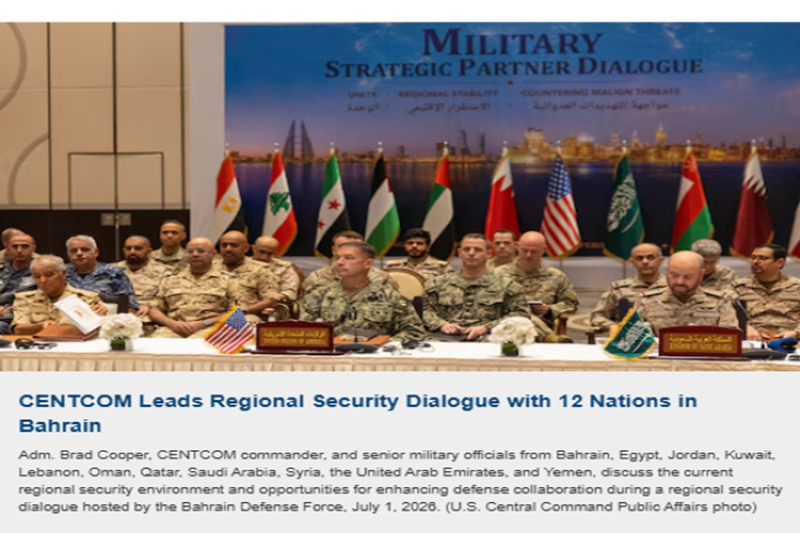
Bahrain: Authorities in Bahrain—home to the U.S. Navy’s 5th Fleet—strongly condemned a separate drone attack on their territory, labeling it a direct threat to national security.
Iran's Revolutionary Guard acknowledged targeting positions belonging to what it termed the "U.S. terrorist army" in the region, though it did not specify the exact locations hit. Meanwhile, Iranian state media reported heavy explosions just north of the strategic Strait of Hormuz.
Shipping Route Extensions Fuel Tensions
The flare-up coincides with an announcement from the U.S. Navy-backed Joint Maritime Information Center, which stated that an alternative shipping route running along the coast of Oman is being expanded to accommodate two-way maritime traffic.
This move directly challenges Tehran's assertion of authority over the Strait of Hormuz. Iranian officials have recently demanded that international vessels follow their directives and have threatened to impose transit fees. The United States and its Gulf allies have rejected these demands, maintaining that the strait is an international waterway.
Maritime authorities have issued warnings to commercial ships regarding a "substantial" threat environment, noting the potential presence of naval mines and ongoing clearance operations.
Ceasefire Deal in Jeopardy
The escalating violence severely complicates diplomatic efforts led by U.S. Vice President JD Vance. Under the current interim framework, Washington and Tehran have a 60-day window to negotiate permanent terms.
Key areas of the high-stakes talks include securing safe passage for global energy shipments through the Strait of Hormuz, addressing Iran's enriched uranium stockpile, and finalizing a cessation of hostilities between Israel and the Iranian-backed Hezbollah network in Lebanon.
Diplomats warn that continued kinetic exchanges could completely derail the diplomatic track before the 60-day deadline is reached.