
Severe Wildfires Overwhelm Madrid as Mass Evacuations Hit Spain and France
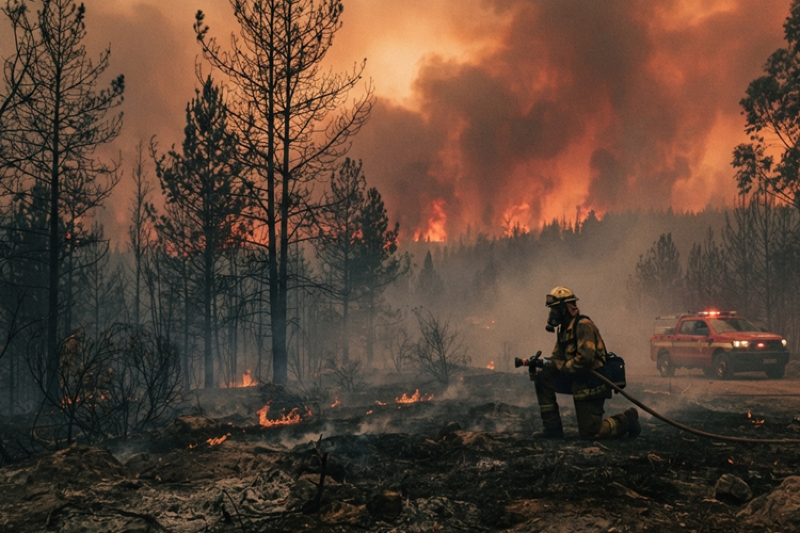
MADRID/PARIS — Emergency services near Madrid are struggling to manage an unprecedented wildfire crisis, with local officials warning that containment efforts have exceeded local capabilities. The disaster has triggered a national state of emergency in Spain, accompanying mass evacuations that have displaced over 140,000 residents across both Spain and France.
Key Developments:
Historic Proportions: Madrid Regional President Isabel Díaz Ayuso characterized the current blazes as the most severe in the region's history, as active fires push toward the western municipal boundaries of Robledo de Chavela and Fresnedillas de la Oliva.
Mass Displacement: Combined estimates from Spain and France place total evacuations above 140,000. Spanish Interior Minister Fernando Grande-Marlaska noted that nearly 60,000 people are directly impacted, including roughly 30,000 evacuees and more than 20,000 individuals placed under strict lockdowns.
France's Gironde Crisis: In southwestern France, thousands of residents and tourists fled the Cap Ferret peninsula by boat as firefighters worked to contain a massive "XXL fire." Strained resources led residents, including off-duty and former firefighters, to use garden hoses to defend properties.
Climate Amplifiers: Climate experts attribute the unusually severe and early Mediterranean wildfire intensity to rapid regional warming. Europe is heating at more than twice the global average, producing dry soils, tinderbox vegetation, and severe heatwaves.
Weather Outlook and Forecast
Madrid Region: Lead Weather Presenter Ben Rich reports that Saturday temperatures are expected to ease slightly to around 29°C (84°F), accompanied by a modest 25% chance of scattered showers and thunderstorms. However, strong afternoon gusts reaching up to 45 km/h (28 mph) threaten to worsen fire spread, while long-term models indicate temperatures could surge back toward 40°C (104°F) next week.
Gironde Region: Patchy rain and thunderstorms moved into France's Gironde region from the Atlantic, offering slight relief. Nevertheless, strong and gusty winds reaching up to 50 km/h (31 mph) continue to fan active flames before dry conditions return next week.