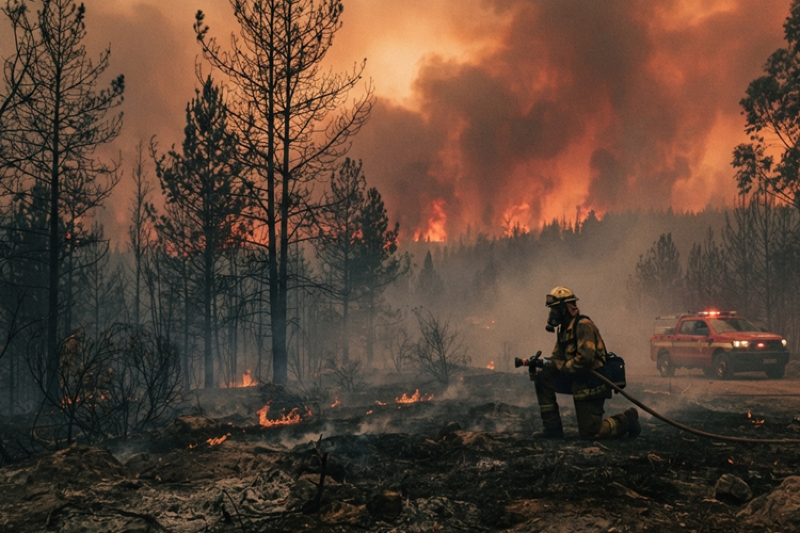

Residents Brace as Category 5 Super Typhoon Bavi Approaches the Mariana Islands
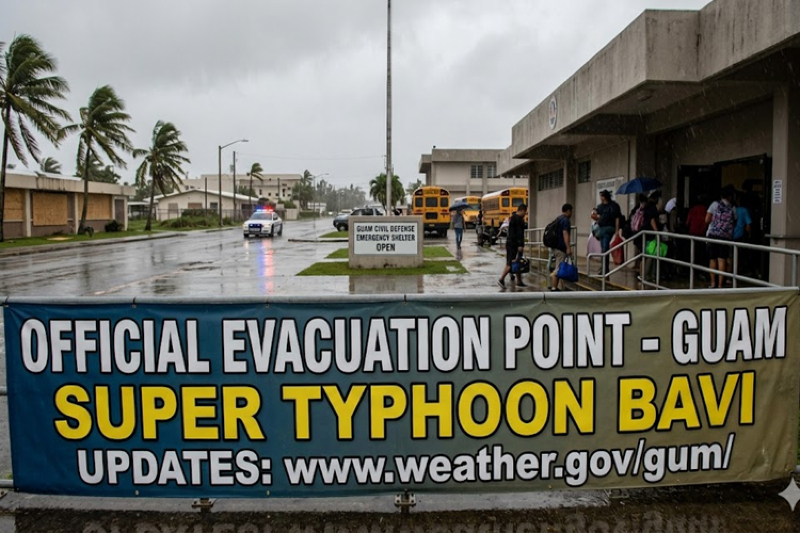
HAGATNA, Guam —Guam and the Northern Mariana Islands are currently under high alert as Super Typhoon Bavi, a powerful Category 5 storm, barrels toward the region.
With landfall expected early Monday morning, local authorities have issued urgent warnings regarding catastrophic damage, life-threatening winds, and severe flooding.
The Current Situation
As of Sunday, July 5, 2026, the storm was tracking west with maximum sustained winds of approximately 265 km/h (165 mph). Forecasters warn that conditions are expected to deteriorate rapidly, with the most severe impact potentially centered near the island of Rota.
Destructive Potential: Meteorologists at the National Weather Service (NWS) have cautioned that the region could face sustained destructive winds for eight to ten hours.
Safety Hazards: The NWS anticipates waves reaching nearly 11 meters (35 feet)—the height of a ten-story building—along with torrential rainfall that could trigger widespread flash flooding and mudslides.
Infrastructure Risks: For areas in the direct path of the storm, experts warn that many non-reinforced structures could sustain total roof failure or wall collapse. Long-term power outages, lasting weeks or months, are highly probable as poles and trees are expected to be brought down by the intensity of the winds.
Emergency Response and Preparations
Government officials have declared Tropical Cyclone Condition of Readiness (TCCOR) 2 and opened emergency shelters. Many residents have spent the weekend securing their properties, boarding up windows, and stocking up on essentials.
Evacuation Efforts: Designated shelters have been opened to accommodate vulnerable residents. Authorities have urged those in flood-prone or unstable housing to evacuate immediately while the window for safe travel remains open.
Economic Impact: The impending storm has disrupted travel, with many flights cancelled. Local business owners are expressing concern over the financial toll, as many are still working to recover from previous climate-related disasters in the region.
Context
This event follows a series of recent powerful storms in the Pacific. Scientists continue to observe that rising sea surface temperatures are contributing to the increased frequency and intensity of such super typhoons.
Bavi’s arrival marks another significant challenge for the US territories, which have already faced multiple severe weather events, including the destructive Super Typhoon Sinlaku that struck the region in April of this year.
"This is a powerhouse super typhoon and this is going to be a very grim outlook for any island that takes a direct hit," meteorologist Landon Aydlett warned as local conditions began to worsen.
For those in the affected areas, please continue to monitor local government advisories and the National Weather Service for real-time updates and evacuation orders.
Are you looking for information on how to find the latest official safety guidance or emergency shelter locations for a specific island in the Marianas?
Official Weather Update Link: https://www.weather.gov/gum/