
Trump to Allies on Strait of Hormuz Crisis: ‘Go Get Your Own Oil’
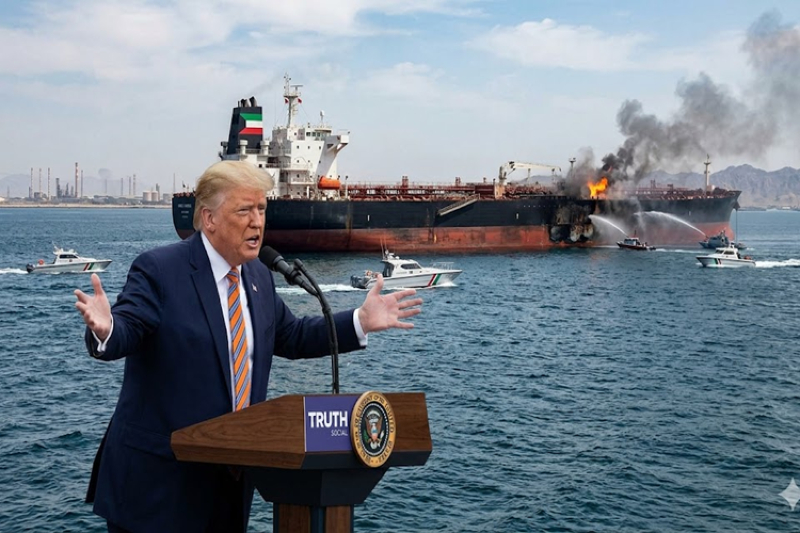
In a dramatic escalation of rhetoric amid a deepening regional conflict, U.S. President Donald Trump has issued a blunt ultimatum to the United Kingdom and other international allies, telling them to secure their own energy shipments in the Strait of Hormuz and "just take it."
The President’s comments come as a Kuwaiti-flagged oil tanker was struck by a drone off the coast of Dubai, further destabilizing global energy markets and pushing jet fuel prices to record highs.
"USA Won't Be There to Help"
Writing on his Truth Social platform, President Trump lashed out at nations he claims have been hesitant to support U.S. military objectives in the Middle East. Addressing countries currently struggling with fuel shortages due to Iran’s maritime blockade, Trump urged them to show "delayed courage."
"You'll have to start learning how to fight for yourself, the U.S.A. won't be there to help you anymore, just like you weren't there for us," Trump wrote.
He specifically targeted France in a follow-up post, labeling the country "unhelpful" for reportedly denying airspace to U.S. military supplies headed for Israel.
The President’s "America First" stance suggests a significant shift in U.S. naval protection for international shipping lanes, a role the U.S. Fifth Fleet has historically maintained.
Tanker Attack Shakes Global Markets
The urgency of the crisis was underscored early Tuesday when the Al-Salmi, a Kuwaiti oil tanker carrying roughly two million barrels of crude oil destined for China, was hit by what officials described as a "brutal Iranian air strike."
Current Status of the Al-Salmi:
Location: Anchored off Dubai Port at the time of the strike.
Casualties: All 24 crew members were reported safe and uninjured.
Environmental Impact: Dubai authorities confirmed that while a fire broke out, it was successfully contained with no oil leakage detected.
Cargo: The vessel was carrying 1.2 million barrels of Saudi crude and 800,000 barrels of Kuwaiti crude.
Regional Conflict Deepens
The maritime strike is part of a broader wave of violence across the Middle East. In Dubai and parts of Saudi Arabia, residential areas have been showered with debris from intercepted missiles and drones, resulting in multiple injuries.
The Human Toll (Since Feb 28):
| Country | Reported Deaths |
|---|---|
| Iran | 3,492 (including 1,574 civilians) |
| Lebanon | 1,247 |
| Israel | 19 (civilians) + 9 (soldiers in Lebanon) |
| Gulf States | 24 (security personnel & foreign workers) |
| United States | 13 (service members) |
Israeli Prime Minister Benjamin Netanyahu stated that the war is "beyond the halfway point" in terms of its strategic goals, including the dismantling of Iran’s nuclear program and arms industry. However, the Israeli Defense Forces (IDF) warned that operations could continue for "weeks to come."
Economic Fallout: $200 Oil and Internet Blackouts
The economic consequences are being felt globally. Korean Air has announced emergency cost-cutting measures as jet fuel prices soared to nearly $200 per barrel—more than double the rate seen in February.
Meanwhile, inside Iran, a total internet blackout has entered its 32nd day. With connectivity at just 1% of normal levels, the Iranian population remains largely isolated from the outside world.
In London, UK Prime Minister Keir Starmer has convened an emergency COBRA meeting to discuss the economic ramifications of the Strait of Hormuz blockade.
With Trump signaling a withdrawal of U.S. protection, the UK and its European partners face the daunting prospect of securing one of the world's most dangerous shipping bottlenecks without American naval backing.