
Japan Anti-War Protests: Thousands Rally in Tokyo Against Defense Policy Shifts
TOKYO — The streets of Japan are witnessing their most significant civil demonstrations in decades as a growing wave of public dissent meets Prime Minister Sanae Takaichi’s push for a more assertive military posture.
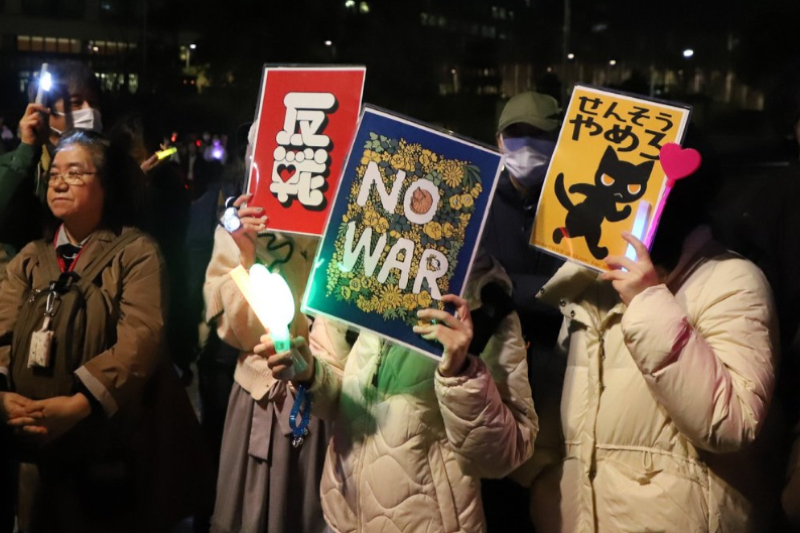
From the rain-slicked corners of Tokyo to the city centers of Osaka and Fukuoka, thousands have gathered under the banner of "No War," signaling a deep-seated anxiety over the nation’s shifting security framework.
A Historic Departure from Pacifism
Since taking office in October 2025, Prime Minister Takaichi has moved swiftly to modernize Japan’s defense capabilities.
On April 21, the government took the landmark step of lifting a long-standing ban on the export of lethal weaponry. This follows a series of policy shifts aimed at expanding the overseas role of the Self-Defense Forces (SDF) and strengthening Japan’s alliance with the United States.
The Takaichi administration argues that these changes are not an abandonment of peace but a "reality check" necessitated by a "severe security environment." With a rising China, an unpredictable North Korea, and a nearby Russia, Tokyo maintains that the pacifist constraints of the post-WWII era must evolve to deter modern aggression.
The Battle Over Article 9
At the heart of the unrest is Article 9 of the 1947 Constitution. Often referred to as the "Pacifist Clause," it renounces war as a sovereign right and prohibits Japan from maintaining a traditional military for the purpose of waging war.
For the hibakusha (atomic bomb survivors) and a significant portion of the public, Article 9 is the moral compass that has kept Japan out of international conflicts for 75 years.
At a recent UN review conference, survivors from Hiroshima and Nagasaki reiterated the plea: "No more war, no more hibakusha."
A Generational Shift in Activism
While anti-war protests in Japan have historically been led by older generations with living memories of the 1940s, the current movement is seeing a surge in participation from those in their 20s and 30s.
Social media platforms like X (formerly Twitter) have become vital tools for organizing, with young activists expressing frustration over what they perceive as a lack of public consultation on major constitutional shifts.
"I’m angry that these changes could be made without properly listening to us," said Akari Maezono, a 30-year-old protester in Tokyo.
A Nation Divided
Despite the scale of the protests, Japanese public opinion remains complex and fractured. Recent polling suggests:
Supporters of Reform: Argue that Japan must be a "war-capable nation" to survive in an unstable region and support allies effectively.
Opponents of Reform: Fear that incremental changes to the constitution will "hollow out" pacifism, eventually dragging the country into overseas conflicts.
As the government moves forward with plans to deploy missiles on islands near Taiwan by 2031, the debate over Japan’s national identity is no longer just a legal discussion—it has become a battle for the soul of the country.