
Tensions Flare as US and Iran Exchange Strikes, Trade Fresh Threats
WASHINGTON / TEHRAN — A fragile two-month truce has been pushed to the brink after the United States and Iran traded military strikes and aggressive rhetoric.
US President Donald Trump warned Tehran that it will "have to pay the price" for delaying a diplomatic resolution, marking a sharp escalation in regional hostility.
The latest conflict erupted following the downing of an American Apache helicopter in the Gulf on Monday.
Washington blamed Iran for the incident, prompting directed US retaliatory airstrikes on Tuesday.
War of Words
Taking to his social media platform, Truth Social, President Trump declared that Iran's military was a "complete and total mess," claiming that large portions of its navy and air force have been effectively neutralized.
"They’ve taken too long to negotiate a deal that would have been great for them, now they will have to pay the price!!!" Trump wrote on Wednesday.
The statements stood in stark contrast to his remarks just a day earlier, when he suggested that both nations were in the final stages of securing a highly favorable agreement.
Iran’s leadership struck back with equal defiance.
The Catalyst: Flashpoint in the Strait of Hormuz
The current flare-up stems from Monday's incident involving a US Army Apache helicopter patrolling near the critical, blockaded Strait of Hormuz.
The Incident: Trump later reported that an Iranian drone struck the low-flying helicopter.
Though the drone failed to detonate, the impact brought the aircraft down. The Rescue: The two American crew members survived uninjured and were pulled from the water by a US naval surface sea drone.
The Denials: While US intelligence indicates an Iranian drone was deployed, Tehran's semi-official Mehr News Agency noted that Iran has not officially claimed responsibility for the downing. Iranian officials suggested the crash could be attributed to technical accidents or crossfire.
Direct Military Confrontation
In what US Central Command (CENTCOM) described as a "proportional response," American fighter jets targeted Iranian military assets near the Strait of Hormuz late Tuesday.
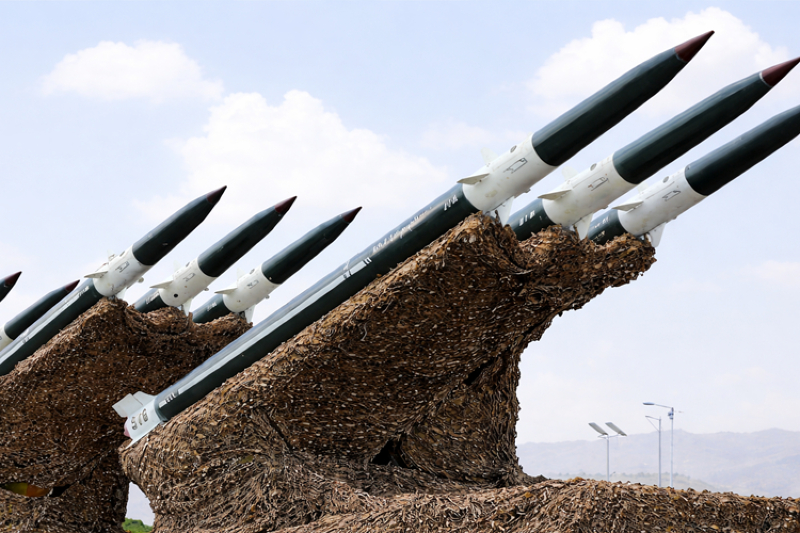
The precision strikes hit radar installations, ground control stations, and air defense frameworks near Qeshm Island, Jask, and Sirik.
Tehran responded rapidly on Wednesday morning, launching an estimated 21 missiles and drones across the region:
Targeted Locations: The Islamic Revolutionary Guard Corps (IRGC) claimed strikes on US assets in Bahrain (home to the US Fifth Fleet) and the Al-Azraq base in Jordan.
Kuwaiti air defenses were also activated to intercept incoming projectiles near its border. Casualties and Damage: US and regional officials confirmed that nearly all of the Iranian assets were intercepted, resulting in no reported casualties.
The IRGC noted that the initial US strikes on Iranian soil damaged a telecommunications tower and structural water reservoirs.
Peace Prospects Fragile
The broader conflict began on February 28, following massive US and Israeli strikes that killed Iran’s Supreme Leader, plunging the region into an intense proxy war that soon enveloped Lebanon.
A temporary, two-week ceasefire broker in April had managed to keep full-scale hostilities at bay, despite intermittent border friction.
The sudden military resurgence has severely fractured ongoing peace talks hosted in Pakistan.