
Netanyahu Claims “Growing Signs” Khamenei Is ‘Gone’ as Iran–Israel Conflict Intensifies (update in slider)
The escalating conflict between Iran and the joint US–Israel alliance entered a dramatic new phase early Sunday after Israeli Prime Minister Benjamin Netanyahu claimed there are “growing signs” that Iran’s Supreme Leader, Ayatollah Ali Khamenei, is “gone” following coordinated strikes on key leadership sites in Tehran.
Speaking after confirmed attacks on what Israeli officials described as senior regime compounds, Netanyahu referred to Khamenei as “this dictator” and suggested that Israel’s military campaign would continue “as long as necessary.” Satellite imagery circulating earlier in the day showed visible damage to parts of the supreme leader’s compound in the Iranian capital, though Iranian authorities have not confirmed any casualty involving Khamenei.
Strikes Across Iran, Heavy Casualties Reported
The United States and Israel carried out extensive strikes across multiple Iranian cities, targeting what they said were military command centers, intelligence infrastructure and strategic regime-linked facilities.
Israeli officials stated that “several senior figures” had been eliminated during the operations, but no independent confirmation has emerged regarding those claims.
Iran’s Red Crescent reported that more than 200 people have been killed nationwide since the attacks began, with hundreds more injured.
Among the most tragic incidents was a strike on a girls’ elementary school in Minab, in Hormozgan province. Iranian state media earlier reported dozens of children killed in the attack, sparking outrage and calls for accountability from Tehran.
Iranian authorities described the strikes as violations of sovereignty and international law and vowed that the loss of civilian lives would not go unanswered.
Iran Retaliates Across the Region
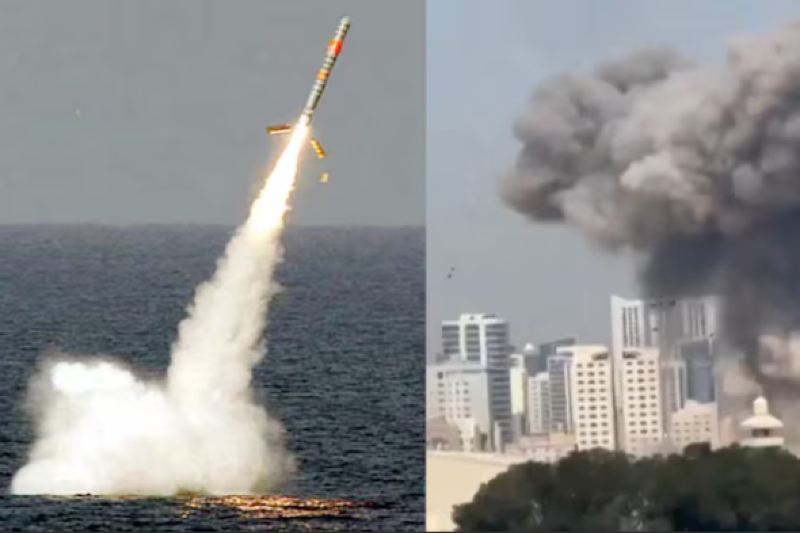
In response, Iran launched waves of missiles and drones across parts of the Middle East. Explosions and interceptions were reported in Dubai, Doha, Bahrain and Kuwait — locations that host US military installations or maintain close security ties with Washington.
Verified footage from Qatar showed what appeared to be a missile falling into a residential area, triggering a large explosion and sending residents running for safety.
Qatar’s Ministry of Foreign Affairs strongly condemned what it called the targeting of its territory with Iranian ballistic missiles, describing it as a “flagrant violation” of national sovereignty and an unacceptable escalation.
Air defense systems across the Gulf were activated as authorities dealt with fires and structural damage in affected areas.
Trump and Netanyahu Call for Regime Change
US President Donald Trump described the strikes as “major combat operations” and urged Iranians to “take over” their government.
In a direct appeal, Netanyahu also addressed the Iranian public, telling them they had a “once in a generation opportunity” to remove the current leadership and encouraging them to “take to the streets en masse.”
The remarks indicate that Washington and Jerusalem may view the current moment as a strategic opening against Tehran’s leadership.
Britain and International Community Respond
UK Prime Minister Keir Starmer confirmed that British aircraft were operating in the Middle East as part of coordinated defensive measures aimed at protecting British personnel and allies.
He called for restraint while emphasizing the need to safeguard regional stability.
The United Nations Security Council scheduled emergency consultations amid mounting fears of broader regional war. Diplomatic efforts appear strained as military operations continue.
Continued Air Operations and Rising Tensions
Israel’s military said its air force continues to operate over Iranian territory. Fresh explosions were reported across parts of Iran late Saturday night into Sunday. Communications from within Iran remain limited, making independent verification difficult.
Energy markets reacted sharply to the escalation, particularly amid concerns over the security of the Strait of Hormuz, a critical global oil shipping route. Any prolonged disruption could have significant global economic consequences.
International observers warn that both sides appear prepared for sustained confrontation. Analysts note that the US and Israel may consider the Iranian regime vulnerable, while Tehran has demonstrated willingness to extend retaliation beyond its borders.
With civilian casualties rising and missile exchanges expanding geographically, the crisis now stands at one of its most dangerous points in decades.