
Strait of Hormuz Crisis: Tehran Rejects Peace Talks Following U.S. Ship Seizure
Tehran/ Islamabad | April 20, 2026
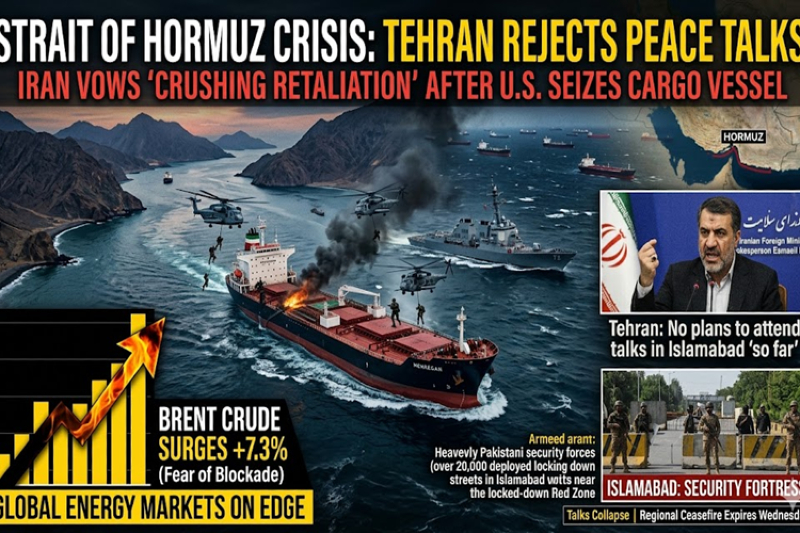
The prospects for a diplomatic breakthrough in the Middle East have darkened significantly today as Iran officially announced it has no plans to participate in scheduled negotiations with the United States.
The decision follows a dramatic escalation in the Strait of Hormuz, where U.S. Marines seized an Iranian-flagged cargo vessel on Sunday.
Escalation in the Strait: "Armed Piracy"
The seizure of the Iranian vessel, which Washington claims was attempting to bypass a naval blockade, has been characterized by Tehran as "armed piracy." Iran’s Joint Military Headquarters of Khatam ul Anbiya issued a stern warning shortly after, vowing that there will be a "crushing retaliation" for the incident.
In a press conference held on Monday, Iranian Foreign Ministry spokesperson Esmaeil Baghaei stated that the government has no intention of attending the proposed talks in Islamabad "so far." While analysts suggest the "so far" leaves a narrow window for diplomacy, the overall mood in Tehran is one of deep distrust toward the Trump administration.
Pakistan on High Alert
The diplomatic standoff comes at a time when Pakistan has already turned Islamabad into a high-security fortress. In anticipation of the talks—which U.S. President Donald Trump had announced just hours before the ship seizure—Pakistan deployed over 20,000 security personnel and locked down major portions of the capital. Despite the massive security apparatus, the primary seats at the table now appear likely to remain empty.
Global Economic Impact: Oil Prices Surge
The volatility in the Strait of Hormuz—one of the world's most critical oil transit chokepoints—has sent shockwaves through global markets.
Brent crude futures jumped more than 7% in Asian trading on Monday. Investors fear that a complete closure of the Strait, a move Iran has recently threatened to reinstate, could lead to a global energy crisis.
The Lebanon Connection
The collapse of the talks is deeply intertwined with the fragile 10-day ceasefire between Israel and Hezbollah in Lebanon.
Tehran cited the continuation of ceasefire breaches on the Lebanese front as a primary reason for reversing its decision to keep the Strait of Hormuz open.
While thousands of Lebanese citizens have returned to the south to inspect their homes, the Israeli military continues to report strikes on "ready-to-fire" launchers in areas like Kfarkela.
What’s Next?
With the regional ceasefire set to expire this Wednesday, the clock is ticking for a diplomatic settlement. President Trump has reiterated threats to target Iran’s infrastructure, including power plants and bridges, if a deal is not reached.
However, with Tehran refusing to sit at the table and oil prices climbing, the region stands at its most "brittle" point in years.