
Iranian Gunboats Open Fire in Strait of Hormuz as Tehran Reimposes Waterway Restrictions
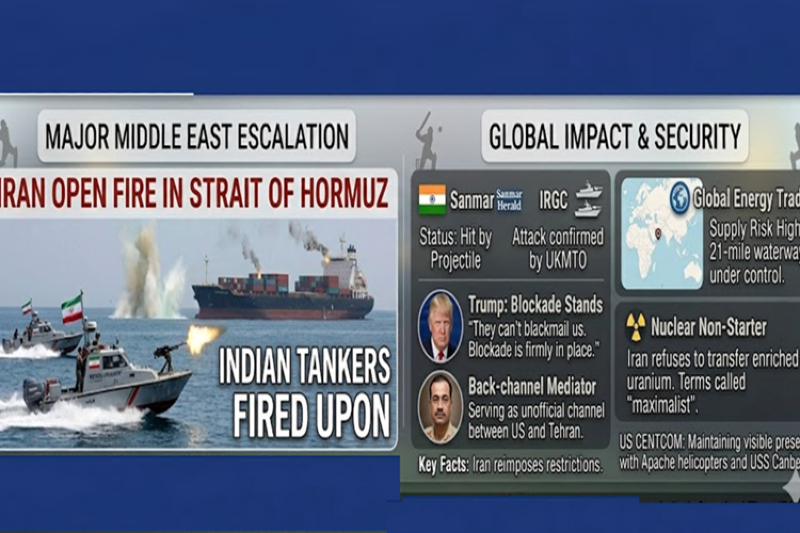
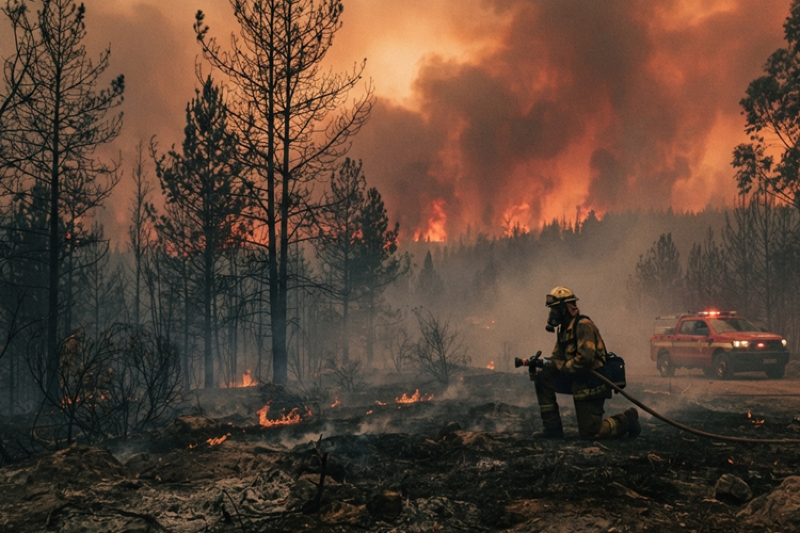
WASHINGTON/ TEHRAN — Global maritime security faced a sharp escalation on Saturday as Iranian Revolutionary Guard gunboats reportedly opened fire on commercial vessels in the Strait of Hormuz.
The incident marks a dramatic reversal from Tehran's earlier signals that it would reopen the vital waterway, which serves as a primary artery for global oil shipments.
Gunfire and Blockades: A Dangerous Standoff
According to reports from the British military and the United Kingdom Maritime Trade Operations (UKMTO), at least two Iranian gunboats targeted a tanker 25 nautical miles northeast of Oman.
While the vessel and crew were reported safe, a second merchant ship was reportedly struck by a projectile, forcing several other tankers to reverse course and abandon their transit through the strait.
The Sanmar Herald, an Indian-flagged vessel carrying crude oil, was among the ships caught in the crossfire. In response, New Delhi officially summoned the Iranian ambassador to express "deep concern" over the safety of Indian mariners and merchant shipping.
Diplomatic Friction: Trump vs. Tehran
The sudden closure comes just 24 hours after Iranian Foreign Minister Abbas Araghchi had hinted at reopening the strait following a ceasefire in Lebanon.
However, Tehran quickly walked back that stance, citing the ongoing U.S. naval blockade of Iranian ports as the primary reason for the renewed restrictions.
From the Oval Office, U.S. President Donald Trump dismissed the move as an attempt at "blackmail," asserting that the American blockade remains firmly in place.
"They got a little cute," Trump told reporters on Saturday. "They wanted to close up the strait again... but they can't blackmail us. Negotiations are actually going along very well."
Despite Trump's optimism, Iranian officials have rejected key U.S. demands. Deputy Foreign Minister Saeed Khatibzadeh explicitly stated that Iran would not hand over its enriched uranium, calling the American terms "maximalist" and "non-starters."
The Role of Back-Channel Diplomacy
In a surprising turn of events, Pakistan’s Army Chief, General Asim Munir, has emerged as a central figure in the mediation efforts. Recently thanked by President Trump on social media, Munir has reportedly been acting as an informal back-channel between Washington and Tehran. His recent visit to Iran—the first by a foreign military leader since the escalation—highlights the critical role of regional players in preventing a full-scale conflict.
Global Market and Security Impact
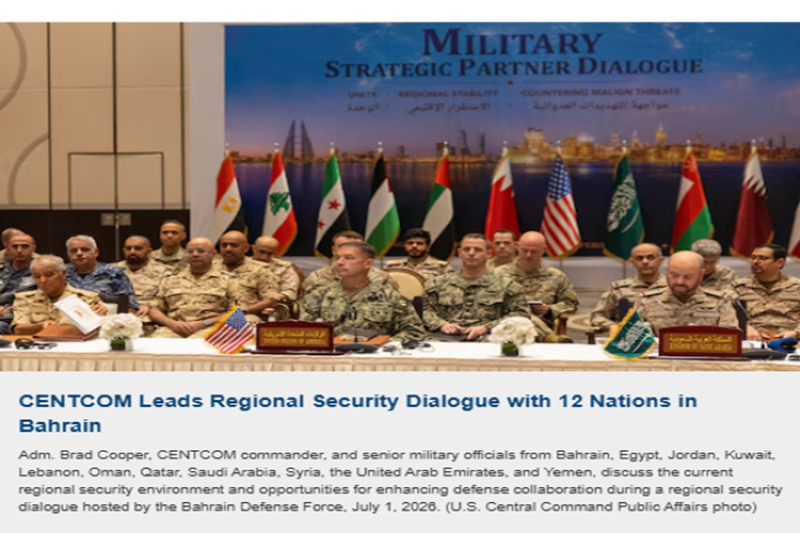
As the Strait of Hormuz remains under the "full control" of the IRGC, the maritime industry remains on high alert. U.S. Central Command (CENTCOM) confirmed that its forces are maintaining a "visible presence," with Apache helicopters and the USS Canberra patrolling the region. Since the blockade began, at least 23 ships have complied with U.S. orders to turn back.
With Iran describing its uranium enrichment as "as sacred as Iranian soil," the path to a permanent diplomatic resolution remains fraught with obstacles. For now, the world watches the narrow 21-mile-wide strait, where the intersection of energy security and geopolitical brinkmanship continues to threaten global stability.
Key Highlights
Strategic Closure: The Strait of Hormuz is effectively closed under IRGC control.
Indian Shipping Targeted: Indian-flagged tankers were among those fired upon, leading to a diplomatic row between New Delhi and Tehran.
Nuclear Non-Starter: Iran officially refuses to transfer enriched uranium to the United States.
U.S. Stance: President Trump maintains the naval blockade until all demands are met.