
Former Prime Minister Begum Khaleda Zia Passes Away
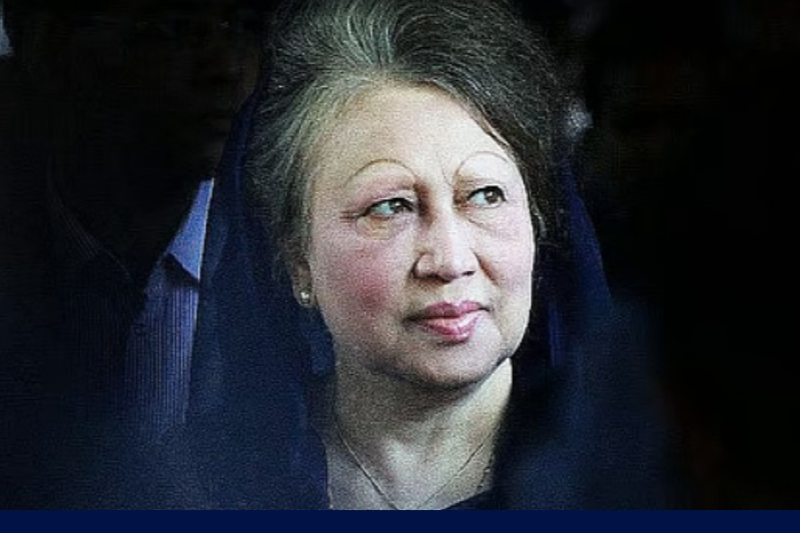
Bangladesh: Former Prime Minister of Bangladesh and BNP Chairperson Begum Khaleda Zia passed away on Tuesday morning. (Inna Lillahi wa Inna Ilaihi Raji’un)
She breathed her last at around 6:00am on December 30. She was 79.
BNP Standing Committee member Salahuddin Ahmed told the media at around 7:15am that the party’s Acting Chairman Tarique Rahman had informed him of the news, saying, “Mother is no more.”
The BNP Media Cell also confirmed her death in a post on its official Facebook page. In a separate statement, the party’s verified page said that Begum Khaleda Zia passed away shortly after Fajr prayers. The party sought prayers for the forgiveness of her soul and expressed deep condolences.
Begum Khaleda Zia had been suffering from multiple health complications for a long time, including heart disease, diabetes, arthritis, liver cirrhosis, and kidney-related problems.
She was admitted to Evercare Hospital in Dhaka on November 23 after experiencing breathing difficulties.
A medical board comprising local and foreign specialists had been overseeing her treatment. Although there were efforts to take her abroad for advanced care, her deteriorating physical condition made it impossible.
Khaleda Zia was the Chairperson of the Bangladesh Nationalist Party (BNP) and served as the Prime Minister of Bangladesh three times, beginning in 1991.
She holds a historic place in the country’s politics as Bangladesh’s first female prime minister and the second elected female head of government in the Muslim world.
She was born on August 15, 1945, in Dinajpur to Iskandar Majumder and Taiba Majumder. Following the partition of India, her father moved to what was then West Pakistan. The family’s ancestral home is in Feni. Khaleda Zia studied at Dinajpur Government Girls’ High School and later at Surendranath College. She married Ziaur Rahman in 1960.
After Ziaur Rahman became President, Khaleda Zia served as First Lady and accompanied him on several state visits abroad.
During this period, she met a number of world leaders, including former British Prime Minister Margaret Thatcher and Queen Juliana of the Netherlands.
Following the assassination of President Ziaur Rahman in a failed military coup in 1981, Khaleda Zia formally entered politics. She joined the BNP as a general member on January 2, 1982, became vice-chairperson in March 1983, and was elected party chairperson in August 1984.
She leaves behind a significant political legacy. Khaleda Zia never lost an election in any constituency she contested. Between 1991 and 2001, she won elections from five different constituencies. In the 2008 general election, she contested three seats and emerged victorious in all of them.
Begum Khaleda Zia’s death marks the end of an era in Bangladesh’s political history, and her passing has drawn widespread reactions across the country.