
Ukrainian Woman Sentenced to 15 Years for Spying for Russian Intelligence
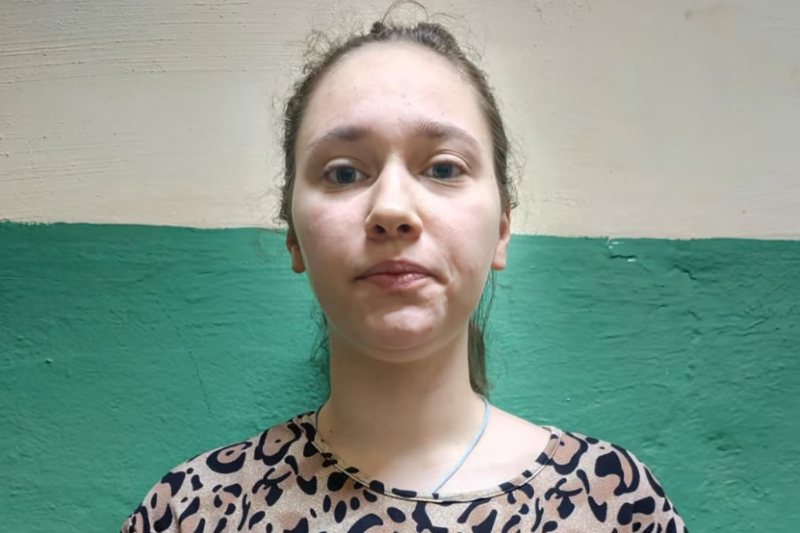
Feb 11, 2026: A 19-year-old Ukrainian woman has been sentenced to 15 years in prison after being convicted of collaborating with Russian intelligence during the ongoing war between Ukraine and Russia.
Hrystyna Garkavenko, the daughter of a priest from Pokrovsk in eastern Ukraine, was found guilty of treason for passing sensitive military information to Russia’s Federal Security Service (FSB).
Prosecutors said she provided details about Ukrainian troop movements and equipment locations in her hometown, a key logistical hub near the front lines.
According to court findings, Garkavenko used a mobile phone to livestream footage of a road frequently used by Ukrainian military vehicles.
Authorities stated that the video feed was transmitted directly to Russian intelligence operatives.
Investigators also said she maintained communication with an FSB contact over several months, sharing information about military positions and infrastructure.
In a phone interview from prison, Garkavenko acknowledged her actions and said she regretted the decision.
She claimed her initial contact with the Russian agent began as a casual online conversation through Telegram before evolving into cooperation.
While she admitted receiving payment, she suggested that personal communication played a significant role in her involvement.
Regional prosecutors indicated that her relationship with the contact may have extended beyond simple communication, though specific details were not publicly disclosed.
Thousands of Treason Cases Since 2022
Ukrainian authorities say her case is part of a broader pattern of recruitment efforts by Russian intelligence services.
Since Russia launched its full-scale invasion in February 2022, Ukraine’s Security Service (SBU) reports that thousands of treason investigations have been opened.
More than a thousand individuals have already been convicted, with sentences typically ranging from 12 to 15 years. In severe cases, courts have imposed life imprisonment.
Officials say the majority of suspects are accused of transmitting information about military deployments, infrastructure facilities, and strategic sites.
In frontline regions, individuals are more often charged with sharing details about troop positions. In central and western Ukraine, cases frequently involve surveillance of infrastructure such as railways, power plants, and government buildings.
Legal experts note that Ukrainian courts require evidence before proceeding to trial and emphasize adherence to due process standards.
Defense lawyers familiar with such cases say prosecutors generally file charges only when substantial proof has been collected.
Recruitment Methods and Motivations
Security officials describe recruitment tactics as increasingly sophisticated. Social media and messaging platforms are commonly used to approach potential collaborators.
Initial tasks are reportedly minor and designed to build trust before escalating into more serious assignments, such as photographing military sites or installing surveillance equipment.
Authorities say financial incentives are often modest, typically a few hundred dollars.
Some individuals are allegedly targeted because of economic hardship or personal vulnerabilities.
Investigators also warn that once communication begins, recruiters may resort to intimidation or blackmail if a recruit attempts to withdraw.
While financial motivation is common, officials acknowledge that personal relationships, ideological beliefs, or family connections in Russia can also influence decisions.
Broader Impact and Sentencing
The Ukrainian government has treated collaboration cases as a serious national security issue during wartime.
Prosecutors argue that sharing military coordinates or surveillance footage can directly endanger lives.
In Garkavenko’s case, she pleaded guilty and expressed remorse during trial proceedings.
Prosecutors stated that her cooperation may have influenced the length of her sentence. She is currently serving her term in a penal colony designated for individuals convicted of crimes against national security.
Some convicted individuals reportedly hope to be included in future prisoner exchanges between Ukraine and Russia. However, officials caution that such exchanges are uncertain and not guaranteed.
Ongoing Security Concerns
Ukrainian counterintelligence services say they continue to uncover new suspected collaboration networks on a regular basis.
Authorities maintain that the conflict has created an environment in which intelligence recruitment efforts remain active across multiple regions of the country.
As the war continues, officials emphasize vigilance, stating that preventing information leaks remains critical to national defense efforts.