
International Contracts Cannot Be Cancelled Arbitrarily, Says Energy Adviser on Adani Power Deal
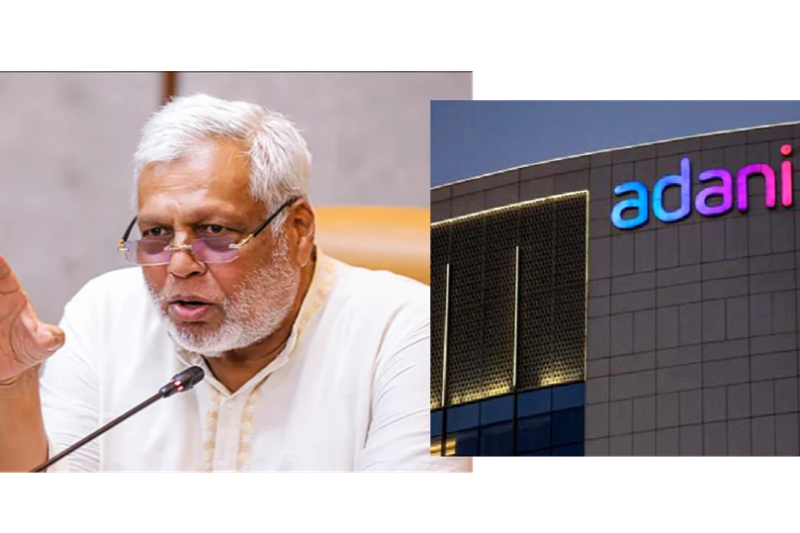
Dhaka, Feb 9, 2026: Energy Adviser Muhammad Fouzul Kabir Khan has said that international agreements cannot be revoked at will, commenting on ongoing public discussion over Bangladesh’s power purchase agreement with India’s Adani Group. He emphasized that any final decision regarding the contract will be taken by the country’s elected government.
The adviser made the remarks on Sunday while speaking to journalists after a stakeholder consultation meeting on the Integrated Energy and Power Sector Master Plan (IEPSMP) 2026–2050 at the Power Division headquarters in Dhaka.
Responding to questions about the possibility of cancelling the Adani power deal, Fouzul Kabir Khan said Bangladesh has maintained a neutral and independent position regarding foreign investors.
He added that the government has avoided actions that could be perceived as politically motivated or unfairly targeted.
“We did not want to create the impression that the government was engaging in any form of witch-hunting,” he said, noting that a national committee had been formed earlier to review such agreements. According to him, the committee’s report has now been finalized.
Framework left for next government
The energy adviser said the current administration is preparing a policy framework to ensure that the next elected government does not face unnecessary pressure in managing the energy and power sector.
He added that while the master plan outlines long-term goals, the incoming government will have the authority to revise or amend it if necessary.
During the meeting, speakers stressed the growing importance of renewable energy in Bangladesh’s future power mix. Bangladesh Energy Regulatory Commission (BERC) Chairman Jalal Ahmed warned that failure to shift toward renewable electricity could have serious trade consequences.
He said that if 42% of electricity used in any sector does not come from renewable sources by 2030, the European Union may restrict imports from that sector.
Highlighting the garment industry, he noted that expanding renewable energy is essential to protect Bangladesh’s export earnings.
Calls for climate alignment and coal reduction
Industry representatives and environmental officials also raised concerns about climate commitments. Salahuddin Yusuf, a director of BNO Lubricants, said the master plan must be assessed against global net-zero carbon emission targets to ensure long-term compatibility.
Meanwhile, Mirza Shawkat Ali, Director (Climate Convention) at the Department of Environment, argued that coal use should be excluded from the master plan altogether.
He warned that continued reliance on coal could weaken Bangladesh’s position in international climate negotiations.
Addressing these concerns, the energy adviser acknowledged resistance within the sector toward renewable energy but said progress had still been made despite challenges.
He clarified that the current government would not approve the master plan, leaving the decision to the next elected administration.
The meeting was attended by representatives from political parties and civil society, including Rajekuzzaman Ratan, assistant general secretary of the Bangladesh Socialist Party (BASAD), and Didarul Alam of the State Reform Movement. Participants called for a people-oriented energy policy, price stability, and stronger accountability mechanisms.