
Bangladesh Foreign Minister Khalilur Rahman Elected President of 81st UN General Assembly
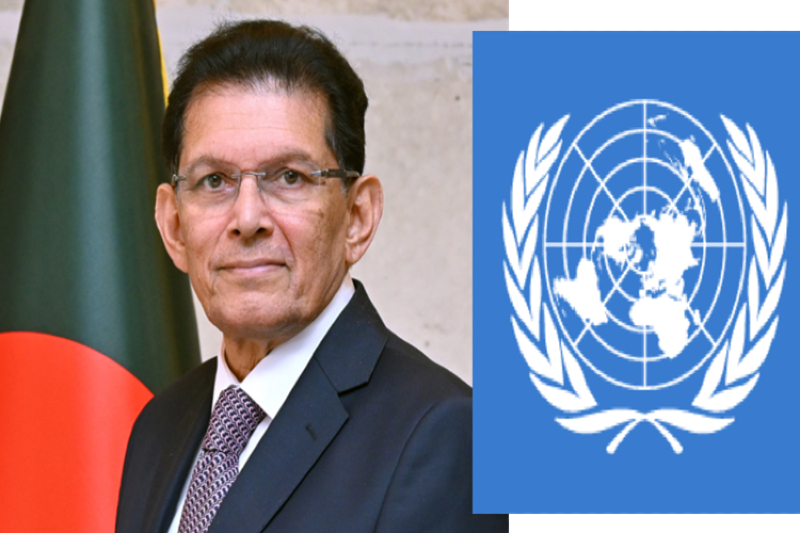
NEW YORK — In a historic diplomatic triumph, Bangladesh's Foreign Minister Khalilur Rahman has been elected as the President of the 81st session of the United Nations General Assembly (UNGA).
In a closely watched secret ballot held at the UN Headquarters in New York on Tuesday, Rahman secured victory by defeating Andreas S. Kakouris, the Special Envoy of the Foreign Minister of Cyprus, by a margin of 8 votes.
The Bangladeshi Foreign Minister bagged 99 votes against Kakouris’s 91. Out of the 193 member states, a total of 190 cast their ballots during the voting session, which commenced at 10:00 AM local time in the presence of UN Secretary-General António Guterres.
Rahman will officially assume his role when the 81st session commences on September 8, leading up to the high-level General Debate on September 22, where heads of state and government will deliver their addresses.
A Boost to Bangladesh's Diplomatic Standing
According to a press release from the Permanent Mission of Bangladesh to the UN, this victory is a resounding testament to the international community's trust, acceptance, and growing diplomatic leverage in global affairs.
This marks the second time a representative from Bangladesh will preside over the UN General Assembly. Exactly four decades ago, in 1986, the eminent diplomat and politician Humayun Rashid Choudhury served as the President of the 41st UNGA session during his tenure as Foreign Minister.
A seasoned career diplomat, Khalilur Rahman brings decades of multilateral experience to the prestigious role. Having spent a significant portion of his career at UN headquarters in Geneva and New York,
Rahman joined the United Nations Conference on Trade and Development (UNCTAD) in Geneva as a Special Advisor in 1991. He subsequently spent 25 years serving in various senior positions within the UN system, frequently acting as the lead author for major UN publications.
Strategy Overcomes a Decade-Long Campaign
Diplomatic sources revealed that Bangladesh’s victory was heavily bolstered by strategic "Reciprocal Support Arrangements" (RSA)—mutual agreements where nations pledge to vote for one another in international forums. Bangladesh's superiority in securing these commitments proved decisive.
Key Takeaway: While Cyprus had officially declared its candidacy back in 2016 and campaigned for an entire decade, Bangladesh only finalized Khalilur Rahman as its nominee on February 27 of this year.
Despite a compressed three-month window for active lobbying, Dhaka launched an intensive, highly strategic campaign.
Through high-level bilateral meetings, targeted outreach, and proactive engagement across multilateral platforms, Bangladesh successfully rallied the necessary global backing to overcome Cyprus's ten-year head start.
Following the announcement of the results, the Government of Bangladesh expressed its deep gratitude to the UN member states for their support and reaffirmed its unwavering commitment to upholding the core principles and objectives of the United Nations Charter.