
US Navy Authorized to Shoot Mine-Laying Vessels as Tensions Flare in Strait of Hormuz
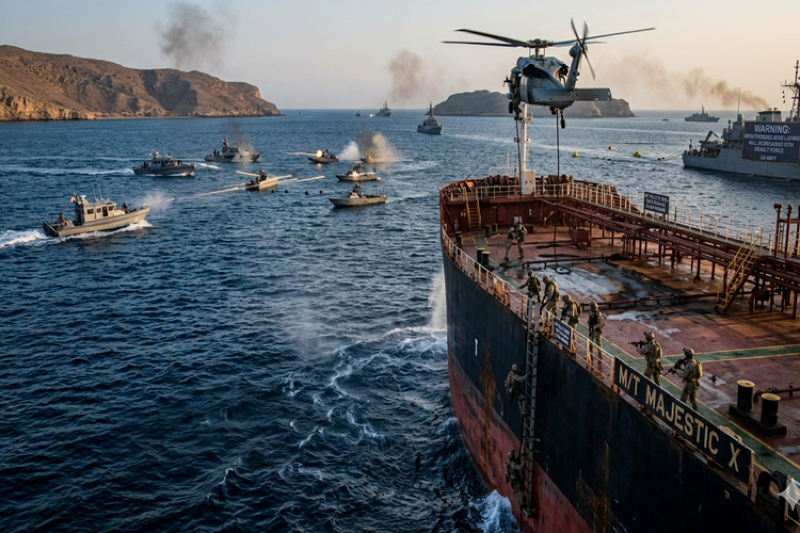
WASHINGTON/ TEHRAN – Global maritime tensions reached a critical flashpoint on Thursday as US President Donald Trump issued a "shoot to kill" order against Iranian vessels suspected of planting mines, while American special forces boarded a sanctioned oil tanker in the Indian Ocean.
The escalation comes as the strategic Strait of Hormuz remains gripped by rival blockades. President Trump, speaking via social media and in a brief call with the BBC, asserted that the United States maintains "total control" over the waterway.
He warned that any small boats caught attempting to disrupt shipping lanes with explosives would be engaged without hesitation.
"I have ordered the United States Navy to shoot and kill any boat... that is putting mines in the waters of the Strait of Hormuz," the President stated, adding that US minesweepers are currently working to clear the channel.
Maritime Interdictions and "Toll" Disputes
As the rhetoric intensified, the US Department of Defense confirmed that its forces conducted a "right-of-visit" boarding of the M/T Majestic X in the Indian Ocean.
The vessel, described as a stateless sanctioned tanker, was reportedly transporting Iranian oil. This operation is part of a broader US naval blockade designed to "strangle" Iran’s economy by intercepting material support.
Simultaneously, a new economic battlefront has emerged. Tehran has begun demanding compulsory transit fees from vessels passing through the Strait, a move international maritime experts call an "anathema" to established global trade protocols.
While the Iranian parliament claimed the first "tolls" have already been deposited into their central bank, Trump has previously threatened to target any commercial ship that complies with Iran's payment demands.
Analysis of the Conflict
The current standoff represents a fundamental clash of strategies:
The US Position: Utilizing "pinprick strikes" and a naval blockade to force Tehran into a new diplomatic agreement.
The Iranian Position: Testing the "longer clock" theory, betting that their economy can absorb more pain than the US political appetite for a sustained conflict.
Meanwhile, the human cost of the blockade is mounting. Tanker crews stranded in the Gulf described a harrowing environment, with one captain reporting missiles passing overhead and a sense of being "exposed" to constant danger.
Regional Instability
The maritime friction is mirrored by volatility on land. In Southern Lebanon, a fragile 10-day ceasefire is being tested by daily reports of violations.
Lebanese officials have accused Israel of war crimes following the death of journalist Amal Khalil in an airstrike, while the IDF maintains it is targeting Hezbollah launch sites.
As Pakistan and other mediators scramble to find a diplomatic off-ramp, the Strait of Hormuz—the world’s most important oil chokepoint—remains a powder keg, with both Washington and Tehran showing no signs of blinking first.