
🔴 LIVE High-Stakes Diplomacy: US and Iran Set for Face-to-Face Talks in Islamabad
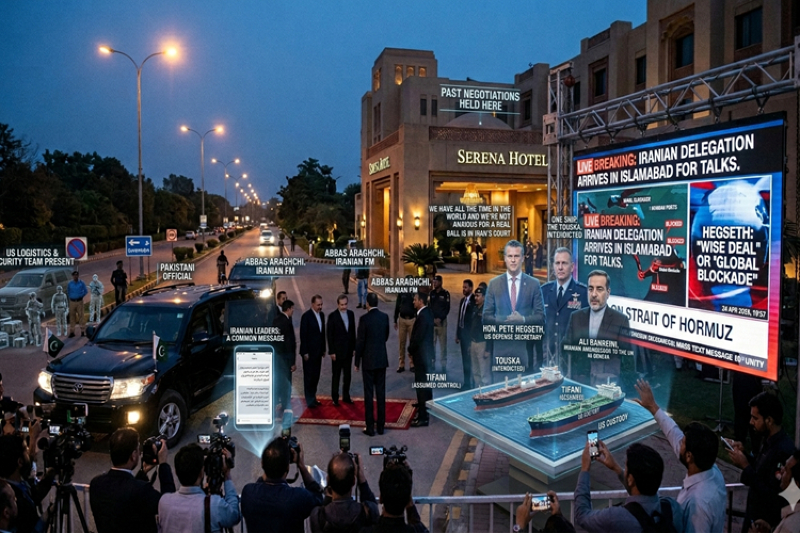
ISLAMABAD / WASHINGTON — In a critical move to break a weeks-long diplomatic deadlock, the White House has confirmed that US Special Envoy Steve Witkoff and senior advisor Jared Kushner will fly to Pakistan on Saturday morning for direct negotiations with Iranian representatives.
The talks, hosted in Islamabad, come at a pivotal moment as the Trump administration intensifies its "maximum pressure" campaign while simultaneously signaling a willingness to reach a landmark deal to end the regional conflict.
US Strategy: The Carrot and the Stick
White House Press Secretary Karoline Leavitt stated that the US delegation is heading to Pakistan to "hear the Iranians out" following recent signs of progress.
Standby Personnel: Vice President JD Vance and Secretary of State Marco Rubio are reportedly on standby in Washington, ready to fly to Islamabad if the initial talks yield enough momentum to warrant high-level signatures.
The "Ironclad" Blockade: Despite the diplomatic opening, the US continues to tighten its military grip.
Defense Secretary Pete Hegseth announced that the US naval blockade of Iranian ports is "growing and going global," revealing that 34 ships have already been turned back. Maritime Action: Hegseth confirmed the recent seizure of the commercial vessel Touska and the tanker Tifani, which was carrying roughly 2 million barrels of sanctioned oil.
He warned that the US presence in the Strait of Hormuz is expanding with the arrival of a third aircraft carrier, the USS George HW Bush.
Iran’s Position: Diplomacy Amidst Defiance
Iranian Foreign Minister Abbas Araghchi is slated to arrive in the Pakistani capital as part of a broader regional tour that includes stops in Oman and Russia.
"Iran has an open window to make a good, wise deal—to abandon a nuclear weapon in meaningful and verifiable ways," Secretary Hegseth remarked during a Pentagon briefing, framing the choice currently facing the leadership in Tehran.
However, the Iranian Mission to the UN has struck a more combative tone regarding the naval blockade, labeling the seizure of the Touska—which they claim was carrying critical medical supplies—as a "flagrant breach of international law."
The Broader Regional Context
The Islamabad summit is unfolding against a backdrop of fragile stability elsewhere in the Middle East:
Lebanon Ceasefire: President Trump recently announced a three-week extension of the ceasefire between Israel and Lebanon.
While Trump expressed optimism about hosting leaders from both nations at the White House soon, the truce remains tenuous. Violations on the Ground: Both the IDF and Hezbollah have accused each other of violations. Verified reports indicate recent Israeli strikes on the village of Deir Aames in southern Lebanon, which Israel claims were retaliatory strikes against Hezbollah rocket launch sites.
Local Skepticism: In Beirut, residents remain wary. Many displaced civilians returning to the southern suburbs report that while the bombs have largely stopped, the presence of Israeli drones and the scale of destruction make a permanent peace feel distant.
What’s Next?
The success of the Islamabad talks hinges on whether Witkoff and Kushner can bridge the gap between Washington’s demand for total nuclear disarmament and Tehran’s demand for the lifting of the crippling naval blockade.
With Pakistan acting as the "incredible mediator," the coming 48 hours are expected to determine if the region moves toward a comprehensive settlement or a renewed escalation.