
US Navy Secretary John Phelan Ousted 'Effective Immediately' Amid Gulf Crisis
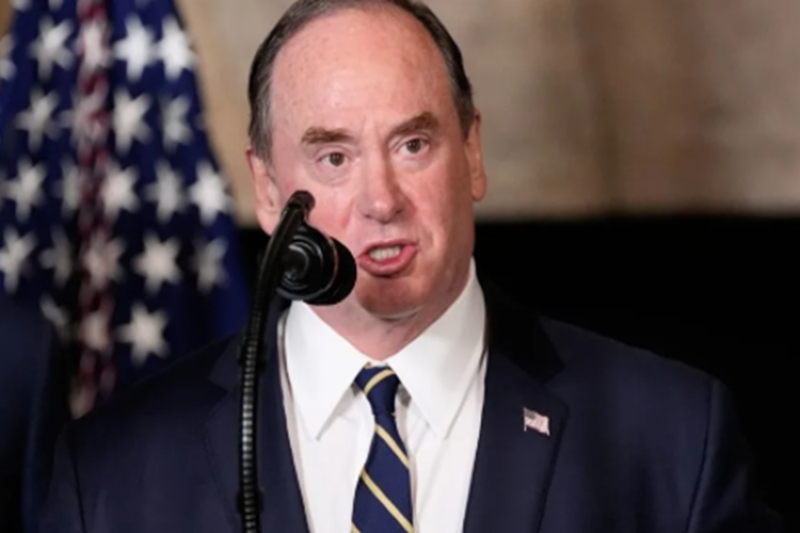
WASHINGTON — In a sudden and high-profile shake-up of American military leadership, U.S. Navy Secretary John Phelan has been removed from his post "effective immediately."
The Pentagon announced the departure late Wednesday, marking another major exit during a period of escalating maritime tension in the Middle East.
Abrupt Departure
Pentagon spokesman Sean Parnell confirmed the news via social media, stating that Phelan—the top civilian official for the Navy—is leaving the administration.
The move was particularly unexpected as Phelan had been actively carrying out his duties just hours prior, addressing sailors and industry leaders at a naval conference in Washington and discussing his long-term agenda with reporters.
Transition to Experienced Leadership
Hung Cao, the current Navy Undersecretary and a 25-year veteran of the service, has been tapped to serve as the Acting Secretary of the Navy.
Cao is a retired Navy Captain with extensive combat experience in Iraq, Afghanistan, and Somalia.
Cao is also a familiar political figure, having run a high-profile, Trump-endorsed campaign for the U.S. Senate in Virginia in 2024.
A Pattern of Pentagon Firings
Phelan’s exit is the latest in a series of dramatic leadership changes orchestrated by Secretary of War Pete Hegseth.
Gen. Randy George, the Army Chief of Staff.
Maj. Gen. William Green, the Chief of Chaplains.
Gen. David Hodne, Commander of Army Transformation.
Hegseth has also reportedly dismissed the Chief of Naval Operations and the Air Force’s Vice Chief of Staff as part of a broader mandate to reshape the military’s top brass.
Context: The Strait of Hormuz Standoff
The leadership change comes at a critical moment for the U.S. Navy, which is currently enforcing a strict blockade of Iranian ports.
The situation in the Strait of Hormuz remains volatile.
With the U.S. Navy actively turning back ships and Iran retaliating with seizures, the appointment of an experienced combat veteran like Cao suggests a shift toward a more battle-hardened posture in the Persian Gulf.
The primary reasons for his sudden ousting include:
Failure on Shipbuilding: A major source of frustration was the lack of progress in revitalizing the American shipbuilding industry, a cornerstone of President Trump’s "Golden Fleet" initiative.
Many of the Navy's core programs were reportedly behind schedule and over budget under Phelan's watch. Controversial Outsourcing Comments: Just days before his removal, Phelan drew sharp criticism for signaling an openness to outsourcing the construction of U.S. warships to foreign shipyards.
This stance directly contradicted the administration's "America First" strategy for national defense and was viewed by many as a "grave strategic error." Internal Infighting: Phelan reportedly clashed repeatedly with Secretary Hegseth and other top officials over his management style and specific personnel decisions.
There was a growing perception within the Pentagon that Navy leadership was resisting the administration’s intended ideological and strategic direction. The "Loyalty" Overhaul: His removal is part of a broader "wartime shakeup" led by Hegseth, who has already dismissed more than a dozen senior military leaders.
The administration appears to be replacing civilian and military heads who do not align perfectly with their vision for a more aggressive and ideologically unified Department of Defense.