
Trump Signals Possible Wind-Down in Iran War, Urges Others to Secure Hormuz
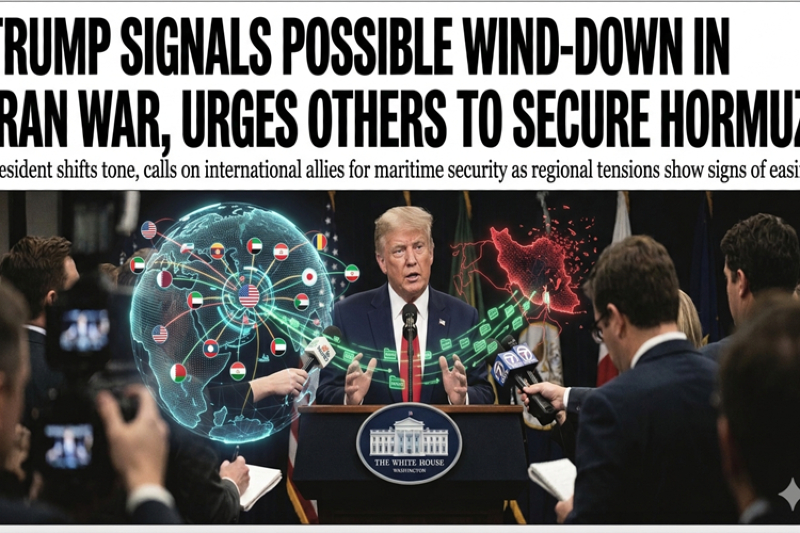
U.S. President Donald Trump has said Washington is considering “winding down” its military operations against Iran, while insisting that responsibility for securing the vital Strait of Hormuz should shift to other nations that rely on it.
Speaking amid escalating regional tensions, Trump made clear he is not seeking a ceasefire, stating that “you don’t do a ceasefire when you are literally obliterating the other side.” His remarks come as global concern mounts over disruptions to the narrow waterway, through which roughly 20% of the world’s oil supply passes.
Allies Pressured to Take Greater Role
Trump emphasized that countries most dependent on Gulf النفط flows—including Europe, China, and Japan—should take the lead in safeguarding shipping routes. He suggested the U.S. may step back from direct involvement, though it could still offer support if requested.
His comments have drawn mixed reactions among allies, especially within NATO, which he previously criticized for hesitating to join efforts to reopen the strait.
UK Shifts Position, Iran Responds
The United Kingdom has recently approved the use of its bases for U.S. strikes targeting Iranian positions linked to Hormuz disruptions—a move Trump described as “very late.”
In response, Iran’s foreign minister Abbas Araghchi warned that British involvement risks escalating the conflict further, saying Tehran would exercise its right to self-defence.
Oil Market Moves and Sanctions Relief
In an effort to stabilize global energy markets, the U.S. has temporarily lifted sanctions on Iranian oil already at sea. The move allows roughly 140 million barrels to enter global supply, aiming to ease soaring prices that have surged above $110 per barrel amid the conflict.
However, U.S. officials say Iran will face restrictions in accessing the financial proceeds, indicating the measure is designed more to control prices than to benefit Tehran.
Rising Regional Tensions
The situation across the Middle East remains volatile, with continued strikes reported in Tehran and drone and missile attacks affecting multiple Gulf states. Maritime authorities warn that threats to commercial shipping remain “critical,” with dozens of incidents recorded since early March.
At the same time, diplomatic signals remain mixed. While Iran has indicated willingness to allow certain countries’ vessels safe passage, broader negotiations to fully reopen the Strait of Hormuz appear uncertain.