
Trump Extends Pause on Iranian Energy Strikes: Diplomacy or Calm Before the Storm?
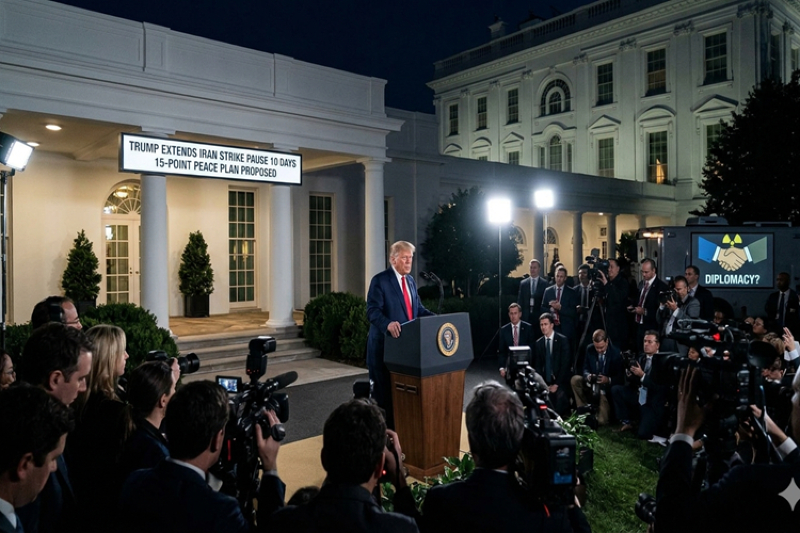
In a move that has sent ripples through global energy markets and shifted the geopolitical landscape of the Middle East, President Donald Trump has officially extended the moratorium on U.S. military strikes against Iranian energy infrastructure.
The extension, announced via Truth Social, pushes the deadline for potential "energy plant destruction" to Monday, April 6, 2026, at 8:00 PM ET. This 10-day reprieve follows an initial five-day pause and comes amidst a backdrop of escalating regional violence and conflicting narratives between Washington and Tehran.
The U.S. Perspective: "Ongoing" Talks and the 15-Point Plan
President Trump has maintained a characteristically optimistic yet firm tone regarding the negotiations. During a recent cabinet meeting, the President claimed that the Iranian government specifically requested more time to review a comprehensive 15-point peace plan delivered by U.S. Special Envoy Steve Witkoff.
Key U.S. Developments:
The "Present" at Hormuz: Trump highlighted a gesture of good faith from Tehran, noting that 10 oil tankers were permitted to transit the Strait of Hormuz—a critical chokepoint Iran has effectively blockaded since the onset of the conflict.
The Ultimatum: Despite the pause, the rhetoric remains sharp. Trump warned that the U.S. would become Iran’s "worst nightmare" if the peace proposal is rejected.
Military Posture: While strikes on energy plants are paused, the Pentagon continues to deploy additional ground troops to the region. Former envoys, including Robert Malley, suggest that a pause on energy sites does not preclude other forms of military action, such as land incursions.
The Iranian Response: Sovereignty and Denials
Tehran’s official stance remains one of defiance and skepticism. While President Trump speaks of "very productive conversations," Iranian state media has frequently denied that formal talks to end the war are even occurring.
Current Conditions in Iran:
Strategic Rights: Iranian officials have reasserted their "natural and legal right" to control the Strait of Hormuz, challenging the U.S. demand for unrestricted maritime flow.
Domestic Hardship: The country is currently under a near-total internet blackout. Authorities are aggressively cracking down on the use of Starlink satellite terminals, with possession carrying a penalty of up to two years in prison.
Civilian Toll: Residents in Tehran report "ear-splitting" explosions as the Israel Defense Forces (IDF) continue to target weapons production facilities—strikes that are distinct from the paused energy plant targets.
Regional Escalation: A Multi-Front Conflict
The pause in energy strikes has not translated to a general ceasefire. The Middle East remains a mosaic of active combat zones:
Lebanon: Israeli strikes have intensified in Beirut’s southern suburbs, targeting Hezbollah strongholds. The Lebanese death toll has reportedly surpassed 1,100 since the start of the conflict.
Israel & UAE: Missiles intercepted over Abu Dhabi and northern Israel have resulted in civilian casualties, keeping regional defenses on high alert.
Gulf Security: Saudi Arabia and Kuwait have reported multiple drone and missile interceptions over the last 24 hours, signaling that the conflict's reach extends far beyond the borders of the primary combatants.
Economic Impact: Oil and Markets
The announcement of the 10-day extension provided immediate, albeit slight, relief to the energy sector.
| Metric | Before Announcement | After Announcement |
|---|---|---|
| Brent Crude Oil | ~$108 / barrel | ~$107 / barrel |
| Nasdaq Index | Significant Slide (Tech Sell-off) | Correction Territory (-11% from high) |
While oil prices dipped on the news of the pause, markets remain volatile. The global economy is bracing for a "prolonged supply crunch" should the April 6 deadline pass without a breakthrough in the 15-point peace plan.
The Road to April 6
As the new deadline approaches, the international community is watching closely to see if the "10-day present" leads to a diplomatic "grand deal" or if it is simply a strategic reset before a major escalation.
With the 2026 FIFA World Cup only 77 days away—and Iran's participation currently in limbo due to safety concerns and travel bans—the stakes for a resolution have never been higher.
The "15-Point Plan": Decoding the U.S. Peace Proposal for Iran
As the April 6, 2026, deadline approaches, the details of the U.S.-led 15-point peace framework have begun to emerge through diplomatic leaks and official briefings.
While the White House has kept the formal document confidential to protect ongoing mediation by Pakistan and Egypt, multiple reports from Reuters, Associated Press, and Channel 12 suggest the plan is a "comprehensive but aggressive" roadmap to ending the month-long war.
The 15 Points of the U.S. Proposal
The plan is structured as a "grand bargain," demanding total Iranian military concessions in exchange for economic survival.
Nuclear & Military Restrictions:
Dismantling Nuclear Infrastructure: Complete decommissioning and destruction of the Natanz, Fordow, and Isfahan nuclear sites.
Removal of Enriched Material: All existing stockpiles of enriched uranium must be handed over to the IAEA or shipped out of the country.
Permanent Enrichment Ban: A total prohibition on future uranium enrichment processing on Iranian soil.
IAEA "Anytime, Anywhere" Access: Unrestricted, permanent access for inspectors to all Iranian military and scientific data.
Missile Range Limits: Strict caps on the range and quantity of ballistic missiles; they may only be used for "self-defense."
End of Proxy Funding: A formal commitment to stop arming and directing groups like Hezbollah and the Houthis.
Dismantling Military Infrastructure: Rollback of specific IRGC facilities used for regional "aggression."
Maritime & Regional Security:
8. Strait of Hormuz Neutrality: Permanent reopening of the Strait as a "free maritime zone" with no Iranian interference.
9. Non-Aggression Pact: Formal guarantees that Iran will not target Gulf neighbors (Saudi Arabia, UAE, etc.).
10. Release of Detainees: Immediate release of any foreign nationals or "hostages" held by the regime.
U.S. Concessions & Incentives:
11. Comprehensive Sanctions Relief: Lifting of all nuclear-related and primary economic sanctions upon verification of compliance.
12. Civilian Nuclear Assistance: U.S. help in developing a strictly civilian nuclear project at the Bushehr plant (with fuel sourced externally).
13. Removal of "Snapback" Threat: Elimination of the mechanism for automatic reimposition of UN sanctions.
14. Economic Revitalization: A "Marshall Plan" style economic engagement package to rebuild the Iranian economy.
15. Regional Integration: Support for Iran's inclusion in a new Middle Eastern security and trade consortium.
Iran’s Standpoint: Evasive and Defiant
Tehran’s response has been characterized by "strategic ambiguity." While President Trump claims they are "begging for a deal," Iranian state media has dismissed the 15 points as "one-sided and excessive."
Tehran’s 5 Counter-Demands:
In response to the U.S. plan, Iranian officials have floated their own "Red Lines":
Reparations: Payment for "wartime losses" and damages caused by U.S.-Israeli strikes since February 28.
Hormuz Sovereignty: Iran maintains its "legal right" to control the Strait and proposes "transit fees" instead of a free zone.
No Missile Limits: Refusal to negotiate on ballistic missile capabilities, which they view as their only deterrent.
Security Guarantees: Concrete, legal mechanisms to ensure the U.S. cannot "re-impose" war in the future.
U.S. Withdrawal: Demand for the closure of U.S. military bases in the Persian Gulf.
The "Pakistani Channel"
The negotiations are being facilitated by Pakistani Prime Minister Shehbaz Sharif and the country’s military leadership.
Key Conflict: While the U.S. pushes for a "Final Deal," the IRGC (Revolutionary Guard) is reportedly split. Some hardliners prefer "economic suicide" over surrendering the nuclear program, while the civilian government under President Pezeshkian is desperate to end the internet blackouts and hyperinflation.