
Tehran Warns Trump’s Naval Mission Violates Ceasefire as Regional Conflict Escalates
TEHRAN/ JERUSALEM – The Middle East stands on a knife-edge today as Iranian officials warned that a newly announced U.S. naval operation in the Strait of Hormuz would constitute a direct violation of current ceasefire agreements.
The warning comes as Israel intensifies its military operations in both Lebanon and Gaza, and the Trump administration bypasses Congress to surge billions of dollars in weaponry to the region.
U.S. Launches "Project Freedom" in the Strait of Hormuz
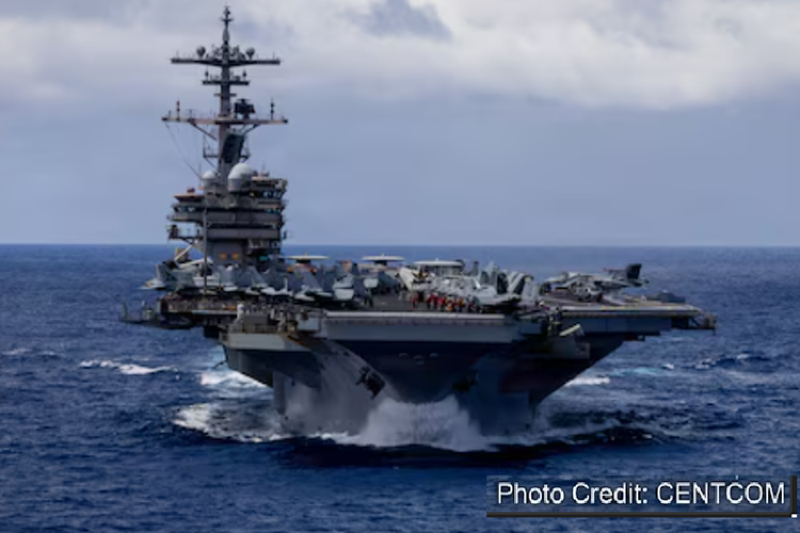
President Donald Trump has authorized Project Freedom, a naval mission designed to escort commercial vessels currently stranded in the Strait of Hormuz. The operation, slated to begin within hours, aims to restore the flow of global shipping through the strategic waterway.
However, the move has drawn a sharp rebuke from Tehran. Ebrahim Azizi, a senior Iranian lawmaker, stated that any American military interference in the strait would be viewed as a breach of the standing ceasefire.
While the Iranian Foreign Ministry confirmed it is currently reviewing Washington’s response to a 14-point peace proposal, President Trump has already dismissed Tehran’s terms as "unacceptable."
In Washington, the mission found strong support among allies. Senator Lindsey Graham backed the move, accusing Iran of "playing games" during negotiations and emphasizing the need to "regain freedom of navigation" by force if necessary.
Deadly Escalation in Lebanon and Gaza
Despite the diplomatic maneuvering, the humanitarian situation on the ground continues to deteriorate:
Southern Lebanon: Israeli strikes have intensified across the south, particularly in the town of Arab Salim and the city of Tyre. A medical facility in Srifa was reportedly targeted, leaving at least four paramedics injured. Reports also indicate that Israeli forces are conducting widespread demolitions of civilian homes and historical sites in the southwest sector near Chama.
Hezbollah Response: Hezbollah reported conducting 11 separate operations against Israeli troops over the last 24 hours, utilizing drones, rockets, and artillery in what they described as a defense against the "invading" forces.
The "Orange Line" in Gaza: Israel has further expanded its territorial control in the Gaza Strip, announcing a new "Orange Line" boundary, signaling a broadening of the occupation despite international calls for de-escalation.
Emergency Arms Sales and Shifting Alliances
The Trump administration has bypassed standard Congressional approval to greenlight $8.6 billion in emergency arms sales to Israel, Qatar, Kuwait, and the UAE. The package includes advanced Patriot missile systems and precision-guided munitions. This marks the third time the administration has utilized emergency powers to circumvent the legislature, citing the need for regional stability following the joint U.S.-Israeli strikes on Iran in February.
Meanwhile, in Europe, German Chancellor Friedrich Merz confirmed that the U.S. will not be stationing Tomahawk cruise missiles in Germany for the time being. Merz attributed this to a global shortage of U.S. stockpiles rather than the recent diplomatic friction regarding his criticisms of the U.S. handling of the Iran conflict.
Sanctions Evasion in Southeast Asia
On the economic front, monitoring firms report that Iranian oil continues to flow despite U.S. Navy patrols. TankerTrackers.com confirmed that a second Iranian supertanker, the DERYA, successfully evaded U.S. forces and is currently navigating Indonesia's Lombok Strait. It joins the supertanker HUGE in a bid to deliver millions of barrels of crude oil to Asian markets, highlighting the ongoing "cat-and-mouse" game between the U.S. Navy and Iranian energy exports.
As "Project Freedom" prepares to launch, analysts warn that any direct encounter between U.S. and Iranian assets in the Strait of Hormuz could rapidly transform a mission framed as "humanitarian" into a full-scale naval confrontation.