
Pezeshkian Reaches Out to Americans as War Intensifies; Tehran Dismisses Trump’s Ceasefire Claims
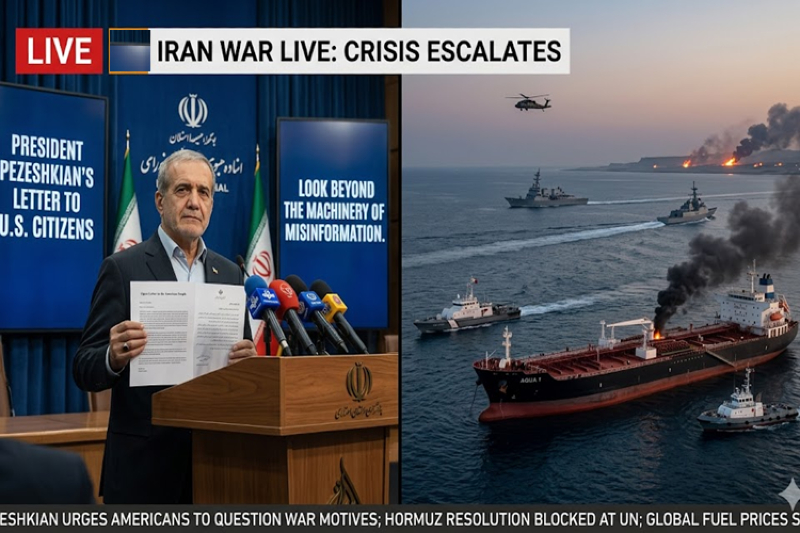
TEHRAN/WASHINGTON — Iranian President Masoud Pezeshkian has issued an unprecedented open letter addressed directly to the citizens of the United States, urging them to look past what he described as a "machinery of misinformation" and to question their government’s motives for the ongoing conflict.
In the letter, published on April 1, Pezeshkian emphasized that Iran harbors no enmity toward the American people, framing Iran’s military actions as purely defensive.
Trump’s "Vital Address": A Two-Week Countdown
In a high-stakes address from the White House, President Donald Trump claimed that the tide of the war is turning. He asserted that Iran’s leadership is "desperate" and has already reached out to Washington to sue for peace.
The Ceasefire Claim: Trump stated on Truth Social and during his address that Iran’s "New Regime President"—referring to Pezeshkian—had officially asked for a ceasefire.
The Ultimatum: Trump set a hard condition for any halt in hostilities: the Strait of Hormuz must be "open, free, and clear."
The Threat: He warned that until the waterway is reopened, the U.S. would continue "blasting Iran into oblivion," threatening to send the nation back to the "Stone Age."
The Timeline: Trump reiterated a timeline of two to three weeks to wind down major U.S. operations, provided his conditions are met, while suggesting the U.S. might exit NATO, calling it a "paper tiger" for its lack of support in the conflict.
Tehran’s Response: "April Fool’s Comedy"
Iranian officials were quick to dismantle Trump’s narrative, with some mockingly dismissing his claims as an "April Fool’s joke" given the timing of the announcement.
"False and Baseless": Foreign Ministry spokesperson Esmail Baghaei officially denied that any ceasefire request had been made, calling Trump’s assertions entirely fabricated.
Araghchi’s Defiance: Foreign Minister Abbas Araghchi told Al Jazeera that he has "no faith" in talks with the U.S. While he acknowledged that messages have been exchanged via intermediaries, he insisted that no formal negotiations are underway.
"You cannot speak to the people of Iran in the language of threats," Araghchi stated.
Regional Fallout and Economic Shocks
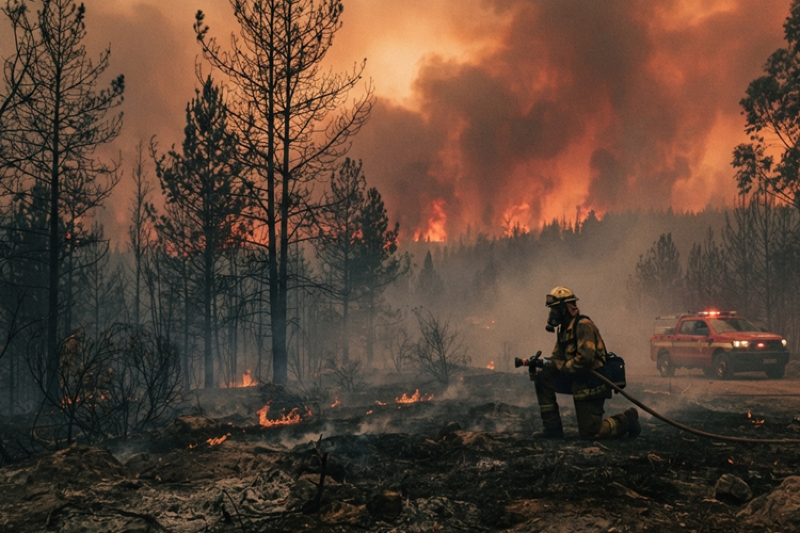
As the rhetoric escalates, the physical toll of the war is spreading across the Middle East and beyond:
Maritime Strikes: A missile launched from Iran reportedly struck the Aqua 1 oil tanker in Qatari territorial waters.
Fortunately, no injuries or environmental leaks were reported. Aviation Chaos: Kuwait’s International Airport suffered a "large fire" at its fuel storage tanks following a drone attack attributed to Iranian-backed factions.
Global Fuel Crisis: The World Bank expressed "extreme concern" over the war’s impact on Africa and Asia, where fuel costs have skyrocketed, threatening food security and economic stability for hundreds of millions.
Iraq’s Pivot: In a bid to bypass the volatile Persian Gulf, Iraq has begun exporting oil via tankers through Syria to reach international markets.
While President Trump promises a quick conclusion to the war, the reality on the ground—marked by burning fuel depots and defiant diplomatic letters—suggests a resolution remains a distant prospect.
Trump’s Address and Ceasefire Claims
The "Ceasefire" Claim: In a viral post on Truth Social, Trump claimed that Iran's "New Regime President" (referring to Masoud Pezeshkian) had reached out to the U.S. to ask for a ceasefire.
Trump praised him as "much less radicalized" and "more intelligent" than past leaders but maintained a hard line. The "Stone Age" Threat: Trump stated he would only consider a ceasefire once the Strait of Hormuz is "open, free, and clear."
He warned that until then, the U.S. would continue "blasting Iran into oblivion" or "back to the Stone Ages." 2–3 Week Timetable: In his White House address, Trump reiterated that the war could be over in two to three weeks.
He claimed the "hard part is done" and that Iran has been "decimated," though he noted the U.S. could return for "spot hits" if needed. "Go Get Your Own Oil": Trump signaled a shift in U.S. strategy, stating that once the U.S. exits, other nations (like China and France) will have to "fend for themselves" to secure the Strait of Hormuz.
Iran's Dismissal: "April Fool's Comedy"
Tehran has moved quickly to debunk Trump's narrative, with officials suggesting his timing was no coincidence:
Official Denial: Foreign Ministry spokesperson Esmail Baghaei called the ceasefire claim "false and baseless." * The "April Fool's" Jibe:
Some Iranian state media outlets and officials mocked the announcement as an "April Fool’s comedy," asserting that no such request was made and that they have no faith in negotiations with the current U.S. administration. Hormuz Control: The Revolutionary Guard issued a statement confirming the Strait remains "decisively under their control" and called Trump's address a "ridiculous spectacle."
NATO and Global Tensions
During his remarks, Trump also described NATO as a "paper tiger" and expressed disgust with the alliance's lack of support in the Iran conflict.