

Netanyahu Trial Faces Fresh Delays as Defense Cites 'National Security Absurdity'
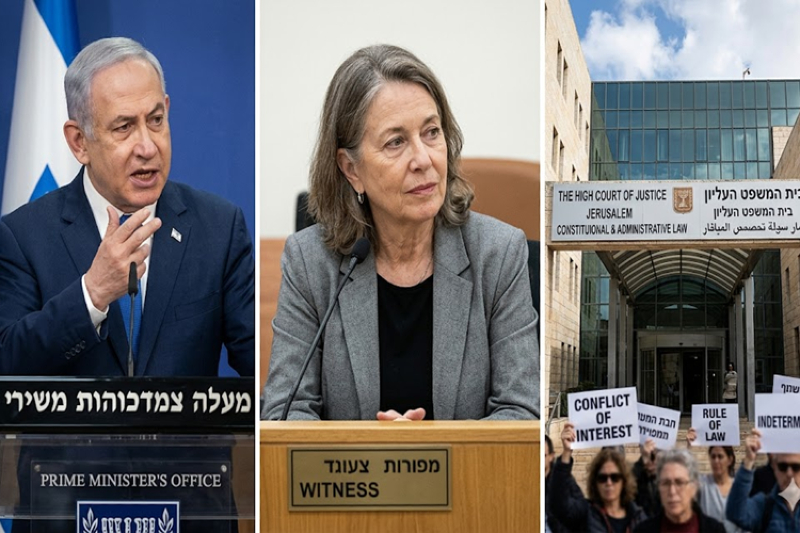
JERUSALEM — For the second consecutive day, judges at the Jerusalem District Court have agreed to adjust Prime Minister Benjamin Netanyahu's testimony schedule, citing an urgent "security and diplomatic" calendar.
The decision follows a series of disruptions that have plagued the landmark corruption trial since the conclusion of a high-intensity war with Iran earlier this spring.
Defense Minister Israel Katz intensified the political pressure surrounding the proceedings on Tuesday, characterizing the trial as a direct threat to national security.
In a statement on social media, Katz claimed that the Prime Minister has been forced to exit court sessions to handle sensitive security matters on a secure line, calling the overlap an "absurdity that must stop."
The court’s decision to move the hearing to a shortened evening window—now scheduled from 4 p.m. to 7 p.m.—comes after the Prime Minister’s defense team argued that the current regional sensitivity prevents him from being away from his command duties for extended periods.
A Trial in the Shadow of Conflict
The trial had only recently resumed a semblance of normalcy after a two-month hiatus caused by the February outbreak of the Iran-Israel war.
Despite a ceasefire brokered by Pakistan in early April, the Prime Minister’s return to the witness stand has been sporadic.
Global and Domestic Stakes
For international observers, the delay raises questions about the stability of the Israeli government during a fragile regional peace. Netanyahu faces charges of bribery, fraud, and breach of trust in three separate cases that have remained in the cross-examination phase for years.
Simultaneously, the Prime Minister remains under the shadow of a separate legal battle on the global stage. Since late 2024, an International Criminal Court (ICC) arrest warrant has been outstanding for Netanyahu concerning alleged war crimes in Gaza.
While prosecutors have argued that the Prime Minister must align his schedule with the court’s calendar to serve the public interest, the judges’ continued leniency suggests that, for now, the "security schedule" of a sitting wartime leader carries more weight than the immediate push for a verdict.
The Legal Architecture: Case Background
The trial is a consolidated proceeding of three distinct investigations (Cases 1000, 2000, and 4000) that share a common thread: the alleged misuse of the Prime Minister’s office to influence private wealth and media narratives.
| Feature | Details |
|---|---|
| The Complainant | The State of Israel, represented by the Attorney General’s Office and lead prosecutors (e.g., Liat Ben-Ari). The cases were initiated following investigations by the Israel Police. |
| Primary Theme | Quid Pro Quo Corruption. The central allegation is that Netanyahu used his regulatory and legislative powers to benefit specific billionaires and media moguls in exchange for personal luxuries and favorable press coverage. |
| Status of Defendant | Netanyahu is the first sitting prime minister in Israeli history to stand trial. He denies all charges, calling them a "witch hunt" and a "judicial coup." |
Inside the Allegations: The "Three Pillars"
1. The Gift Economy (Case 1000)
This case focuses on "illicit benefits."
The "quid" in this exchange allegedly involved Netanyahu helping Milchan with U.S. visa issues and promoting tax exemption laws that would save the billionaire millions.
2. The Media Trade-Off (Case 2000)
This case is built on recorded conversations.
3. The Regulatory Favor (Case 4000)
Known as the "flagship" case, this involves Shaul Elovitch, the former owner of the telecommunications giant Bezeq.
Prosecutors allege Netanyahu granted Bezeq regulatory benefits worth hundreds of millions of dollars in exchange for editorial control over the Walla!
A Trial Interrupted: The 2026 Perspective
The Paradox of Power and Prosecution
As the cross-examination of key witnesses enters a critical phase in May 2026, the trial has become a study in constitutional endurance.
The spectacle is not just about the alleged crimes, but about the resilience of democratic institutions.
Despite a direct war with Iran and the resulting security protocols, the Jerusalem District Court continues to insist that "the law must proceed, even as the sirens fall silent."
The Diplomatic Defense
The recent shifts in the trial’s schedule highlight a growing tension: can a leader effectively manage a nation’s existential security while defending his personal liberty in court?
Defense Minister Israel Katz’s recent intervention—labeling the trial an "absurdity" that compromises the state—suggests that the Prime Minister's legal strategy is increasingly merging with his national security platform.
A Global Benchmark
Beyond the borders of Israel, this trial serves as a high-stakes benchmark for international law and governance.
With an ICC warrant still pending and domestic graft charges ongoing, Netanyahu’s legal journey is unprecedented.