
Kim Jong Un Strengthens Control Over State and Party Machinery
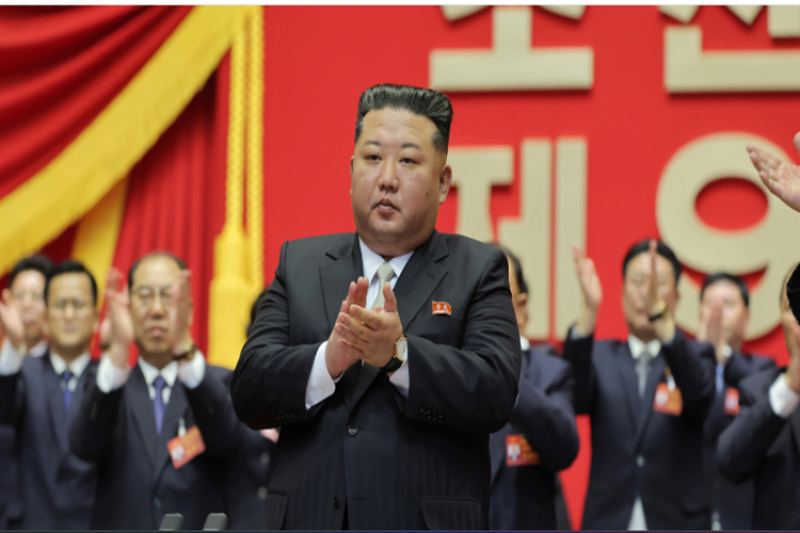
The reappointment of Kim Jong Un as general secretary of the Workers' Party of Korea further consolidates his authority over both the party and the state structure of North Korea. In the North Korean political system, the ruling party functions as the central governing institution that directs major national policies, including defence, economic planning, and foreign relations.
Political observers often interpret his continued leadership of the party as a sign that the country will maintain its existing governance and security strategy. The position ensures strong influence over senior government appointments, military command structure, and long-term national policy.
Party Leadership and State Presidency – How the System Works
North Korea does not have a simple rule stating that the party chief automatically becomes the president in a constitutional sense. Instead, the country follows a unique political framework where the highest authority is usually concentrated in the hands of the top leader through multiple overlapping titles.
Historically, the head of the Workers’ Party has been considered the most powerful position in the political hierarchy, but the country’s constitution and party rules have been revised several times.
The supreme leadership is typically distributed across key offices such as party general secretary, head of state institutions, and military leadership roles.
Unlike some political systems where party leadership directly determines the presidency, North Korea operates under a centralized model where one individual often holds several top positions simultaneously to maintain unified command.
Importance of the Re-Appointment for National Policy
Kim’s continued leadership is expected to provide policy continuity at a time when the country is facing economic constraints and international sanctions. The regime has emphasized improving living standards while simultaneously strengthening its defence capabilities.
State media statements suggest that the government will continue prioritizing the development of strategic weapons systems, which it describes as essential for national security and sovereignty.
International Security and Regional Response
The leadership confirmation is closely watched by neighbouring countries and global powers, particularly the United States, which maintains a long-standing security and diplomatic focus on North Korea’s nuclear programme.
Security analysts believe that a stable internal leadership structure could either facilitate future diplomatic engagement or enable more rapid advancement of military testing, depending on policy decisions taken by the regime.
Significance of the Party Congress
The party congress remains one of the most important political events in North Korea’s governance system. It serves as a platform for announcing strategic priorities, reshuffling senior officials, and demonstrating internal political unity within the ruling establishment.
Is There Any Opposition Party in North Korea?
There is no independent or competitive opposition political party operating inside the country’s political system. The political landscape is dominated by a single-party structure led by the ruling establishment. Other small parties exist only nominally and operate under state control within a united political framework.
One such political structure is the Democratic Front for the Reunification of the Fatherland, which functions as an umbrella organization that includes several approved parties and social groups. However, these parties do not act as opposition forces in the way political opposition functions in multiparty democratic systems. Political competition, independent campaigning, or alternative policy platforms are not permitted under the current governance model.