
Israel-Hezbollah Clashes Intensify, Threatening Fragile US-Iran Truce
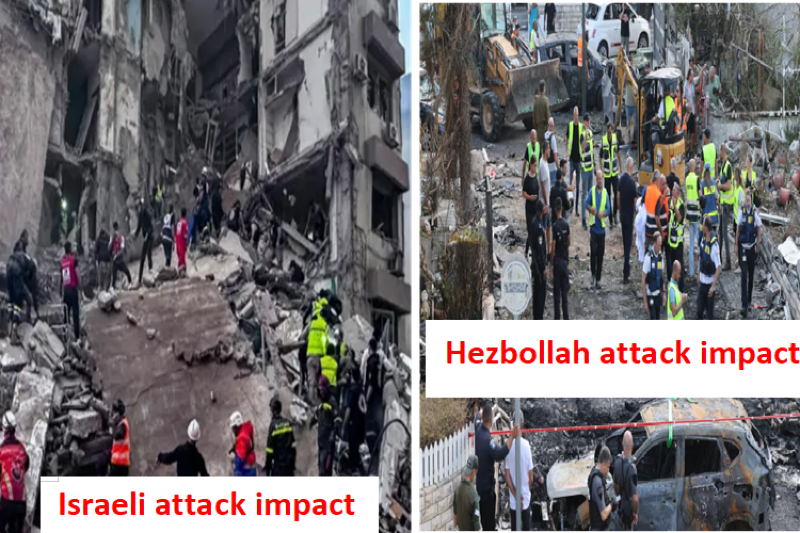
BEIRUT/JERUSALEM – A massive wave of Israeli airstrikes across Lebanon has left at least 182 people dead and hundreds wounded, placing an immense strain on the conditional two-week ceasefire recently brokered between the United States and Iran.
The escalation comes just 24 hours after U.S. President Donald Trump announced a temporary halt to hostilities. While the truce was intended to stabilize the region, a fundamental disagreement over its scope has emerged: Washington and Israel maintain that Lebanon is excluded from the deal, while Tehran insists it is a core component.
Heavy Toll in Lebanon
On Wednesday, Israel conducted what it described as one of its most intensive operations of the conflict, striking 100 targets in just 10 minutes. The Lebanese Health Ministry confirmed the death toll includes women and children, with the largest strikes hitting near the heart of Beirut.
In response, Hezbollah launched a series of rocket barrages into northern Israel, citing "Israeli-American aggression" and violations of the peace agreement. The militant group has vowed to continue its resistance until attacks on Lebanese soil cease.
Diplomatic Discord and the "10-Point Plan"
The sustainability of the truce is now in question as both sides dispute the terms of Iran’s proposed 10-point peace plan.
The Iranian Stance: The Speaker of Iran's Parliament, Mohammad Bagher Ghalibaf, stated that three clauses have already been "openly violated," specifically pointing to the exclusion of Lebanon and the denial of Iran’s right to uranium enrichment.
The U.S. Response: Vice-President JD Vance, who is set to lead a negotiating team in Pakistan this Saturday, dismissed certain iterations of the Iranian proposal as "garbage," though he noted that some "choppiness" is expected in early-stage agreements.
Maritime Threats in the Strait of Hormuz
Adding to the volatility, Iran’s Revolutionary Guard Corps (IRGC) issued a stern warning regarding the Strait of Hormuz—a vital artery for global oil supplies. The IRGC claimed the waterway is "closed" to those without explicit permission, threatening that any unauthorized vessels will be "targeted and destroyed."
While the White House has dismissed these reports as "unacceptable" misinformation, commercial ship brokers confirmed receiving warnings from Iranian authorities, heightening fears of a global energy disruption.
Domestic and Global Pressure
In Israel, Prime Minister Benjamin Netanyahu faces domestic criticism. While he hailed the strikes on Lebanon as a decisive blow to Hezbollah, opposition leaders argue the current strategy has failed to meet war aims and has only created a more "vengeful" Iran.
Meanwhile, at the White House, President Trump held what were described as "frank" talks with NATO Secretary General Mark Rutte. Following the meeting, Trump took to social media to criticize the alliance, claiming NATO "wasn't there when we needed them" during recent military operations.
As Vice-President Vance prepares for high-stakes talks in Islamabad, the international community remains on edge, watching whether diplomacy can survive the mounting violence on the ground.