
UN Issues War Crimes Warning as Trump’s Infrastructure Deadline Approaches
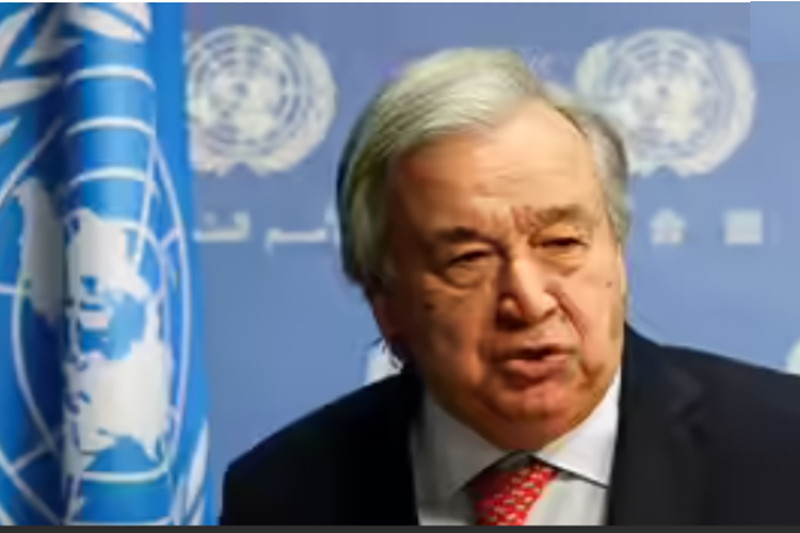
NEW YORK / WASHINGTON D.C. — United Nations Secretary-General António Guterres has issued a stern, high-stakes warning to the United States, cautioning that any deliberate strikes on Iranian civilian infrastructure would constitute a clear violation of international law.
The warning arrives as the world watches the clock tick toward a Tuesday night deadline set by U.S. President Donald Trump, who has threatened a campaign of "total infrastructure destruction" against the Islamic Republic.
Speaking through his spokesperson, Stéphane Dujarric, the UN chief emphasized that power plants, bridges, and water treatment facilities are protected assets under the Geneva Conventions.
Dujarric noted that even if the U.S. administration argues that specific civilian facilities have been repurposed for military utility, an attack remains strictly prohibited if it risks "excessive incidental harm" to the civilian population.
"The intentional targeting of objects indispensable to the survival of the civilian population is a war crime," Dujarric stated, adding that any official ordering such strikes could face future prosecution in international courts.
Sacrifice and Defiance in Tehran
In the face of this ultimatum, a wave of nationalism and defiance has swept through Tehran. Iranian President Masoud Pezeshkian, in a televised address to the nation, declared that he and "14 million Iranians" are prepared to sacrifice their lives to protect the country's sovereignty.
The figure, a reference to the scale of the national mobilization, highlights the regime's intent to resist what they describe as "Western state-sponsored terrorism."
As the clock approaches 20:00 ET—a window the media has dubbed "Infrastructure Midnight"—the Iranian government has implemented a desperate defensive strategy.
Authorities have encouraged students, athletes, and professionals to form "human chains" around major power stations and dams.
By placing civilians at these critical nodes, Tehran hopes to deter U.S. and Israeli aerial bombardments, effectively daring the coalition to strike protected civilian groups.
Urgent Transit Warnings and Leadership Crisis
The tactical reality of the coming hours was underscored by an unusual and urgent directive from the Israeli Defense Forces (IDF) addressed directly to the Iranian public. In a rare move, the IDF issued a warning via social media and radio frequencies advising Iranian civilians to avoid all travel by train until at least late Tuesday evening.
Military analysts suggest this specific warning indicates that Iran’s national railway network and transit hubs are high-priority targets in the planned coalition wave of strikes.
This looming military operation coincides with a deepening leadership crisis in Iran. Intelligence reports suggest that the country's new leader, Mojtaba Khamenei, is in "severe condition" at a medical facility in Qom and is currently medically unfit to manage the state's defense.
With the Supreme Leader incapacitated and the U.S. military "ramping up" its volume of strikes, the risk of a total collapse of Iranian civil order has reached its highest point since the conflict began.
As oil prices surge and global markets tremble, the international community remains divided. While President Trump maintains that "the entire country can be taken out in one night," the UN and
European allies warn that such a move would cause a humanitarian catastrophe of unprecedented proportions. With only hours remaining, the world waits to see if diplomacy can prevail or if "Infrastructure Midnight" will mark the start of a total regional transformation.