
IRGC Spokesperson Ali Mohammad Naini Killed in US-Israeli Air Strikes
The joint US-Israel military campaign against Iran continues to escalate, with the recent assassination of senior Iranian officials marking a dramatic intensification of the conflict.
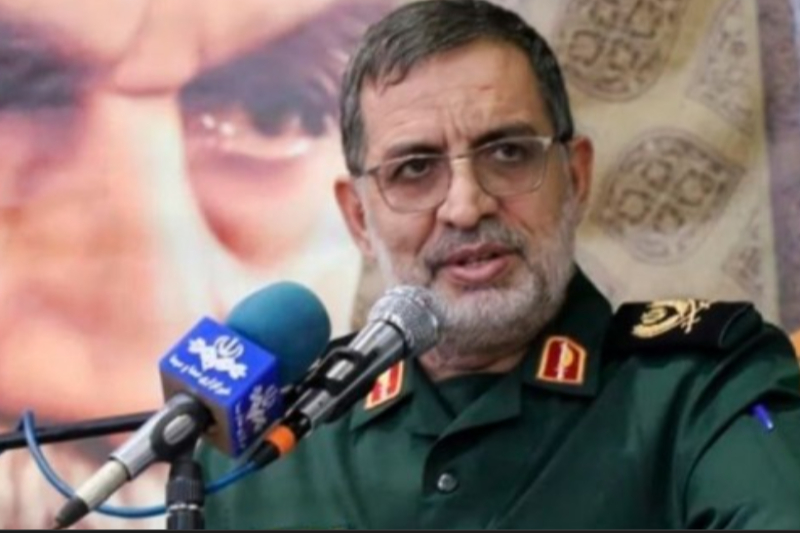
The latest casualty is IRGC spokesperson Brigadier General Ali Mohammad Naini, who was killed in an airstrike targeting Tehran overnight, according to Iran’s Islamic Revolutionary Guard Corps (IRGC).
The IRGC condemned the attack as a “criminal and cowardly act by American-Zionist forces,” highlighting the growing toll on Iran’s military and political leadership since the start of hostilities.
Series of High-Profile Killings Shakes Iran
Naini’s death is part of a rapid sequence of targeted assassinations that have struck at the core of Iran’s establishment.
Supreme Leader Ayatollah Ali Khamenei was reportedly killed in the opening hours of the US-Israel campaign on February 28 and has been succeeded by his son, Mojtaba Khamenei.
Ali Larijani, secretary of Iran’s Supreme National Security Council, was killed earlier this week along with his son and several aides.
The head of the Basij paramilitary forces, Brigadier General Gholamreza Soleimani, and Intelligence Minister Esmail Khatib were also confirmed dead within the same 48-hour period.
The Israeli military has additionally claimed the killing of Esmail Ahmadi, a senior intelligence figure in the Basij, during a strike on Tehran’s Basij command centre, which also killed Soleimani and several other senior figures.
No immediate confirmation came from Iranian authorities regarding Israel’s claim about Ahmadi.
Tehran Observes Nowruz Quietly
The airstrikes coincided with the Persian New Year, Nowruz, which this year overlapped with Eid al-Fitr. Reports from Tehran describe a subdued atmosphere in the capital, with traditional celebrations absent amid heightened security and fear of further attacks.
Israeli and US Perspectives
Israeli Prime Minister Benjamin Netanyahu has claimed that the attacks have disrupted Iran’s capacity to enrich uranium and develop ballistic missiles.
He framed the strikes as creating an opportunity for Iranians to “reclaim their country,” noting that the campaign would be gradual to allow the Iranian population to “take their fate into their own hands.”
US Defense Secretary Pete Hegseth acknowledged the strategic impact of the recent killings, asserting that “the last job anyone in the world wants right now” is a leadership role in the IRGC or Basij.
However, Director of National Intelligence Tulsi Gabbard emphasized that US and Israeli objectives differ: while Israel aims to disable Iran’s leadership, the US seeks to dismantle Iran’s missile capabilities and naval infrastructure.
Iranian Response
Iranian Foreign Minister Seyed Abbas Araghchi stressed that the Iranian political system does not rely on any single individual, arguing that the elimination of leaders does not fundamentally alter the structure of the state.
Meanwhile, the Iranian Red Crescent reported that over 204 children have died in the conflict so far, with the overall death toll in Iran surpassing 1,444. In Lebanon, more than 1,000 people have been killed in Israeli attacks.
Regional Impact
The ongoing strikes have heightened concerns across the Gulf, with Iran targeting energy sites and threatening shipping routes such as the Strait of Hormuz, a key artery for global oil trade. The conflict has triggered a surge in oil and gas prices, prompting warnings of a broader economic impact.