
Iran Warns of Confrontation as US Troop Build-Up Continues; Gulf Infrastructure and Shipping Routes Under Threat
The intensifying conflict involving Iran, United States and Israel has taken a more volatile turn, as Tehran signalled readiness for a potential ground war while military activity escalates across the Middle East.
Iran Signals Readiness for Ground Clash
Iran’s Parliament Speaker Mohammad Bagher Ghalibaf said Iranian forces are “waiting” for American troops, warning they would respond forcefully if US ground forces enter the battlefield. He accused Washington of publicly advocating negotiations while covertly preparing for a ground offensive.
His remarks came amid growing speculation that the Pentagon is planning for extended ground operations in Iran, though it remains unclear whether such plans would receive final approval from Donald Trump.
US Military Build-Up Raises Stakes
The United States has reinforced its military presence in the region, deploying around 3,500 additional personnel aboard the amphibious assault ship USS Tripoli.
Despite the build-up, US Secretary of State Marco Rubio indicated that Washington could achieve its objectives without deploying ground troops, suggesting that the reinforcements are intended to provide strategic flexibility rather than signal imminent invasion.
Strikes Intensify Across Region
Military exchanges have continued on multiple fronts. Israeli forces reported targeting temporary command centres in Tehran, while Iran claimed to have launched a fresh wave of strikes against Israeli and US-linked targets in the region.
In the Gulf, critical infrastructure has come under attack. Facilities linked to Emirates Global Aluminium have reportedly sustained significant damage, raising concerns about disruptions to global industrial supply chains.
Shipping Routes Face Heightened Risk
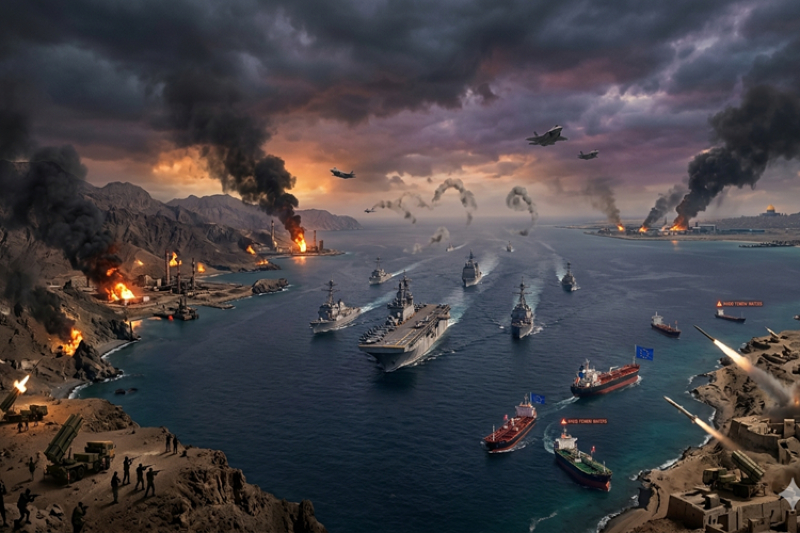
Security risks are expanding into vital maritime corridors. European naval authorities have warned commercial vessels to avoid Yemeni waters, citing the threat posed by the Iran-aligned Houthi movement.
The Houthis have already launched missile attacks towards Israel and signalled more strikes ahead. Analysts warn that any escalation near the Bab al-Mandab Strait—a key chokepoint linking the Red Sea to global trade routes—could severely disrupt international shipping and energy supplies.
Regional and Civilian Impact Deepens
The broader regional impact is becoming increasingly visible. Strikes and counter-strikes have affected multiple countries, while tensions remain high in areas hosting US military installations.
In Jerusalem, security concerns forced the cancellation of traditional public religious processions during Palm Sunday, reflecting fears of further missile attacks near sensitive religious sites.
Meanwhile, funerals were held in Lebanon for journalists killed in recent strikes, underscoring the growing toll on civilians and media workers.
Diplomatic Efforts Continue Amid Escalation
Amid the deteriorating security situation, diplomatic channels remain active. Talks involving Saudi Arabia, Egypt, Turkiye and Pakistan are ongoing, aimed at reducing tensions and preventing further escalation.
However, with military deployments increasing, infrastructure under attack, and threats of a wider conflict looming, the situation remains highly unstable, with the risk of a broader regional war continuing to grow.