
Iran Warns Civilians in the Region to Flee Near U.S. Bases; Targets Riyadh and Kuwaiti Ports as Peace Talks Stall
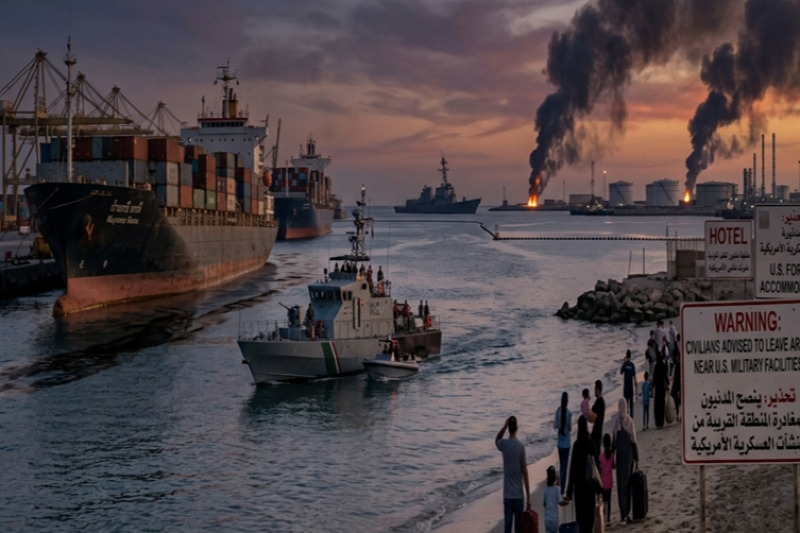
The Middle East stands on the precipice of a broader regional war as Iran’s Islamic Revolutionary Guard Corps (IRGC) issued a chilling directive on Friday, urging civilians across the Gulf to immediately evacuate areas surrounding U.S. military installations.
The warning comes amid a series of high-stakes developments, including a temporary delay in U.S. strikes and intensifying mediation efforts by Pakistan, Egypt, and Türkiye.
A "Duty-Bound" Threat: IRGC Warning
In a statement carried by the Tasnim news agency, the IRGC declared it is "duty-bound" to target American forces "wherever we find them." The military body issued a formal recommendation for residents in host nations—particularly in the Gulf Cooperation Council (GCC) states—to leave vicinities where U.S. troops are stationed to avoid collateral damage.
This follows accusations from Iranian Foreign Minister Abbas Araghchi that U.S. soldiers are using regional civilians as "human shields" by relocating from military bases into local hotels and commercial offices. Iran has warned that any building housing U.S. personnel will be treated as a legitimate military target.
Diplomatic High-Wire Act: The 10-Day Window
Amidst these threats, U.S. President Donald Trump has announced a 10-day deferment of planned strikes on Iran’s critical energy infrastructure. The attacks, originally slated for late March, have been pushed back to April 6. Trump claimed that negotiations for a peace deal are "going very well," though Tehran has pushed back, calling the current U.S. proposal "one-sided and unfair."
The diplomatic heavy lifting is currently being spearheaded by Pakistan, with Foreign Minister Ishaq Dar confirming that Islamabad is acting as the primary messenger between Washington and Tehran. Egypt and Türkiye are also providing mediation support, while German officials suggest that a direct meeting between U.S. and Iranian representatives could take place in Pakistan within days.
Friday’s Frontline: Riyadh and Kuwaiti Ports Hit
While diplomats talk, the "shadow war" has turned into a direct exchange of fire:
Targeting Riyadh: Saudi Arabia’s air defenses intercepted a wave of six ballistic missiles and several drones targeting the capital region. While no major casualties were reported, the persistence of the attacks has kept the city on high alert.
Kuwaiti Infrastructure: Port facilities at Mubarak Al-Kabeer and Shuwaikh were struck by Iranian drones and cruise missiles, causing significant material damage and further choking regional trade.
Strait of Hormuz: The IRGC confirmed the waterway remains closed to "allies of the Israeli-American enemies," with three more container ships blocked from passage on Friday.
The Global Economic Ripple
The 28-day conflict has moved beyond a regional spat into a global energy emergency:
Fuel Crisis: In the Philippines and Vietnam, fuel prices have more than doubled, forcing national emergencies and massive flight cancellations.
Rationing: Sri Lanka has returned to a 2022-style QR-based rationing system to manage its dwindling one-month fuel reserve.
Humanitarian Crisis: The death toll in Iran has climbed to nearly 2,000, with international outrage mounting over a strike on a school in Minab that killed 175 children and teachers.
Analysis: A Tense Countdown to April 6
The next 10 days represent a critical "cooling-off" period. If the mediation efforts in Pakistan fail to produce a breakthrough, the expiration of Trump’s deferment on April 6 could signal a catastrophic shift toward the destruction of Iran’s power grid—a move analysts warn would trigger a global recession worse than the COVID-19 pandemic.
For now, the world’s attention is fixed on the Gulf, where the sight of civilians fleeing the vicinity of U.S. bases underscores the very real fear of an imminent, all-out explosion of violence.
Summary Highlights: Day 28 of the U.S.-Israel War on Iran
The conflict has reached a critical diplomatic and military tipping point as of March 27, 2026. Here are the essential highlights:
1. The 10-Day Diplomatic Window
Trump’s Deferment: U.S. President Donald Trump has delayed planned strikes on Iran’s energy infrastructure by 10 days, moving the deadline to April 6.
The Peace Proposal: While Trump claims talks are going "very well," Iranian officials have dismissed the U.S. proposal as "one-sided and unfair."
The Mediators: Pakistan is currently the primary messenger between Washington and Tehran, with active diplomatic support from Türkiye and Egypt. Reports suggest a direct meeting may soon occur in Pakistan.
2. Military Escalation & New Targets
Strikes on Riyadh: Saudi Arabia intercepted six ballistic missiles and several drones targeting the capital region; four missiles fell in uninhabited areas or Gulf waters.
Kuwaiti Ports Hit: Drones and cruise missiles struck Mubarak Al-Kabeer and Shuwaikh ports, causing material damage and further paralyzing regional trade.
IRGC Evacuation Warning: Iran’s Revolutionary Guard urged civilians to evacuate areas near U.S. military bases and hotels housing U.S. troops, declaring them legitimate targets.
Strait of Hormuz: The IRGC has officially closed the waterway to "allies of the Israeli-American enemies," blocking multiple container ships.
3. Humanitarian & Global Economic Impact
Rising Death Toll: Total deaths in Iran have surpassed 1,900 since February 28. International outrage is mounting over a strike on a school in Minab that killed 175 children and teachers.
Energy Crisis: Fuel prices have doubled in the Philippines and Vietnam, leading to national emergencies and flight cancellations.
Rationing: Sri Lanka has reintroduced a QR-based fuel rationing system (similar to its 2022 crisis) due to a lack of reserves.
Recession Warning: Finland’s President warned that the war could trigger a global recession more severe than the COVID-19 pandemic.
4. Tactical Developments
Cyber Warfare: Iran’s near-total internet blackout has entered its 28th day, with authorities using a "two-tiered" whitelist system.
Lebanon Invasion: Israeli forces are pushing further north of the Litani River toward the Zahrani River, forcing nearly one million people to flee southern Lebanon.