

Iran Shakes Global Security: Ballistic Missile Range Now Puts London in Crosshairs
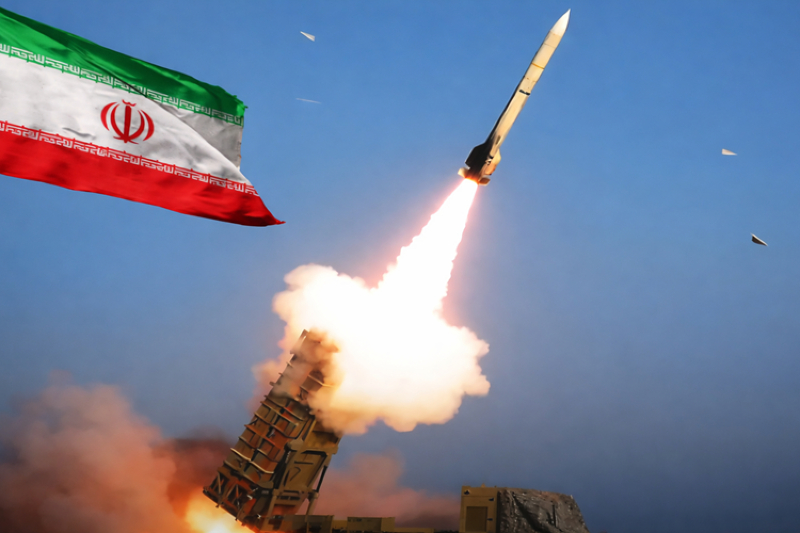
The geopolitical landscape of Western Europe was fundamentally altered this weekend following a sophisticated long-range missile operation by Iran.
Evidence from a foiled strike on the joint US-UK military base at Diego Garcia suggests that Tehran has successfully doubled its known missile range, placing major European capitals—including London, Paris, and Berlin—within striking distance for the first time.
The Diego Garcia Incident: A 4,000 km Warning
On March 21, 2026, Iran launched two intermediate-range ballistic missiles (IRBMs) toward the Naval Support Facility Diego Garcia in the Indian Ocean.
While the UK Ministry of Defence confirmed the attack was "unsuccessful"—with one missile failing mid-flight and the other intercepted by a US Navy Aegis-class destroyer—the technical implications are staggering.
Diego Garcia sits approximately 3,800 to 4,000 km (2,500 miles) from Iranian launch sites. Previously, Western intelligence and Iran’s own "self-imposed" limits placed Tehran’s maximum reach at 2,000 km.
By successfully targeting a base twice that distance away, Iran has effectively signaled that its "Khorramshahr" class or newer experimental variants can now reach the heart of the United Kingdom.
Economic and Diplomatic Fallout
The breakthrough in range has sent shockwaves through global markets:
Energy Markets: Brent crude spiked as the Strait of Hormuz remains a high-tension chokepoint, with Iran threatening further infrastructure strikes if its own power plants are targeted.
Aviation: Major carriers have begun rerouting flights between India and the West, avoiding both Iranian and adjacent corridors, leading to increased fuel costs and flight times.
UK Policy Shift: While Housing Secretary Steve Reed stated there is "no specific assessment" that Tehran is currently targeting the UK mainland, Foreign Secretary Yvette Cooper condemned the "reckless" escalation. The UK has notably maintained a more cautious "defensive-only" stance compared to the aggressive posture of the Trump administration and Israel.
Technical Evolution
Military analysts believe Iran may have utilized its space-launch vehicle (SLV) technology or a lightened-payload variant of the Khorramshahr-4 to achieve this range. The Israeli Defense Forces (IDF) issued a stern warning on Sunday, describing the development as proof that the "Iranian terrorist regime now poses a global, not just regional, threat."
Strategic Shift: The Dual-Use Tech Behind Iran’s 4,000 km Reach
The "Satellite" Cover for Long-Range Ambitions
According to former IDF air defense chief Brig.-Gen. Ran Kochav, the sudden doubling of Iran’s missile range from 2,000 km to 4,000 km likely stems from a sophisticated two-stage launch process—technology originally developed under the guise of a civilian space program.
Speaking to The Jerusalem Post, Kochav noted that Saturday’s strike on the Diego Garcia base “doubled the demonstrated capability overnight.” This sentiment was echoed by IDF Chief of Staff Lt.-Gen. Eyal Zamir, who stated that the increased distance was likely achieved through a multi-stage launch vehicle, a technology Iran has been refining for years to deploy satellites into orbit.