
Iran Claims Closure of Hormuz Strait and Threatens Shipping as US Prepares for Further Strikes
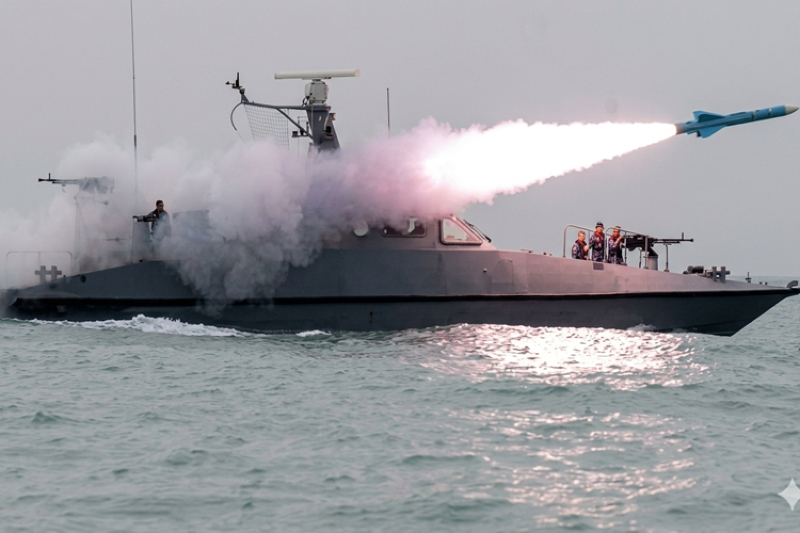
Tensions across the Middle East have intensified dramatically as Iran warned it could “set fire” to ships attempting to pass through the strategically vital Strait of Hormuz, while senior US officials signalled that further and potentially more severe military action may follow.
An Iranian official issued the threat as fighting between Iran, the United States and Israel continues to widen, raising fears over global energy supplies and regional stability.
The Strait of Hormuz, a narrow waterway at the mouth of the Persian Gulf, is one of the world’s most critical oil and gas transit routes, with roughly one-fifth of global energy shipments passing through it.
US Signals More Military Action
US Secretary of State Marco Rubio warned that “the hardest hits” against Iran are “yet to come,” declining to provide operational details.
Speaking after the coordinated US–Israel strikes, Rubio suggested that Washington acted pre-emptively, saying the US moved before anticipated Iranian responses could inflict greater casualties.
President Donald Trump, addressing the nation from the White House for the first time since the attacks, described the decision to launch military operations as the “last, best chance” to halt Iran’s leadership.
He confirmed that “large-scale combat operations” are ongoing, while indicating that US objectives remain focused and strategic.
Vice President JD Vance reinforced that position, stating the US would not allow the conflict to evolve into a prolonged war similar to past engagements in Iraq or Afghanistan.
According to Vance, Washington’s central objective is to permanently prevent Iran from obtaining nuclear weapons capability.
Embassy Attack and US Casualties
The crisis escalated further after two drones struck the US embassy compound in Riyadh, Saudi Arabia.
Saudi authorities reported limited fire damage and minor structural impact. The attack followed confirmation from US Central Command that six American service members were killed and 18 others injured in related hostilities.
Trump has suggested that retaliation for the embassy attack could come “soon,” though he has reportedly indicated that deploying ground troops may not be necessary.
Shipping and Energy Markets Disrupted
Global oil markets have reacted sharply to the growing instability. Shipping rates for supertankers transporting crude from the Middle East to Asia have surged to record levels, surpassing $400,000 per voyage, according to financial data from the London Stock Exchange Group.
The spike reflects heightened risk to vessels navigating the Strait of Hormuz amid Iranian threats.
Satellite imagery analysed by BBC Verify also showed damage to a major oil refinery in Ras Tanura, eastern Saudi Arabia, following reported drone strikes. Energy giant Aramco temporarily suspended refinery operations after the incident.
Regional Strikes Continue
Israel has continued air operations inside Iran and Lebanon. Prime Minister Benjamin Netanyahu defended the strikes, arguing that Iran’s nuclear infrastructure would have become untouchable within months if action had not been taken.
He rejected claims that Israel pushed Washington into war, stating that Trump independently decided based on US interests.
In Lebanon, Israeli strikes targeting what it described as Hezbollah infrastructure have reportedly killed dozens, according to Lebanese health officials. Hundreds of residents in Beirut have been displaced as bombardments continue.
Iran, meanwhile, has fired missiles toward Israeli territory, with Israeli defence systems intercepting several incoming threats, according to the Israeli military.
Cultural Site Damaged
Iranian state media reported that the historic Golestan Palace, a UNESCO World Heritage site in central Tehran, sustained damage during recent strikes.
UNESCO has expressed concern regarding the protection of cultural heritage sites amid the conflict.
Disputed Reports of Civilian Casualties
Controversy has also emerged over reports that a school in Iran was struck during weekend attacks. Iranian officials claimed that dozens of civilians, including children, were killed.
When questioned, Rubio stated that the US would not deliberately target a school and said the Department of Defense was reviewing the incident. He described any civilian deaths as “tragic” if confirmed.
UK and International Reactions
UK Prime Minister Keir Starmer said Britain’s decision not to participate in the US-Israeli strikes was “deliberate,” emphasising that his government does not support “regime change from the skies.”
The US State Department has issued advisories urging American citizens in much of the Middle East to leave the region using commercial means due to “serious safety risks.”
As military exchanges continue and diplomatic channels remain strained, the conflict threatens to reshape regional dynamics, disrupt global energy markets, and deepen international divisions over the path forward.