
India-Pakistan Conflict Escalates with Cross-Border Strikes and Military Retaliation
Tensions between India and Pakistan have sharply escalated, with both nations trading accusations and engaging in cross-border military action that has left dozens dead and injured on both sides of the Line of Control.
As the situation worsens, global powers are urging restraint and de-escalation.
The latest wave of conflict began on Wednesday when Pakistan reportedly launched drone and missile strikes targeting three Indian military bases, including locations in Jammu and Kashmir.
Blame game
India has claimed that the attacks were unprovoked and part of a wider pattern of aggression, while Islamabad has denied any involvement, instead accusing India of violating its airspace and targeting civilian areas.
In response to the alleged Pakistani assault, India retaliated with precision strikes on what it identified as terrorist hideouts and strategic assets inside Pakistani territory.
India hits Pakistani air defense
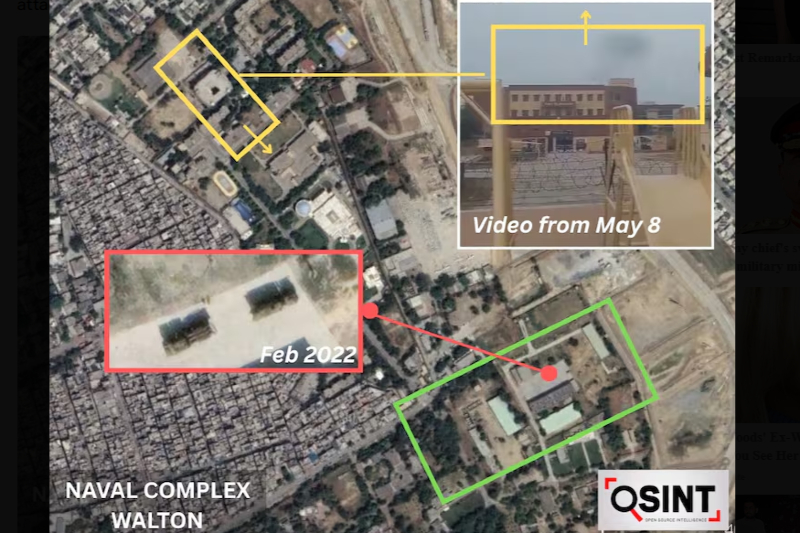
Among the targets was a Pakistani military base in Lahore, where India claims to have destroyed an air defense system.
Analysts believe the destroyed system was an HQ-16 surface-to-air missile battery of Chinese origin, capable of engaging aerial targets at ranges up to 40 kilometers.

Pakistan Downs 5 Indian Jets after Missile Strikes
India carried out missile strikes on multiple locations within Pakistan early Wednesday, according to official statements from both countries. In response, Pakistan claimed it had downed five Indian Air Force jets, marking a sharp escalation in tensions that risks triggering broader conflict between the nuclear-armed neighbors.
India stated the strikes were aimed at "terrorist infrastructure" across nine sites in Pakistan's Punjab province and Pakistan-administered Kashmir.
Pakistan shot down 25 Indian drones
Pakistan, meanwhile, has claimed to have shot down 25 Indian drones and reported significant casualties resulting from Indian strikes.
According to Pakistani authorities, at least 31 people have been killed and 57 injured in Pakistan and Pakistan-administered Kashmir since hostilities intensified on Wednesday.
On the Indian side, the military reported that 16 civilians were killed due to Pakistani shelling along the de facto border.
India maintains that its military actions were in direct response to a terrorist attack in Pahalgam last month, in which 26 Indian tourists lost their lives.
The Indian government has alleged Pakistani involvement in the attack, a claim strongly denied by Islamabad.
Civilian preparedness
Amid rising fears of broader conflict, India has moved to bolster civilian preparedness. All government employees in Delhi, including medical staff, have had their leave canceled, and authorities have begun installing air raid sirens throughout the capital.

Mock drills and blackout exercises
Mock drills and blackout exercises were conducted in over 50 locations, and anti-aircraft guns were deployed as a precaution.
Bomb disposal squads and SWAT teams have been dispatched to key areas including markets, government complexes, and transportation hubs to ensure public safety.
Security tightened in border regions
Security measures have also been tightened across Jammu and Kashmir, Rajasthan, and border regions in Punjab and Gujarat.
Operations in Arabian Sea
The Indian Navy reportedly launched operations in the Arabian Sea early Friday as part of coordinated military efforts following Pakistan’s cross-border actions.
The decades-long conflict over Kashmir, which both nations claim in full, remains at the heart of this latest military flare-up. With the situation volatile and civilian casualties mounting, international observers are urging both countries to step back from the brink of wider conflict.