
High-Stakes US-Iran Peace Talks Stretch Overnight in Switzerland Amid Mounting Regional Tensions
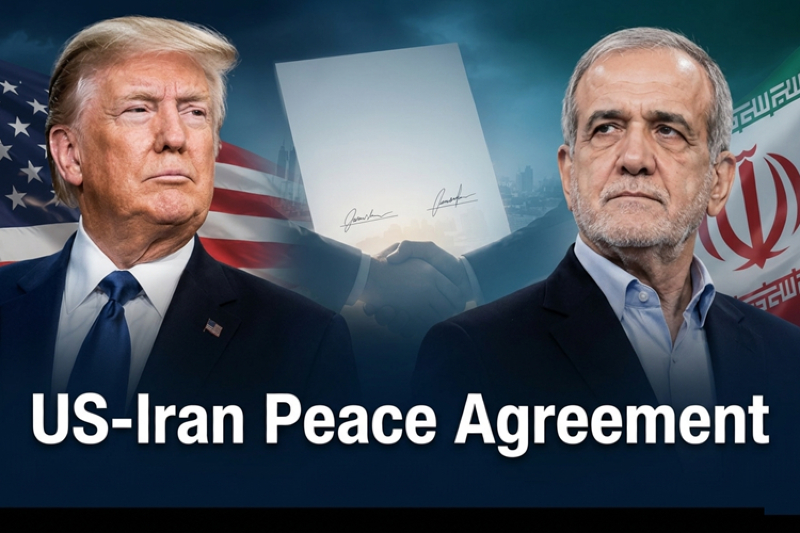
LUCERNE, Switzerland — Direct diplomatic negotiations between high-level delegations from the United States and Iran stretched deep into the night in Switzerland, as diplomats raced against a 60-day deadline to cement a permanent end to the war.
The high-stakes session in the Swiss resort city of Lucerne followed a preliminary agreement signed last week.
Friction Over Lebanon and the Strait of Hormuz
A senior US diplomat involved in the talks stated that the late-night sessions were primarily focused on "clarifying some of the confusing messaging from Iran" regarding the strategic shipping lane, enforcing a tenuous ceasefire in southern Lebanon, and outlining structural elements of a broader nuclear agreement.
The diplomatic push faced immediate headwinds over the weekend.
However, continued skirmishes prompted Tehran to announce on Saturday that it had closed the Strait of Hormuz—the vital maritime corridor responsible for the transit of roughly 20% of the world's oil and natural gas.
While Iran claims the passage is shut, international maritime tracking data from MarineTraffic indicated that commercial shipping traffic has continued.
Leadership Clashes and the Nuclear Question
The discussions also triggered fiery rhetoric from leadership on both sides.
US President Donald Trump issued a warning on social media demanding that Iran halt its proxy operations in Lebanon, threatening to "hit Iran very hard again" if compliance was not met.
Iran’s lead negotiator and Parliament Speaker, Mohammad Bagher Ghalibaf, swiftly dismissed the warning.
Despite the tense backdrop, US Vice President JD Vance, leading the American delegation alongside special envoy Steve Witkoff and Jared Kushner, struck a forward-looking tone before entering the session.
Vance noted that President Trump had instructed negotiators to "turn over a new leaf," offering a fundamental transformation of bilateral relations if Tehran abandons its nuclear weapons ambitions and regional destabilization efforts.
A Complex Framework for Peace
The current negotiations are part of an ambitious 60-day diplomatic roadmap initiated by a Memorandum of Understanding (MoU) signed electronically by both nations' presidents earlier in the week.
The Scope of the Initial MoU: The preliminary framework calls for an immediate halt to hostilities on all fronts, the formal reopening of the Strait of Hormuz, and the lifting of a US military blockade on Iranian ports.
The Financial Package: The agreement proposes a massive $300 billion reconstruction initiative for Iran alongside the complete termination of secondary US economic sanctions.
The Unresolved Core: The technicalities surrounding Iran's nuclear infrastructure—the baseline catalyst for the direct conflict—remain the most complex puzzle left to negotiate.
Regional Power Dynamics Complicate Progress
The path to a final agreement is heavily complicated by non-signatory combatants.
Conversely, Hezbollah leader Naim Qassem rejected any permanent Israeli presence, vowing that the militant group would continue to resist.
The war initially expanded into Lebanon shortly after the joint US-Israeli military campaign against Iran commenced on February 28, following a retaliatory rocket barrage by Hezbollah. Israel subsequently occupied roughly 5% of southern Lebanese territory.
As the US and Iranian teams—the latter rounded out by Foreign Minister Abbas Araghchi—continue their late-night technical sessions, international mediators remain on-site.
The prime ministers of Qatar and Pakistan, along with Pakistan's army chief, are active in Lucerne to facilitate dialogue and keep the fragile peace process from fracturing.