
France Demands Urgent UN Security Council Session Following Fatal Attacks on Peacekeepers
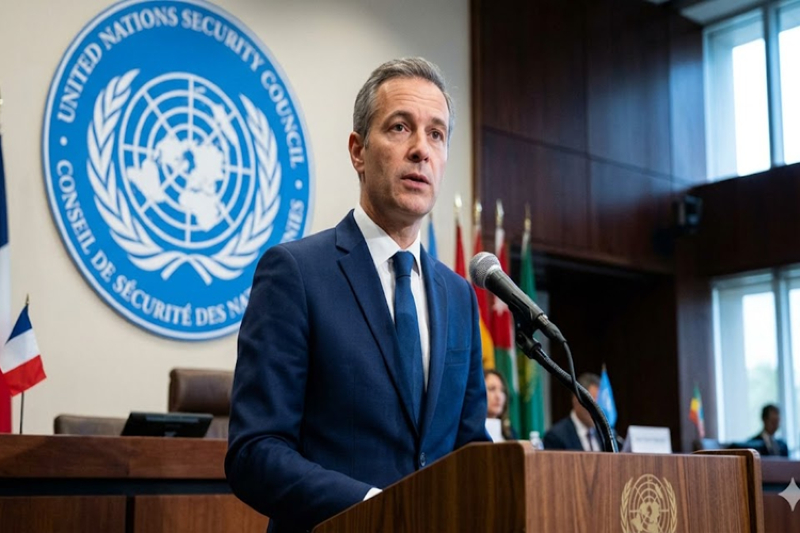
The French government has officially called for an emergency meeting of the United Nations Security Council following a series of deadly incidents involving Israeli forces and UN peacekeepers in southern Lebanon.
French Foreign Minister Jean-Noël Barrot issued a stinging rebuke on Monday, describing recent military actions against the United Nations Interim Force in Lebanon (UNIFIL) as "unacceptable and unjustifiable."
The diplomatic escalation follows two days of violence that left several international personnel dead and others wounded.
Escalating Casualties in Southern Lebanon
According to official statements, the situation for UN personnel has deteriorated rapidly over the last 48 hours. Minister Barrot detailed a timeline of events that has sparked international outrage:
March 29: Gunfire directed near UN positions resulted in the death of one Indonesian peacekeeper and left three others injured.
March 30: A secondary explosion claimed the lives of two more Indonesian peacekeepers and caused additional injuries.
Ongoing Threats: Reports have surfaced of "acts of intimidation" by Israeli Defense Forces (IDF) specifically targeting the French UNIFIL contingent located in the Naqoura region.
"France condemns these acts in the strongest possible terms," Barrot stated via social media. "We express our deepest condolences to the families of the fallen and stand in full solidarity with Indonesia."
Diplomatic Friction and Deconfliction Failures
The French Foreign Ministry emphasized that these incidents occurred despite UNIFIL following established deconfliction procedures—protocols designed to ensure military forces are aware of UN positions to avoid accidental engagement.
In response to the gravity of the situation, the Israeli ambassador in Paris was summoned to receive a formal protest. Barrot characterized the interaction as one of "utmost firmness," signaling a significant rift between Paris and Jerusalem regarding the conduct of operations in Lebanese territory.
The Significance of Resolution 1701
At the heart of the French demand for a Security Council meeting is the preservation of UN Security Council Resolution 1701. Established in 2006, the resolution was intended to:
Maintain a cessation of hostilities between Israel and Hezbollah.
Ensure that the area between the "Blue Line" (the border) and the Litani River is free of any armed personnel other than the Lebanese army and UNIFIL.
Guarantee the freedom of movement for UN personnel to monitor peace.
France argues that the recent "threats to security" directly undermine the UN's mandate. "UNIFIL must be able to fully implement its mission without the fear of intimidation or targeted strikes," Barrot added.
Uncertain Origins of Fatal Blast
While the French ministry has been direct in its criticism of the Israeli army's conduct, UNIFIL officials remain cautious regarding the specifics of the most recent tragedy. On Monday, a UN vehicle was destroyed by an "explosion of unknown origin" near the village of Bani Hayyan, resulting in two fatalities.
Investigations are currently underway to determine whether the blast was the result of direct shelling, a remotely detonated device, or an unexploded remnant of previous combat. France has demanded "full clarity" be established regarding the circumstances of every casualty.
As the UN Security Council prepares to convene, the international community remains on high alert, fearing that the targeting of peacekeepers could lead to a total collapse of diplomatic efforts in the region.