
Downing Street Rejects Foreign 'Interference' After US Vice President Weighs In on UK Murder Case
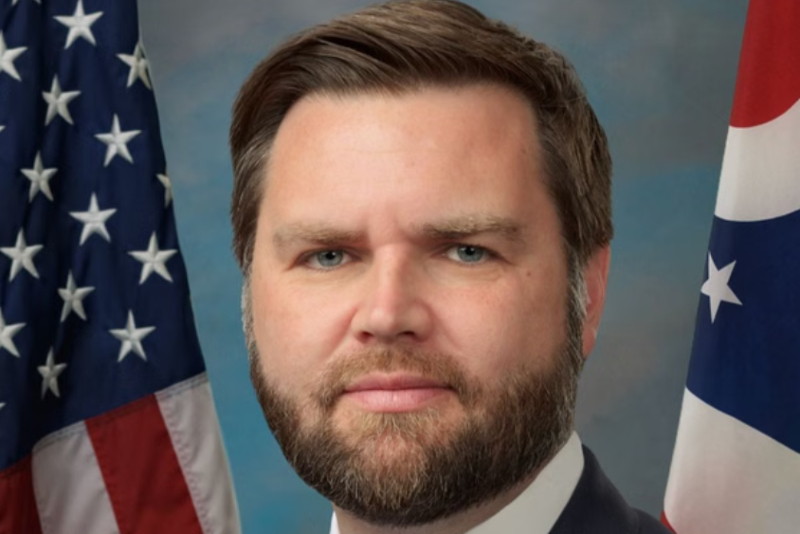
LONDON — The British government has launched a sharp counterattack against what it calls external attempts to fuel societal friction, following controversial public remarks by US Vice President JD Vance regarding a high-profile British murder case.
Number 10 Downing Street strongly condemned individuals trying to meddle in domestic affairs and trigger social hostility.
The International Dispute
The row ignited when Vice President Vance claimed on the social platform X that the university student would still be alive if European leaders had rejected "the mass invasion of migrants."
The American political intervention expanded beyond the Vice President's office. A recent statement from the US State Department similarly criticized British institutions, asserting that "ideological conditioning" and unbalanced enforcement of the law are signs of western decline.
Responding to these remarks, a spokesperson for Prime Minister Sir Keir Starmer emphasized that the victim’s family had explicitly requested that the tragedy not be exploited for political polarization.
"The Nowak family has clearly stated they do not want their son’s death used to generate hostility or further division," the Downing Street spokesperson said.
"Our political landscape should foster unity during tragic moments. That reflects our national values."
Background of the Crime
The dispute stems from the December 2025 killing of Henry Nowak in Southampton.
The case triggered widespread outrage following the release of police bodycam footage.
Growing Domestic and Digital Fallout
The cross-Atlantic political friction is part of a broader debate over British policing practices.
Domestically, the case has intensified a debate regarding "two-tier policing"—the allegation that law enforcement treats minority communities more favorably out of fear of racism allegations.
| Political Figure | Position / Reaction on the Case |
|---|---|
| Sir Keir Starmer (Prime Minister) | Condemned foreign tech figures and domestic politicians for weaponizing the tragedy to fuel public grievances. |
| Nigel Farage (Reform UK Leader) | Expressed "pure, cold rage" over the police response and accused authorities of practicing preferential enforcement. |
| Kemi Badenoch (Conservative Leader) | Stated that while police do not intend to create unequal systems, the negative public perception must be taken seriously. |
| Scott Green (Acting Chief Constable) | Explicitly rejected the existence of "two-tier policing," defending front-line officers. |
Despite the increasingly sharp rhetorical clashes between London and Washington officials over immigration and policing, British diplomats maintain that close international security and intelligence cooperation between the United Kingdom and the United States remains unaffected.