
China Urges Immediate Reopening of Strait of Hormuz in High-Stakes Talks with Iran
BEIJING – China has ramped up diplomatic pressure for the restoration of global shipping lanes, calling for the Strait of Hormuz to be reopened "as soon as possible" during high-level discussions with Iranian leadership.
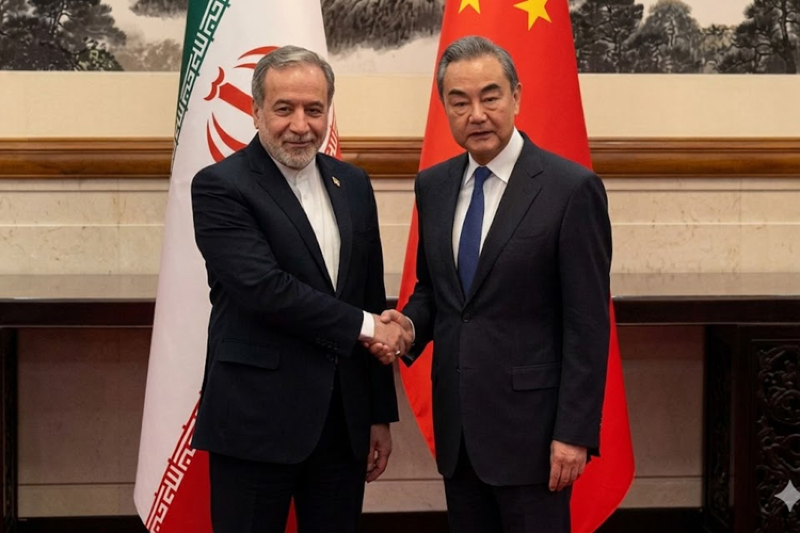
The appeal came on Wednesday as Chinese Foreign Minister Wang Yi hosted his Iranian counterpart, Abbas Araqchi, in Beijing. The meeting marks Araqchi’s first official visit to the Chinese capital since the outbreak of the devastating conflict involving the United States, Israel, and Iran.
A Critical Maritime Deadlock
The Strait of Hormuz, a vital artery for the world’s energy supply, has remained largely impassable following a series of blockades imposed by both Tehran and Washington. The maritime standoff has sent ripples through global markets, but for Beijing, the stakes are uniquely high. China remains a primary consumer of Iranian crude, with 2025 data showing imports of roughly 1.38 million barrels per day—accounting for over 10% of its total oil intake.
"The international community shares a common concern over restoring normal and secure navigation," Wang Yi stated, according to state media readouts. He emphasized that while a comprehensive ceasefire remains the "urgent priority," the continued closure of the Strait is increasingly untenable.
Diplomatic Balancing Act
Beijing has sought to position itself as a neutral mediator throughout the hostilities, carefully avoiding direct entanglement while criticizing Western tactics. During the talks, Wang described the U.S. naval blockade of Iranian ports as "irresponsible and dangerous," warning that such maneuvers could shatter the fragile, Pakistan-brokered ceasefire reached in April.
Despite the friction, China continues to leverage its influence with both sides. President Donald Trump, speaking from the White House this week, noted that President Xi Jinping has been "very respectful" regarding the blockade. Trump suggested that the strength of his personal rapport with Xi has prevented the maritime dispute from escalating into a direct confrontation between the two superpowers.
Prelude to a Landmark Summit
The timing of Araqchi’s visit is significant. It serves as a diplomatic curtain-raiser for a highly anticipated summit between President Trump and President Xi scheduled for next week.
Initially delayed following the commencement of U.S. and Israeli strikes on Iranian targets, the summit represents the first visit by a U.S. president to China in nearly a decade. The reopening of the Strait and the long-term stability of the Middle East are expected to dominate the agenda.
For Tehran, the message from Beijing was one of cautious support mixed with a firm nudge toward de-escalation. Wang Yi reportedly praised Iran’s commitment to its non-nuclear status, while Araqchi affirmed that the partnership between the two nations would only strengthen in the face of Western pressure.
As the world looks toward next week’s summit, the focus remains on whether Beijing can successfully bridge the gap between Washington’s "maximum pressure" and Tehran’s "maximum resistance" to keep the world’s most important oil transit point flowing.