
US-Israel War on Iran Enters Second Month: Houthis Strike Israel as "No Kings" Protests Explode Across America
The joint US-Israeli military offensive against Iran has officially entered its second month, marked by a dangerous expansion of the conflict.
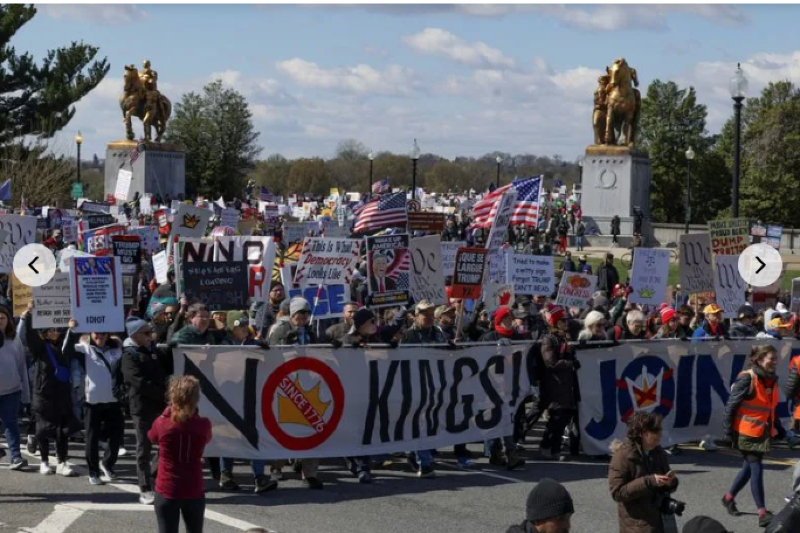
As ballistic missiles from Yemen’s Houthi rebels reached Israeli territory for the first time today, millions of Americans took to the streets in the "No Kings" demonstrations, signaling a deepening domestic and international crisis.
Regional Conflict Escalates: Houthi Rebels Enter the War
In a significant turning point, Yemen’s Iran-backed Houthi rebels confirmed their first direct attack on Israel since the war began on February 28.
The Strike: A barrage of ballistic missiles was launched toward southern Israel, triggering sirens in Beersheba and areas surrounding the Negev nuclear research facility.
The Intent: Houthi spokesperson Yahya Saree stated the group’s "finger is on the trigger," and operations will continue until the "aggression" on all fronts—including Lebanon and Iraq—ceases.
Israeli Response: The IDF confirmed the interception of at least one missile from Yemen and warned that its air defenses are increasingly "overstretched" by threats from multiple directions.
Domestic Unrest: Millions Join "No Kings" Protests
In the United States, the war has sparked a massive political backlash. Millions of citizens participated in over 3,000 "No Kings" protest events across the country.
The Movement: Demonstrators in Washington, D.C., and hubs like Saint Paul, Chicago, and New York voiced anger over the expansion of presidential powers and the "senseless war" in Iran.
Celebrity & Political Support: Speakers included Senator Chris Murphy and Bill Nye in D.C., while Bruce Springsteen and Senator Bernie Sanders appeared in Saint Paul.
The Stakes: Protesters hope the movement will translate into major Democratic gains in the upcoming November midterm elections, framing the conflict as “Trump’s war.”
Casualties and Humanitarian Crisis
The toll of the past 30 days has been catastrophic across the Middle East:
Iran: The Ministry of Health reports nearly 2,000 people killed (at least 1,937) and over 18,500 injured.
Over 93,000 civilian buildings have been damaged. Lebanon: Israeli strikes on Hezbollah targets have killed at least 1,189 people and displaced over one million.
Israel: While the IDF maintains a high interception rate, one civilian was recently killed in Tel Aviv following an Iranian missile strike, and over 300 US service members have been reported injured in regional attacks since the conflict's inception.
Diplomatic Lifelines: The Pakistan Mediation
Despite the escalating violence, a sliver of hope remains in the form of indirect diplomacy.
The Role of Islamabad: Pakistani Foreign Minister Ishaq Dar confirmed that Pakistan is relaying messages between Washington and Tehran.
The 15-Point Plan: The U.S. has submitted a 15-point proposal for a peace deal, which includes demands for Iran to end its nuclear program and reopen the Strait of Hormuz in exchange for sanction relief.
Iranian Stance: While Iran's President Pezeshkian thanked Pakistan for its efforts, Iranian state media maintains that the U.S. proposal is "one-sided and unfair."
Strategic Outlook
As the war grinds into April, Israeli military leaders have raised "red flags" regarding a manpower crisis and the long-term sustainability of the multi-front engagement.
With elections looming in both the U.S. and Israel, the political pressure to find an "exit strategy" is reaching a boiling point, even as President Trump maintains that the coalition is "winning big."