
"Nuclear Dust" Dispute: Tehran Flatly Denies Agreement to Transfer Uranium to U.S.
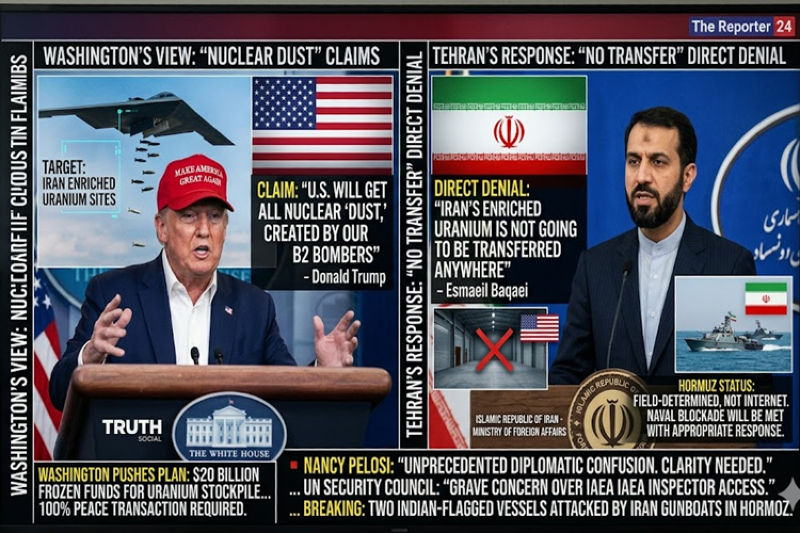
TEHRAN – Iran’s Foreign Ministry has issued a sharp rebuttal to claims made by President Donald Trump, stating that the nation’s stockpile of enriched uranium will remain on Iranian soil and will not be transferred "anywhere."
The denial comes amidst a "blizzard of contradictions" regarding the terms of a potential peace deal to end the current conflict.
The Clash Over "Nuclear Dust"
The diplomatic row was ignited by a post on President Trump’s Truth Social platform, where he asserted that the United States would successfully retrieve all "Nuclear Dust"—a reference to enriched uranium at sites previously targeted by U.S. B-2 bombers.
However, Iranian Foreign Ministry spokesperson Esmaeil Baqaei clarified on state television that such a handover has never been a part of the current negotiations.
"Transfer of Iran’s enriched uranium to the U.S. has never been raised," Baqaei stated, emphasizing that while previous talks focused on nuclear limitations, the current priority is "ending the war" and securing a 10-point plan for lifting sanctions.
The $20 Billion Question
The denial follows a report from Axios suggesting that a high-stakes deal was in the works. According to the report, Washington was considering the release of $20 billion in frozen Iranian assets in exchange for the surrender of Tehran's enriched stockpile.
Currently, Tehran is estimated to hold a significant amount of uranium enriched to 60% purity—dangerously close to the 90% weapons-grade threshold—as well as a large stockpile at 20%.
Since the heavy U.S. and Israeli strikes in June 2025, the International Atomic Energy Agency (IAEA) has been unable to verify the status or safety of these materials.
Escalating Tensions in the Strait
The uranium dispute is compounded by a deepening maritime standoff. Baqaei dismissed President Trump’s digital warnings about the naval blockade, asserting that "the opening and closing of the Strait of Hormuz does not take place on the internet; it is determined in the field."
The Blockade: Trump maintains that U.S. forces will continue to block Iranian ports until a deal is "100% complete."
The Response: Tehran has warned that the blockade is a "violation of the ceasefire" and that its armed forces are prepared to take "necessary measures" in response to what they deem maritime piracy.
Regional "Red Flags"
As the April 22 ceasefire deadline looms, the diplomatic landscape remains precarious:
Pakistan’s Role: Reports indicate a "Red Flag" warning regarding President Trump’s growing alignment with Pakistan's Army Chief, Asim Munir, who has been acting as a key mediator.
Maritime Violence: In a troubling escalation, two Indian-flagged vessels were reportedly attacked by Iranian gunboats in the Strait of Hormuz on Saturday, adding pressure on the international community to secure freedom of navigation.
The "Nuclear Dust" Mystery: With IAEA inspectors still barred from site visits, the true condition of Iran's buried uranium remains the most volatile variable in the peace process.