
Middle East Crisis: Iran Claims Israeli Jet Downed as Conflict Escalates Across Multiple Fronts
The military confrontation between Iran and the joint forces of the United States and Israel reached a new fever pitch on Saturday, marked by claims of downed aircraft, strikes on nuclear facilities, and a rising civilian death toll.
Aerial Warfare and the Battle for Air Supremacy
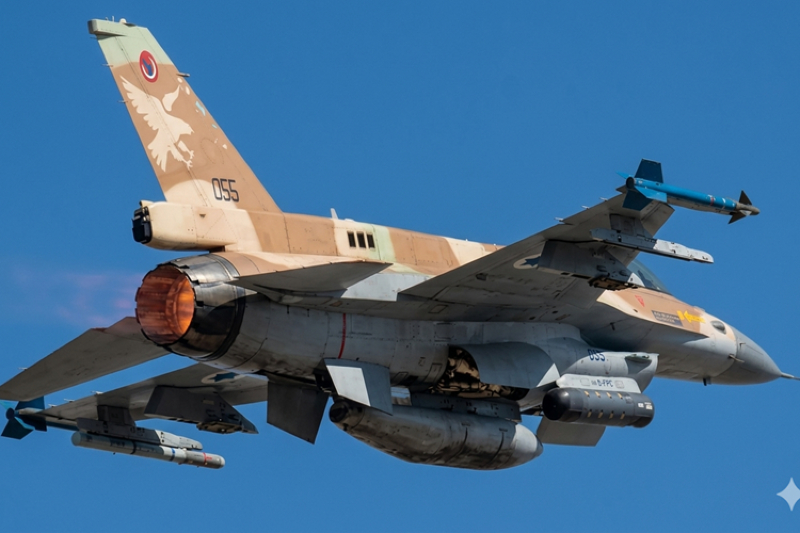
The Islamic Revolutionary Guard Corps (IRGC) claimed today to have successfully intercepted and downed an Israeli fighter jet within Iranian airspace. While Israel’s military acknowledged that one of its aircraft faced anti-aircraft fire during a mission, it denied the loss of any assets, asserting the plane returned safely.
This claim follows a series of intense aerial exchanges. Tehran further alleged it targeted Ben Gurion Airport near Tel Aviv using drones, specifically aiming at refueling tankers to cripple the Israeli Air Force's operational reach.
Strikes on Strategic and Nuclear Facilities
International concern spiked following reports of an attack on the Natanz nuclear enrichment center.
The Damage: Iran confirmed a strike on the facility but emphasized that no radioactive leakage occurred.
The Response: Russia has called for an urgent international investigation, warning that targeting nuclear infrastructure risks a regional "catastrophe."
Missile Capabilities: Israel claimed to have dismantled a key IRGC ballistic missile production plant in Tehran, aiming to "significantly degrade" Iran's long-range strike capabilities.
Human Cost and Regional Spillover
The humanitarian situation continues to deteriorate rapidly.
Casualties: The Iranian Health Ministry reports over 20,000 injuries since the joint US-Israeli campaign began on February 28. In the coastal city of Ramsar, a couple and their child were reportedly killed in their home during an airstrike.
Lebanese Front: Hezbollah launched a record 55 strikes in a single day against northern Israel, damaging buildings in Metula and Safed. Meanwhile, Israeli strikes on Beirut and eastern Lebanon continue to claim lives, with the death toll in Lebanon now exceeding 1,000.
Syria: Saudi Arabia and Turkey issued stern condemnations of Israeli strikes in southern Syria, labeling them a violation of international law and Syrian sovereignty.
The "Oil Pivot" and Global Economy
In a surprising tactical shift, the United States announced a temporary 30-day suspension of sanctions on Iranian oil.
Market Impact: Approximately 170 million barrels of Iranian oil currently at sea are now eligible for sale. This move is seen as an attempt by the Trump administration to stabilize global energy prices, which have skyrocketed due to the virtual closure of the Strait of Hormuz.
Diplomatic Maneuvers
Despite the violence, diplomatic lines remain open:
India-Iran Dialogue: Prime Minister Narendra Modi spoke with President Masoud Pezeshkian, expressing concern over regional infrastructure and emphasizing the need for maritime safety.
The Russia-Iran Axis: President Vladimir Putin reaffirmed Moscow’s stance as a "reliable partner" to Tehran, condemning the recent assassination of Iranian leaders and criticizing the US-Israeli military campaign.
Summary of Major Incidents (March 21, 2026)
| Location | Incident | Reported Outcome |
|---|---|---|
| Natanz, Iran | Strike on Nuclear Center | No radiation leak; facility damaged. |
| Tehran, Iran | Strike on IRGC Factory | Missile production capacity "reduced." |
| Baghdad, Iraq | Drone attack on Intelligence HQ | One official killed; buildings damaged. |
| Northern Israel | Hezbollah Rocket Barrage | Structural damage in Safed and Metula. |
| Strait of Hormuz | Maritime Tensions | GCC and EU nations demand end to ship seizures. |