
Iran War Sparks Rift Among Western Allies as Leaders Resist Trump’s Call for Military Support in Strait of Hormuz
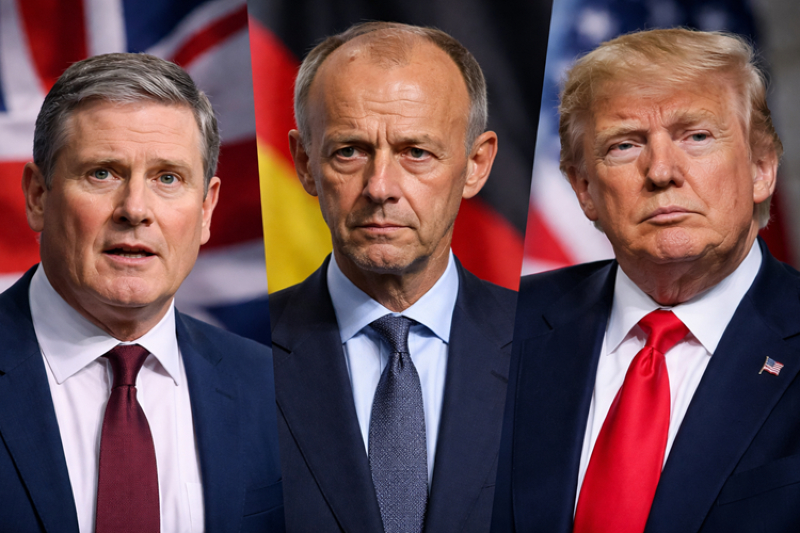
Growing tensions in the Middle East have exposed differences among Western allies after US President Donald Trump urged partner nations to help secure the strategically vital Strait of Hormuz, a key global oil route affected by the ongoing conflict with Iran.
However, several leaders signaled reluctance to expand their military involvement, stressing the need to avoid a wider regional war.
Speaking during a briefing from Downing Street in London, UK Prime Minister Keir Starmer said Britain would not be drawn into a wider war. Meanwhile in Berlin, German Chancellor Friedrich Merz said the conflict with Iran is “not a matter for NATO.”
UK Rules Out Joining a Wider War
British Prime Minister Keir Starmer said the United Kingdom would not be drawn into a broader conflict over Iran.
Speaking amid escalating tensions in the Gulf, he emphasized that London is working with allies to develop a practical solution to keep shipping moving through the Strait of Hormuz, which carries a large share of the world’s oil exports.
While the UK is discussing possible measures with international partners, Starmer suggested any response would focus on stabilizing maritime trade rather than expanding the conflict militarily.
Germany Says Iran War Not a NATO Issue
Germany also pushed back against the idea that the conflict should involve the North Atlantic Treaty Organization (NATO).
Chancellor Friedrich Merz said the war is not a matter for the alliance, stressing that NATO was created as a defensive organization rather than a vehicle for offensive military campaigns.
German Defence Minister Boris Pistorius echoed that position, stating that the conflict with Iran was not started by Germany or its European partners.
Trump Presses Allies for Support
President Trump, meanwhile, renewed calls for international assistance in safeguarding shipping routes in the Strait of Hormuz. He warned that a failure by allied nations to help protect the waterway could damage the future of NATO cooperation.
Speaking in Washington, Trump claimed that US and Israeli forces had already significantly weakened Iran’s military capabilities.
According to him, thousands of targets have been struck in Iran, including facilities linked to missile and drone production as well as naval assets.
He also said the United States had destroyed numerous vessels used by Iran to deploy sea mines and had conducted strikes on key infrastructure, including the oil hub at Kharg Island.
At the same time, the US president urged other countries to help ensure commercial vessels can safely pass through the Strait of Hormuz, though he did not identify which nations had agreed to support the effort.
Strait of Hormuz Crisis Raises Global Concerns
The Strait of Hormuz is one of the world’s most important energy routes, with roughly one-fifth of global oil shipments passing through the narrow waterway each day. The ongoing conflict and Iran’s effective disruption of shipping have triggered sharp volatility in global energy markets.
The International Energy Agency (IEA) said the current disruption is among the most significant ever recorded in global oil supply. The agency has already authorized the release of hundreds of millions of barrels of strategic oil reserves to help stabilize markets.
Military Escalation Across the Region
The crisis has also intensified military activity across the Middle East. Israel Defense Forces (IDF) reported carrying out large-scale strikes targeting sites in several Iranian cities, including Tehran, Shiraz, and Tabriz.
Meanwhile, regional tensions spread beyond Iran and Israel. Qatar reported intercepting a second wave of missiles launched from Iran, while authorities in the United Arab Emirates said drone attacks caused fires in an oil industrial zone in Fujairah.
Missile fragments and debris were also reported in parts of Jerusalem, including areas close to major religious and government sites.
Calls for De-escalation Continue
Despite the ongoing escalation, several governments have stressed the need to reduce tensions through diplomacy. Western leaders say reopening the Strait of Hormuz and restoring stability in global energy markets remain urgent priorities.
For now, discussions among allies continue, but major European partners appear cautious about joining a military campaign in the region.