
Iran War Escalates After Kharg Island Strikes as IRGC Threatens US Forces in UAE
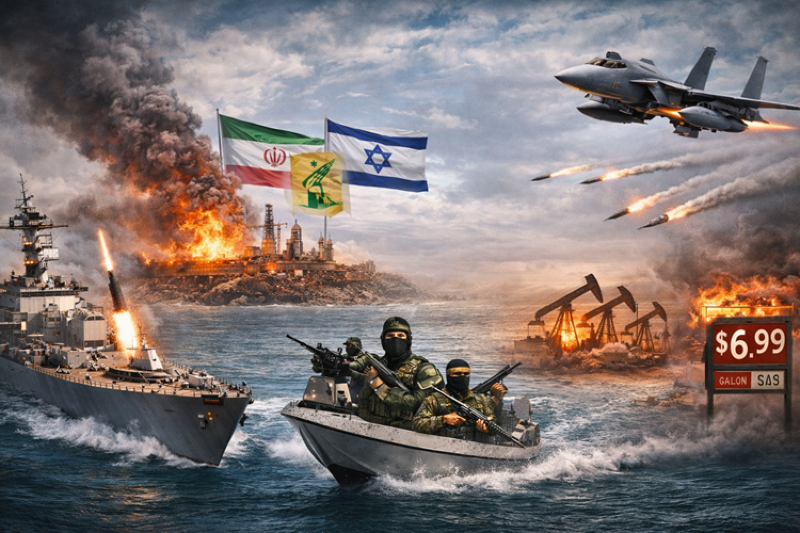
The war between Iran, the United States and Israel intensified on Saturday after American forces launched a large-scale strike on Kharg Island, a strategic hub responsible for the majority of Iran’s oil exports.
The attack has triggered strong warnings from Iran’s powerful Islamic Revolutionary Guard Corps (IRGC), which declared that American military facilities in the United Arab Emirates could now be considered legitimate targets.
According to the United States Central Command (CENTCOM), the operation struck more than 90 Iranian military sites on the island, including naval mine depots and missile storage bunkers.
US officials said the strikes were carefully designed to avoid damaging oil facilities, although Donald Trump warned that energy infrastructure could be targeted if Iran disrupts shipping through the Strait of Hormuz, one of the world’s most important oil transit routes.
Iranian authorities said oil exports from Kharg Island have continued despite the bombardment, describing the damage as limited.
Iran Threatens US Facilities in the UAE
Following the attack, the IRGC issued a warning to the United Arab Emirates, stating that locations hosting American troops could be targeted if the conflict expands.
Iranian state media urged residents near key ports — including Jebel Ali Port, Khalifa Port, and Fujairah Port — to evacuate areas around military installations.
UAE authorities reported intercepting nine ballistic missiles and dozens of drones launched from Iran on Saturday alone. Since the start of the conflict in late February, the country says its air defenses have shot down hundreds of missiles and drones.
Iranian naval commanders also claimed their forces targeted US-linked bases in the region, including Al Dhafra Air Base, facilities in Kuwait, and military installations in Bahrain.
Missile Exchanges Expand Across the Region
The conflict has spread beyond Iran and the Gulf, with renewed fighting in Lebanon and Israel.
The Lebanese armed group Hezbollah said it fired rockets toward northern Israel, while the Israeli military reported detecting incoming Iranian missiles and activating air defense systems.
Explosions were heard in Jerusalem after Iranian missiles were detected approaching Israeli territory. Israeli forces also continued air strikes in Lebanon, including near Beirut, where authorities reported casualties.
Israel’s defense minister Israel Katz said the war had entered a “decisive phase” as military operations intensified across the region.
Regional and Global Tensions Rise
The widening conflict has already caused significant casualties and displacement across the Middle East. Regional officials estimate that more than 1,400 people have been killed in Iran alone since hostilities began on February 28, while hundreds more have died in Lebanon and other countries.
The fighting has also disrupted global energy markets. Oil prices have surged past $100 per barrel amid concerns that shipping through the Strait of Hormuz could be halted.
Analysts say Iran may increasingly use its influence over global energy routes to pressure Western economies as the war continues.
Calls for Diplomacy Amid Escalation
Amid the growing violence, António Guterres, secretary-general of the United Nations, urged all sides to halt the fighting.
“There is no military solution,” Guterres said during a visit to Lebanon, warning that continued attacks could devastate the country.
He called for immediate diplomacy and respect for civilian lives, stressing that the region risks a deeper humanitarian catastrophe if the conflict continues to expand.