
Fresh Protests Erupt Across Iranian Universities Following Deadly Crackdown
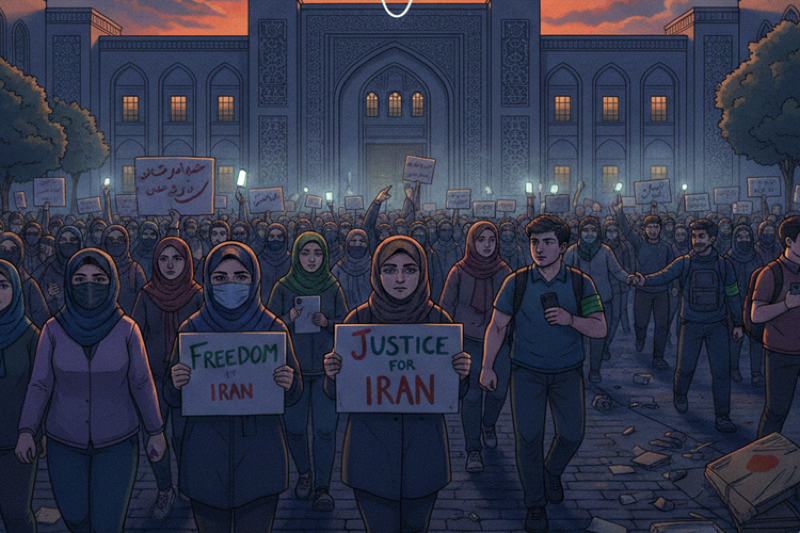
TEHRAN — Iranian students returned to university campuses on Saturday, marking the start of a new semester with a wave of anti-government demonstrations. These rallies represent the first significant surge in campus activism since a brutal security crackdown last month left thousands dead.
Verified footage from the capital shows hundreds of students at the Sharif University of Technology marching through streets, chanting slogans against the ruling establishment. Similar reports of unrest have surfaced from the northeastern city of Mashhad and Beheshti University in Tehran, where students reportedly held peaceful sit-in protests.
A Movement Born of Mourning
The current demonstrations coincide with the traditional 40-day mourning period for those killed during the mass unrest in January. Human rights organizations have provided staggering casualty figures that highlight the severity of the state’s response:
HRANA (Human Rights Activists News Agency): Confirmed at least 7,015 deaths, including over 200 children. An additional 17,000 cases are still being investigated.
Government Figures: Iranian authorities previously acknowledged approximately 3,100 deaths, though they attributed the majority to security personnel or "rioters."
Detentions: Over 50,000 people are estimated to have been arrested since late December.
The atmosphere on campuses remains volatile, with unverified reports of skirmishes between pro-government groups and student protesters.
Nuclear Diplomacy Under Military Shadow
The domestic unrest is unfolding against a backdrop of high-stakes international tension. US and Iranian officials met in Geneva, Switzerland, this week to discuss curbing Tehran’s nuclear program. While both sides reported "progress" on guiding principles, the threat of conflict remains imminent.
"The world will find out over the next 10 days whether a deal will be reached or if the US will take military action," stated US President Donald Trump, who has reinforced the American military presence in the region with a second aircraft carrier.
Western allies remain concerned that Iran is nearing the capability to develop a nuclear weapon, a claim Tehran continues to deny.
Scenarios of Intervention
As the Iranian government prepares for a potential military strike, the opposition remains deeply divided:
Exiled Factions: Some groups are calling for US intervention, hoping a strike will catalyze the downfall of the hardline government.
Internal Dissidents: Other activists oppose outside interference, fearing it could rally nationalist support around the regime or lead to a protracted regional war.
The Iranian Revolutionary Guard (IRGC) has reportedly moved meetings into civilian infrastructure, such as hospitals and schools, a move critics say uses the population as human shields in the event of an air campaign.